


Snow Removal Contracts: Top 3 Best Practices 2024
Snow removal contracts are vital in ensuring that both homeowners and business owners in snowy regions maintain safe and accessible properties during the harsh winter months. They serve as a formal agreement between a service provider and a client detailing the scope of services, payment terms, and specific obligations to manage snow and ice effectively. This is crucial for anyone looking to ensure reliable and professional snow management throughout the winter season, especially in areas prone to regular snowfall.
Having a well-drafted snow removal contract offers numerous benefits. For one, it clearly defines responsibilities, reducing misunderstandings. It also establishes a schedule and method for snow management, whether it’s snow plowing, de-icing, or full removal. This not only keeps your property safe and accessible but also mitigates the risk of accidents and liability. Moreover, a contract can lay the groundwork for a long-term relationship with a contractor, assuring you that your property will be taken care of consistently through the winter.
As snow and ice can cause potential hazards, effective management is not just about convenience—it’s about safety and minimizing risk. Whether dealing with residential driveways or commercial premises, a reliable snow removal strategy prevents slips and falls, protecting property users and reducing the risk of legal issues related to accidents.
Ready to dive in and learn more? Let’s explore the key elements of these contracts and how you can craft a robust agreement for your snow management needs.
Find more about snow removal contracts:
– commercial plowing service
– snow plow companies near me
– snow plowing services
Understanding Snow Removal Contracts
Key Terms to Know
When it comes to snow removal contracts, understanding key terms is essential. Knowing the difference between snow removal and snow plowing is a good start. Snow removal involves completely clearing snow from the property, ensuring there’s no snow left to pile up. On the other hand, snow plowing usually means pushing the snow to the sides, which is often more cost-effective for large areas.
Another important term is plowable events. This refers to specific snowfall conditions that trigger the need for snow removal services. For example, a contract might specify that any snowfall over 3 inches is considered a plowable event. Understanding this term helps in planning and budgeting for snow management effectively.
Essential Elements
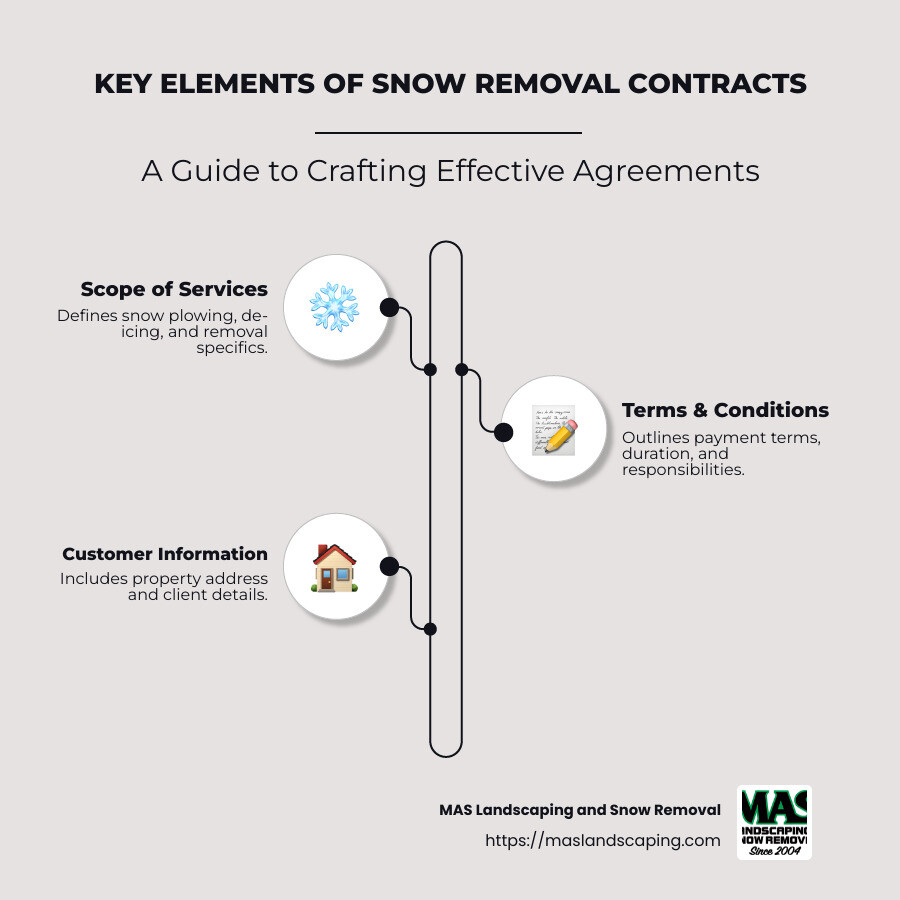
To create a solid snow removal contract, several elements must be included:
- Property Address: Clearly specify the location where services will be provided. This avoids any confusion about which areas are covered.
- Customer Information: Include the customer’s name, email, and phone number. This ensures clear communication between the client and the service provider.
- Payment Terms: Outline how and when payments will be made. Will it be a flat fee, or based on the number of snow events? Make sure these details are clear to prevent disputes.
The scope of services should also be detailed. This means specifying the exact services included, such as snow plowing, de-icing, or full snow removal. Also, indicate the frequency of these services—whether they are on-demand or scheduled regularly.
By including these elements, both parties can ensure a clear understanding of the agreement, leading to a successful and hassle-free snow management season.
Now that we’ve covered the essentials, let’s explore the different types of snow removal contracts and how they cater to various needs.
Types of Snow Removal Contracts
When choosing a snow removal contract, understanding the different types can help you decide what’s best for your needs. Each type has its own billing structure, frequency, and cost implications.
Per Push Contracts
Per push contracts charge you each time the snow is plowed. This type is straightforward—you pay for every visit. It’s ideal if you want to manage costs based on actual snowfall. The billing is clear and tied to the number of times the contractor plows your property. This can be cost-effective in regions with low snowfall, as you only pay for what you need. However, during heavy snow periods, costs can add up quickly.
Per Event Contracts
With per event contracts, you pay for snow removal per storm, typically within a 24-hour window. This means that if a storm requires multiple visits, the cost may increase due to the extra work involved. This type of contract is beneficial if your area experiences severe winter weather. It’s crucial to clarify with your contractor about any extra payments for multiple visits during a single storm to avoid unexpected costs.
Time-Based Contracts
Time-based contracts are popular for businesses that need consistent snow management. You pay a predetermined fee for a specific timeframe, ensuring your property is regularly cleared of snow. This provides reliability and consistency, as you don’t have to worry about fluctuating costs. It’s perfect for businesses that need hassle-free snow removal throughout the winter season. The fixed fee structure helps in budgeting and planning, making it a convenient option for many.
Each type of contract has its own advantages and is suited for different needs. Understanding these options helps in making an informed decision that aligns with your budget and snow management requirements.
Best Practices for Snow Removal Contracts
When crafting a snow removal contract, adhering to best practices ensures clarity and protects both parties involved. Let’s explore some key areas to focus on.
Legal Considerations
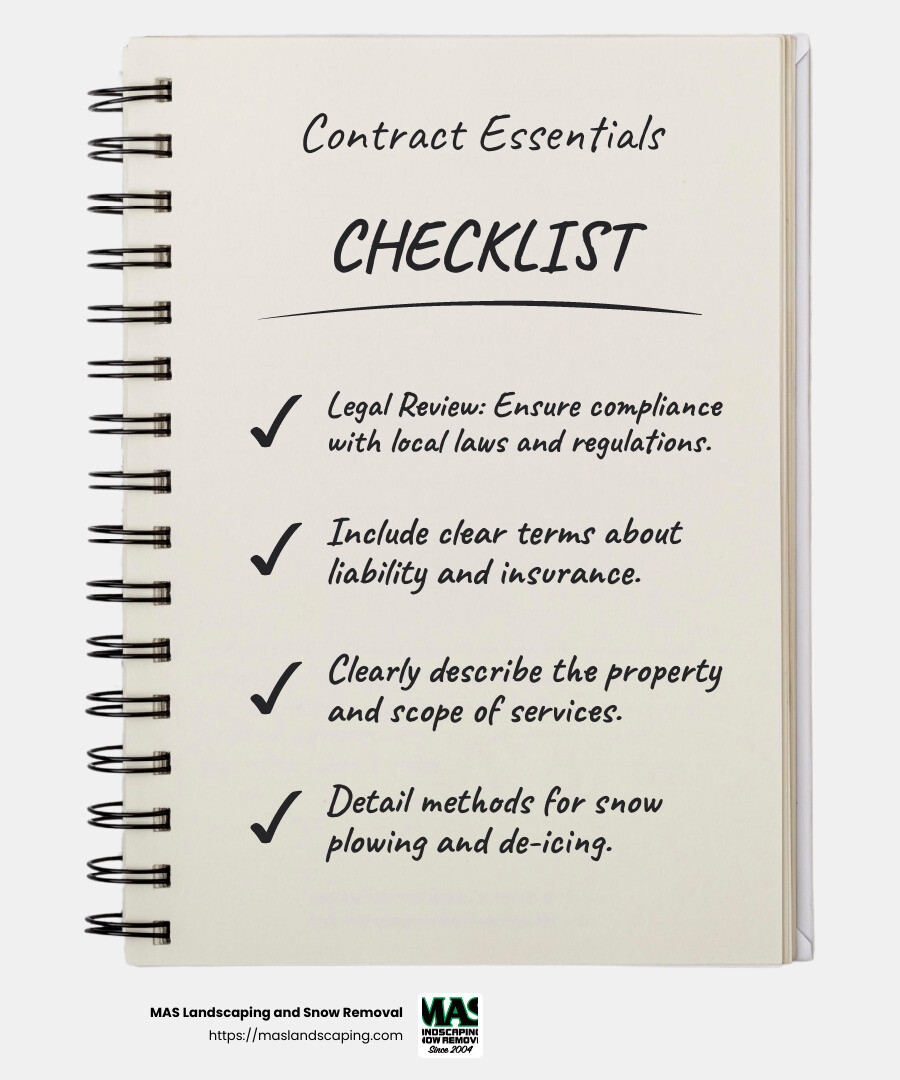
Legal Review: Before finalizing any contract, it’s wise to have a legal professional review it. This step ensures compliance with local laws and regulations. A lawyer can also help incorporate clauses regarding liability and insurance coverage, safeguarding both you and your client from potential disputes.
Compliance and Liability: Make sure your contract complies with local ordinances and includes clear terms about liability. This means outlining who is responsible for damages or injuries that may occur during the snow removal process. Including these details can prevent misunderstandings and legal issues down the line.
Insurance Coverage: It’s crucial to specify the insurance policies you hold, such as general liability insurance, in the contract. This provides peace of mind to your clients, knowing that they are protected in case of accidents or damages during snow removal activities.
Service Outline
Property Description: Clearly describe the property in the contract. Include details or a map highlighting areas like driveways, sidewalks, and entrances that will be serviced. This ensures both parties have a mutual understanding of the work scope.
Scope of Services: Define the services you will provide, such as snow plowing, shoveling, and de-icing. Specify the frequency of these services—whether they are on-demand or scheduled. This helps set expectations and ensures a comprehensive snow removal plan that meets the client’s needs.
Snow Plowing and De-Icing: Detail the methods used for snow removal and ice management. Explain the equipment and materials, like salt or sand, that will be used for de-icing. This transparency helps clients understand the value of the service and the effort involved.
Frequency: Clarify how often snow removal will occur. For instance, will it be after every snowfall of a certain depth, or on a regular schedule regardless of snow accumulation? This prevents any confusion about when services will be rendered.
By focusing on these legal and service aspects, your snow removal contracts will be robust and effective, ensuring a smooth and professional relationship with your clients.
Next, we’ll address some frequently asked questions about snow removal contracts, including how to write and price them effectively.
Frequently Asked Questions about Snow Removal Contracts
How to Write a Snow Removal Contract?
Creating a snow removal contract requires attention to detail and clarity. Here’s a step-by-step guide to help you get started:
- Business Information: Start with the basics. Include your business name, address, contact details, and licensing information. This establishes your credibility and provides clients with a way to reach you.
- Terms of Agreement: Clearly outline the terms. Specify the start and end dates of the contract, payment terms, and cancellation policies. Be explicit about when and how payments should be made, whether it’s upfront, monthly, or after each service.
- Scope of Services: Detail what services are included, like snow plowing, shoveling, and de-icing. Define the specific conditions under which these services will be performed, such as snowfall depth or frequency.
- Liability and Insurance: Include clauses about liability and insurance coverage. Clearly state who is responsible for damages or accidents, and list the insurance policies you have in place.
By covering these elements, you ensure that both you and your clients have a clear understanding of the agreement.
How to Price a Snow Removal Contract?
Pricing a snow removal contract can vary depending on several factors. Here’s a breakdown of common pricing strategies:
- Flat Fee: This is a straightforward approach where you charge a fixed amount for the entire season. It’s beneficial for clients who want predictable expenses and for businesses that can anticipate their workload.
- Additional Inches: Charge based on the amount of snowfall. For example, you might have a base fee for up to six inches of snow and an additional charge for every inch beyond that. This method aligns your charges with the actual work required.
- Hourly Rate: Billing by the hour can be suitable for unpredictable weather conditions. It ensures you are compensated for the actual time spent on the job, but it might be less appealing to clients looking for cost certainty.
Consider the local climate, average snowfall, and your business costs when choosing a pricing model. It’s also wise to review competitor pricing to stay competitive.
How to Market a Snow Removal Business?
Effective marketing can help you reach more clients and grow your snow removal business. Here are some strategies to consider:
- Google Ads: Use targeted advertising to reach potential clients in your area. Focus on keywords like “snow removal services” and “local snow plowing” to attract relevant traffic to your website.
- Email Marketing: Build an email list of existing and potential clients. Send regular updates, promotions, and tips for winter preparedness. This keeps your business top of mind when clients need snow removal services.
- Word of Mouth: Encourage satisfied clients to refer your services to friends and family. Offer discounts or incentives for referrals to motivate them. Positive reviews and recommendations can significantly boost your reputation.
By combining these marketing strategies, you can effectively promote your business and attract a steady stream of clients throughout the winter season.
Conclusion
At MAS Landscaping and Snow Removal, we pride ourselves on delivering top-notch snow management services custom to the unique needs of our clients in Everett, Lynnfield, Malden, and surrounding areas. Our commitment to professionalism and local expertise sets us apart in the snow removal industry.
With over a decade of experience, we understand the challenges that winter weather can pose to both residential and commercial properties. Our team is fully licensed and insured, providing peace of mind as we tackle everything from snow plowing to de-icing with precision and care. We believe in clear communication and transparency, ensuring our clients know exactly what to expect from our services.
Our deep understanding of the local climate allows us to anticipate and respond to weather events efficiently, minimizing disruption to your daily operations. We work closely with expert meteorologists to stay ahead of the forecast, ensuring your property remains safe and accessible throughout the snow season.
Partnering with MAS Landscaping and Snow Removal means choosing a team dedicated to exceeding your expectations with every service. Whether you’re securing a seasonal contract or opting for per-event services, our custom approach ensures your specific needs are met with the utmost professionalism.
Ready to experience the MAS difference? Explore our snow management services and let us handle the winter weather, so you can focus on what truly matters. Together, let’s keep your property clear, safe, and functional all season long.