


Your Paver Patio Deserves More Than a Rinse
Patio paver cleaning and sealing is one of the highest-impact maintenance tasks a homeowner can do to protect their outdoor investment.
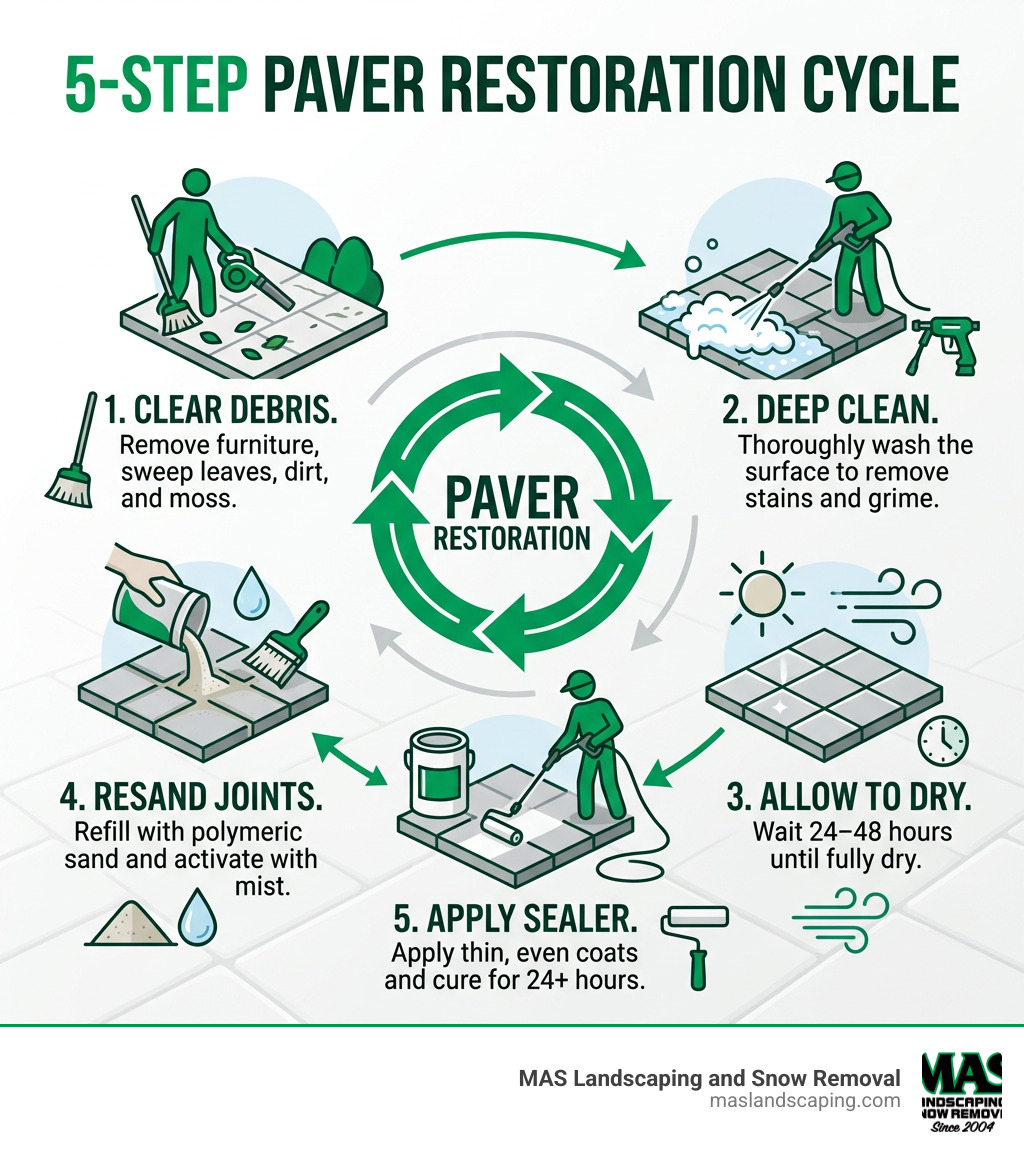
Here’s the quick version of what’s involved:
- Clear and sweep the patio — remove furniture, debris, weeds, and moss
- Deep clean the surface using appropriate cleaners for your paver type and any stains present
- Allow to fully dry — typically 24–48 hours after cleaning
- Refill joints with polymeric sand and activate with a fine mist of water
- Apply sealer in thin, even coats using a sprayer or roller, then allow 24+ hours to cure
A few key facts to know upfront:
- New pavers: Wait 6–12 months after installation before sealing
- Resealing frequency: Every 2–5 years depending on usage and climate
- Best conditions: Dry weather, temperatures between 50–85°F
- Quick test: Pour a small amount of water on your pavers — if it soaks in instead of beading up, it’s time to reseal
Your paver patio takes a beating year-round. Between New England winters, spring rain, summer cookouts, and falling leaves, the surface endures constant stress. Over time, that shows up as faded color, stained surfaces, crumbling joint sand, and stubborn weed growth sneaking through the cracks.
The good news? Most of this damage is preventable — and much of it is reversible.
This guide walks you through everything you need to know to restore and protect your paver patio, whether you’re tackling it yourself or deciding when to call in a professional.
Simple patio paver cleaning and sealing glossary:
Why Patio Paver Cleaning and Sealing is Essential
We often think of pavers as “set it and forget it” features, but they are actually quite porous. Without protection, they act like a hard sponge, soaking up oil from the grill, tannins from fallen leaves, and moisture that leads to mildew.
The financial incentive is significant: landscaping can add up to 20 percent more value to a home. In competitive Massachusetts real estate markets like Lynnfield or Andover, a pristine patio can be the difference between a quick sale and a property that lingers. Research shows you have only seven seconds to make a first impression; a stained, weed-choked walkway sends the wrong message immediately.
Beyond aesthetics, sealing provides several structural benefits:
- Stain Resistance: It creates a barrier that prevents spills from penetrating the surface.
- UV Protection: Much like sunscreen, sealer prevents the sun’s rays from fading the vibrant pigments in your pavers.
- Weed and Pest Prevention: When combined with polymeric sand, sealing hardens the joints, making it a “hostile environment” for weeds and ants.
- Joint Stabilization: It keeps the sand in place, preventing the pavers from shifting or sinking during our harsh New England freeze-thaw cycles.
If you are still on the fence, check out our detailed look at should you seal your paver patio? to see the long-term protection benefits.
Preparing Your Patio: Cleaning and Stain Removal
You wouldn’t wax a dirty car, and you certainly shouldn’t seal a dirty patio. Any dirt, moss, or oil trapped under the sealant becomes a permanent part of your patio’s “look.”
First, clear the deck. Move all patio furniture and planters to a safe area. Sweep the surface thoroughly to remove loose leaves and twigs.
Tackling Tough Stains
Different stains require different weapons. Before the general wash, spot-treat problem areas.
| Stain Type | Recommended Removal Method |
|---|---|
| Oil & Grease | Use a specialized degreaser or liquid dish soap. Apply, scrub with a stiff brush, and rinse. |
| Rust | Apply a professional-grade rust remover. Avoid wire brushes on concrete pavers as they can cause scratches. |
| Organic (Mildew/Algae) | A mixture of water and pool shock or specialized mold cleaners works best. |
| Efflorescence | Use a specific efflorescence cleaner to dissolve the white, powdery salt deposits. |
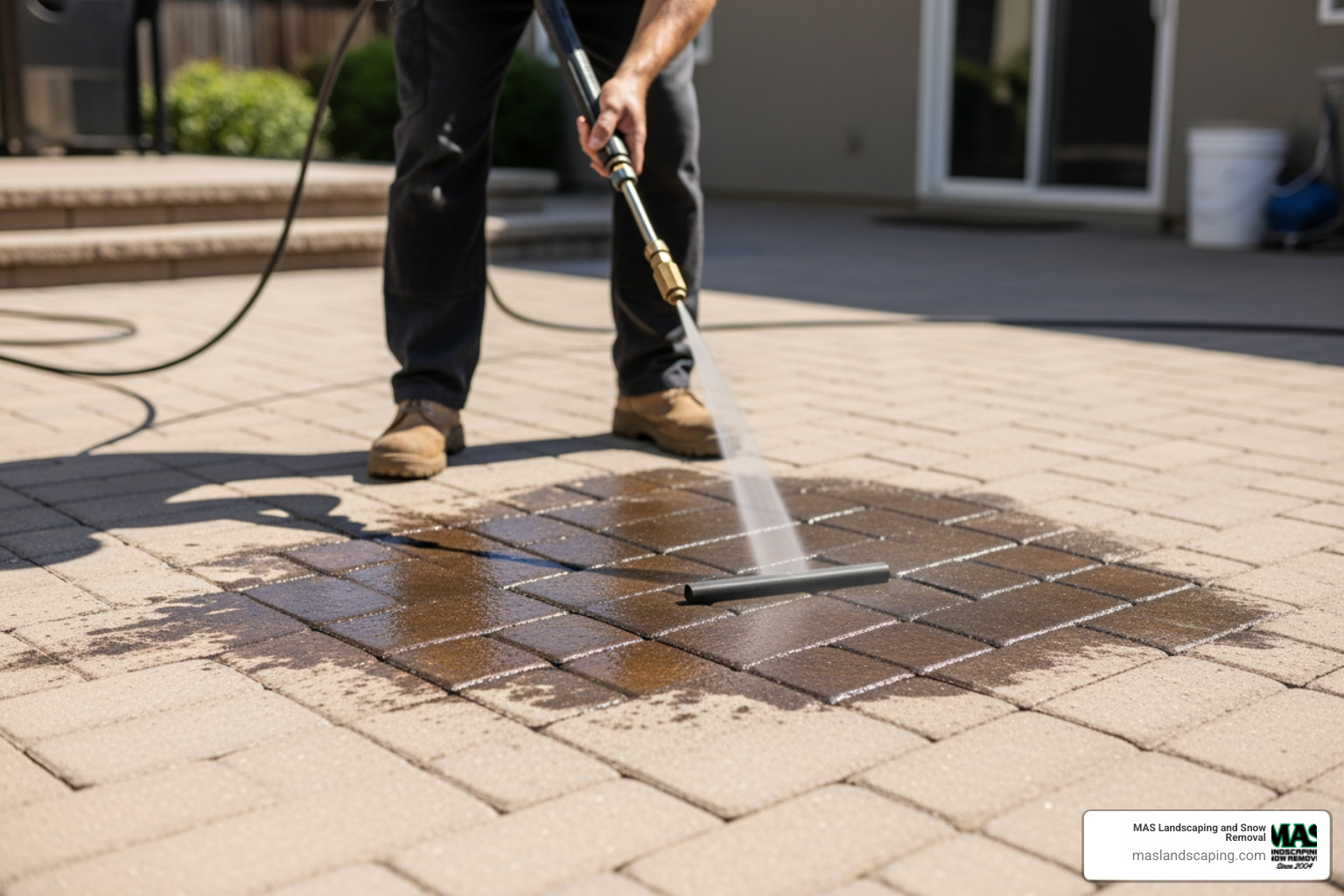
Once spots are treated, it’s time for a deep clean. While you can use a garden hose and a stiff broom, many homeowners opt for a power washer. If you go this route, keep the pressure between 2,500 and 3,000 PSI and keep the nozzle moving to avoid etching the stone. For a deep dive into the mechanics, read our guide on how to seal patio pavers.
Best Practices for Patio Paver Cleaning and Sealing Preparation
Preparation is where most DIY projects go wrong. Here are the professional secrets we use at MAS Landscaping:
- The 6-12 Month Rule: If you just had a new patio installed in Saugus or Peabody, wait! New pavers need 6 to 12 months to “breathe” and allow efflorescence (natural salt deposits) to work its way out. Sealing too early traps these salts, creating a permanent white haze.
- Curing Time: Concrete pavers specifically need at least 14 days to fully cure before any chemicals are applied.
- The Dry Test: The pavers must be bone-dry. We recommend waiting at least 24 to 48 hours after washing before you even think about opening a can of sealer. If moisture is trapped, the sealer will turn cloudy or “blush.”
- Weather Watching: Check the forecast for a 48-hour window of clear skies. Ideal temperatures are between 50°F and 80°F. Avoid windy days, as debris will blow into your wet sealant.
For more on technical specs, see our concrete paver sealer requirements page.
The Step-by-Step Sealing Process
Once the patio is clean and dry, it’s time to stabilize the joints. This is where polymeric sand comes in. Unlike regular play sand, polymeric sand contains additives that cause it to harden into a flexible, water-resistant bond when misted with water.
- Pour and Sweep: Pour the sand over the dry pavers and use a push broom to sweep it into the joints.
- Vibrate (Optional but Recommended): Using a plate compactor helps the sand settle deeply into the joints, preventing future sinking.
- Clear the Surface: This is critical. Use a leaf blower to remove every grain of sand from the top of the pavers. Any sand left on the surface will be permanently glued there once activated.
- Mist Activation: Use a garden hose on a fine mist setting. Dampen the sand without washing it out of the cracks. This “activates” the polymers. Let this dry for another 24 hours.
Using high-quality materials is essential; Techniseal notes that polymeric sand creates a much more homogeneous and durable installation than conventional materials. For more on the restoration aspect, consult our paver restoration guide.
Choosing the Right Products for Patio Paver Cleaning and Sealing
There are two main “flavors” of sealer:
- Water-Based Sealers: These are eco-friendly, have low odors, and are easier to apply. They typically provide a “natural” or matte finish.
- Solvent-Based Sealers: These are the heavy hitters. They penetrate deeper and are generally more durable, but they have strong fumes and require careful application.
You also need to choose your aesthetic:
- Wet Look: This darkens the stone and adds a glossy sheen, making the colors “pop” as if they were just rained on. Check out our wet look paver sealer guide for examples.
- Natural Look: This provides all the protection without changing the appearance of the stone. See our natural look paver sealer guide for more info.
Avoiding Common Mistakes and Maintenance Tips
The most common mistake we see in Essex County is over-sealing. Homeowners think “more is better,” but applying too much sealer prevents the pavers from “breathing.” This leads to peeling and a white, flaky appearance. Always apply in thin, even coats.
- Avoid Pooling: If you see “puddles” of sealer in the joints or low spots, use a foam roller to spread them out immediately.
- Watch the Clock: Most sealers need 24 hours for foot traffic and 48–72 hours before you move heavy furniture or drive vehicles back onto the surface.
- Temperature Matters: If it’s too hot (over 85°F), the sealer will dry too fast and won’t bond properly. If it’s too cold (under 50°F), it won’t cure.
To keep that “just sealed” look, we recommend routine maintenance. Sweep away leaves promptly, as wet leaves can leave permanent tannin stains. An annual rinse with a garden hose is usually enough to keep the surface clear of abrasive grit. For a step-by-step on the application itself, read how to seal paving.
Frequently Asked Questions about Paver Maintenance
When should you seal new pavers after installation?
You should wait 6–12 months. This allows the pavers to settle and ensures that all efflorescence (the white salt that naturally migrates to the surface of concrete) has escaped. If you seal too early, you trap that white powder under the sealer forever.
How often should pavers be cleaned and resealed?
Most paver patios benefit from sealing every two to three years, though high-quality sealants in lower-traffic areas can last up to five years. A good rule of thumb is the “water test”: if water no longer beads on the surface, the protection has worn off.
Should you use a pressure washer on pavers?
Yes, but with caution. High pressure can blast out the joint sand and even pit the surface of softer stones. Always use a wide fan tip and keep the wand at least 12 inches from the surface. If you’re nervous about damaging your stone, it’s often safer to hire a professional who has adjustable-pressure equipment.
Conclusion
At MAS Landscaping and Snow Removal, we’ve spent years perfecting the art of patio paver cleaning and sealing across Saugus, Lynnfield, and the surrounding Middlesex and Essex County areas. We know that a patio isn’t just a collection of stones—it’s where your family spends its summers.
While DIY is possible for the patient homeowner, the process is meticulous. From ensuring the perfect moisture levels to choosing between solvent and water-based products, there are many variables that can affect the final result. If you’d rather spend your weekend relaxing than scrubbing, we are here to help.
When considering the cost, professional restoration is an investment in your property’s longevity. Based on average internet data (and not actual costs for MAS Landscaping), professional cleaning, sanding, and sealing typically ranges from $1.50 to $5.50 per square foot. Factors like the level of staining, the type of sand used, and the choice of sealant will influence the final price.
Ready to bring the “sparkle” back to your outdoor space? Request a professional patio installation or restoration consultation with us today. Whether you are in Danvers, Melrose, or right here in Saugus, we’ll make sure your patio is protected for years to come.