

Is Synthetic Turf Worth the Cost in 2026?
The cost of synthetic turf is one of the first things homeowners and business owners want to understand before committing to a project — and for good reason. It’s a significant investment.
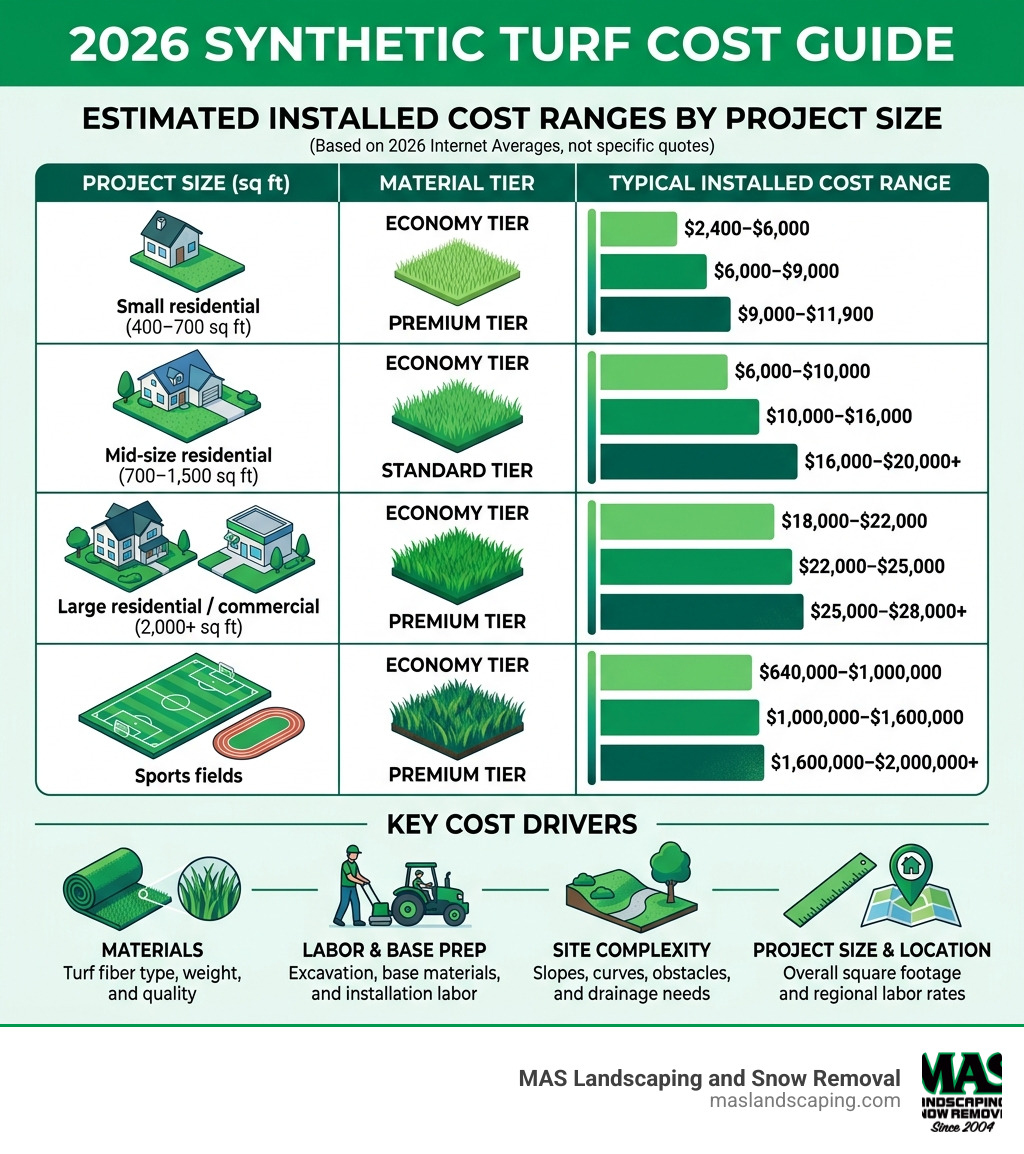
Here’s a quick snapshot of what you can expect to pay (based on average internet data, not actual MAS Landscaping pricing):
| Project Type | Typical Installed Cost Range |
|---|---|
| Small residential (400–700 sq ft) | $2,400 – $11,900 |
| Mid-size residential (700–1,500 sq ft) | $6,000 – $20,000+ |
| Large residential / commercial (2,000+ sq ft) | $18,000 – $28,000+ |
| Sports fields | $640,000 – $2,000,000+ |
Key cost drivers at a glance:
- Materials (turf fiber type and quality)
- Labor and base preparation
- Site complexity (slopes, curves, drainage)
- Project size and location
Greater Boston homeowners are increasingly turning to synthetic turf as a practical alternative to natural grass. Between water restrictions, harsh winters, and the never-ending maintenance cycle, a lawn that looks great year-round without constant upkeep is an appealing idea.
But the upfront price tag can feel like a lot. And with costs varying so widely depending on materials, site conditions, and who you hire, it’s hard to know what a fair quote actually looks like.
This guide breaks down every component of synthetic turf pricing — so you can compare professional installation quotes with confidence and know exactly what you’re paying for.
Breaking Down the Average cost of synthetic turf in 2026
When we look at the landscape of 2026, the cost of synthetic turf has become more transparent, yet the range remains wide. Nationally, homeowners see a massive spectrum of pricing. It is important to remember that the figures we discuss are average costs based on internet data and not actual costs for MAS Landscaping. We always recommend a personalized consultation to get a precise figure for your specific North Shore or Middlesex County property.

Generally, the total installed price is split between materials and labor. Materials usually account for about 40% to 50% of the budget, while labor, base preparation, and equipment make up the remainder. In high-demand areas like Lynnfield or Reading, labor rates can be higher than the national average due to the specialized skill required to handle our unique New England soil conditions.
Typical Residential Project Costs (Internet Averages)
To give you an idea of the scale, here is how residential projects often break down based on square footage. Note the wide ranges; high-end custom work can easily be 3x the price of a basic “economy” install.
| Project Size (sq ft) | Low-End Estimate | Average Estimate | High-End / Premium |
|---|---|---|---|
| 300 sq ft | $1,500 | $3,820 | $11,500+ |
| 500 sq ft | $2,500 | $6,375 | $19,000+ |
| 1,000 sq ft | $5,000 | $12,725 | $38,000+ |
| 1,500 sq ft | $7,500 | $19,000 | $57,000+ |
For a deeper dive into how these numbers are calculated, you can check out this Fake Grass Cost Per Square Foot: Price Guide and Budget Tips 2026 – LatestCost – Real-Time Price Insights. If you are specifically looking at how this applies to local yards, see our guide on fake grass for lawns pricing.
Material Quality and the cost of synthetic turf
Not all “fake grass” is created equal. The material you choose is the foundation of your investment. In 2026, there are three primary types of plastic used in turf fibers:
- Polyethylene: The most popular choice for residential lawns. It strikes a great balance between a soft, natural feel and solid durability.
- Nylon: The “heavyweight champion” of turf. It is incredibly resilient and can handle extreme heat without losing its shape, though it carries a higher price tag.
- Polypropylene: Usually the most budget-friendly option. It’s great for low-traffic decorative areas but may not hold up as well to the pitter-patter of energetic dogs or kids.
Beyond the plastic type, you’ll hear us talk about face weight. This refers to how many ounces of fiber are in a square yard. A higher face weight means a denser, lusher lawn, which naturally increases the cost of synthetic turf. Blade shape also matters; “W” or “V” shaped blades are engineered to stand upright even after being walked on, whereas flat blades might mat down more easily. For more technical details, visit our page on synthetic grass price per square foot.
Site Complexity and Installation Variables
We often tell our clients in Saugus and Melrose that no two yards are the same. A flat, rectangular lot is a dream to install. However, if your yard looks like a mini-mountain range or has more curves than a racetrack, the price will climb.
- Slopes: Installing on a hill requires extra labor and specialized securing methods to prevent the turf from shifting. This can add 50% or more to labor costs.
- Curves: Every curve requires custom cuts. This leads to more material waste and significantly more time for the installers to ensure the seams are invisible.
- Soil Conditions: In places like Danvers or Peabody, we often encounter rocky soil or heavy clay. This requires more extensive excavation and a thicker base of crushed stone to ensure proper drainage.
Choosing experienced artificial lawn installers is vital here, as they know how to navigate these local challenges without cutting corners.
Key Factors Influencing the Price of Artificial Grass
When you receive a quote, it isn’t just a random number. It’s a calculation based on several moving parts. Understanding these helps you decide where to splurge and where to save.
- Fiber Type & Pile Height: A taller “blade” of grass looks more luxurious but requires more infill to keep it standing up.
- Infill Choices: Infill is the “soil” of the synthetic world. It weighed down the turf and keeps the blades upright. Options range from simple silica sand to antimicrobial acrylic-coated granules (great for pets) or cooling infills that lower the surface temperature on hot July days.
- Substrate Preparation: This is the most important part you’ll never see. We have to remove 3-4 inches of existing grass and soil, then replace it with a compacted base of crushed stone. If this isn’t done right, your lawn will eventually look like a lumpy carpet.
- Local Labor Rates: In the Boston area, skilled labor is in high demand. Professional crews ensure the job is done once and done right.
To learn more about the different styles available, check out our section on the artificial lawn.
Professional vs. DIY: Evaluating the Total Investment
The “Do-It-Yourself” route is tempting. You might save on the immediate labor costs, but it’s a massive undertaking. A 500-square-foot lawn requires moving tons of dirt and stone by hand (or renting expensive equipment like sod cutters and plate compactors).
The risks of DIY include visible seams (the “Frankenstein” look), poor drainage leading to puddles, and a lack of warranty. Most professional installs come with a 10-to-15-year product warranty and a labor guarantee. If you’re brave enough to try, we have a guide on how to install fake grass, but most of our neighbors in Everett and Malden find that the peace of mind offered by a pro is worth the extra investment.
The Long-Term ROI and Maintenance cost of synthetic turf
Is it a cost-saving investment? In many cases, yes. While the upfront cost of synthetic turf is higher than sod, the “break-even” point often arrives within 3 to 6 years.
- Water Savings: You can save tens of thousands of gallons of water per year.
- Maintenance Savings: No more gas for the mower, no more expensive fertilizer treatments, and no more paying for spring and fall cleanups.
- Time Savings: Instead of spending 4 hours every Saturday morning maintaining the lawn, you get that time back for your family.
Ongoing maintenance is minimal but not zero. You’ll need to occasionally brush the fibers to keep them upright and hose off pet waste. For more on this, see our article on low maintenance fake grass.
Hidden Expenses and Large-Scale Project Considerations
When budgeting, don’t forget the “extras” that can pop up. Permits are sometimes required in certain Middlesex County towns, especially if you are changing the drainage profile of your land.
Other potential costs include:
- Grass Removal & Haul-away: Getting rid of old sod isn’t free; landfills charge by weight.
- Edging: Specialized bender board or masonry edging keeps the stone base contained.
- Drainage Upgrades: If your yard already has a “lake” every time it rains, we may need to install French drains or additional catch basins.
For those looking at much larger projects, such as community parks or school fields, the scale changes everything. A full-size football field can range from $640,000 to over $2,000,000. These projects require shock pads for player safety and advanced drainage systems. You can find a detailed breakdown here: Artificial Turf Football Field Cost: $640K-$2M Breakdown (2026). We also offer insights for public spaces in our guide to fake grass for parks.
Budgeting for Specialized Turf Applications
Different uses require different “specs”:
- Pet-Friendly Turf: Requires high-flow drainage backings and antimicrobial infills to prevent odors. Check out our pet turf installation cost guide for specifics.
- Putting Greens: These use a very short, dense pile and require much more precise base leveling to ensure a true “roll.”
- Rooftops/Patios: These often require “pedestal” systems or drainage mats to ensure water doesn’t trap against the building structure.
Frequently Asked Questions about Synthetic Turf
Is artificial turf a worthwhile investment in 2026?
Absolutely. Beyond the financial ROI, it increases your property’s curb appeal and provides a usable space 365 days a year—no more “mud season” in March! It’s an excellent way to reclaim your yard. Read more about artificial turf for yards.
How much does it cost to maintain artificial grass annually?
Internet data suggests an annual maintenance budget of $250 to $750 for professional “refresh” services, which include power brushing and infill top-offs. If you do it yourself, your cost is essentially just the price of a stiff broom and a little bit of water. Many of our clients hire artificial lawn installers for an annual tune-up to keep the lawn looking brand new.
What are the main components of a turf installation quote?
A comprehensive quote should include:
- Materials: The turf itself, infill, and seaming tape/glue.
- Base Materials: Tons of crushed stone and weed barrier.
- Labor: Excavation, hauling, base compaction, and turf fitting.
- Equipment: Rental of skid steers, dumpsters, and compactors.
For more on the square foot breakdown, see synthetic grass price per square foot.
Conclusion
At MAS Landscaping and Snow Removal, we’ve spent years helping our neighbors in Saugus, Lynnfield, and across the North Shore create outdoor spaces they actually enjoy. We know that the cost of synthetic turf is a major consideration, which is why we focus on providing professional, transparent service that stands the test of time.
Whether you’re looking to build a backyard putting green in Andover or a pet-safe play area in Medford, our local expertise ensures your project is handled with care from the first shovel in the ground to the final brush of the grass blades. Ready to ditch the mower? Explore our artificial lawn services and let’s build something beautiful together.