



Is Driveway Paver Sealing Worth It? Here’s What You Need to Know
Driveway paver sealing is the process of applying a protective coating to brick, concrete, or stone pavers to shield them from stains, UV damage, moisture, and everyday wear.
Quick answer: Yes, sealing your driveway pavers is worth it for most homeowners. Here’s why it matters:
- Protects against stains from oil, grease, and chemicals
- Enhances color and curb appeal with wet-look or natural finishes
- Stabilizes joint sand to reduce weed growth and erosion
- Extends the life of your driveway by reducing freeze-thaw damage
- Makes cleaning easier year-round
Your driveway takes a beating. Vehicle traffic, New England winters, UV rays, and the occasional oil drip all chip away at your pavers over time. Without a sealer, those porous surfaces absorb moisture and contaminants — leading to fading, cracking, and weed growth.
The good news? Sealing is one of the most effective and affordable maintenance steps you can take. Most sealers need reapplication only every 3–5 years, making it a low-effort, high-reward investment.
Whether you’re sealing a brand-new driveway or refreshing an older one, this guide covers everything you need to make the right call.
Explore more about Driveway paver sealing:
Why Driveway Paver Sealing is Essential for Your Home
When we talk about hardscaping in areas like Lynnfield or Saugus, we aren’t just talking about aesthetics; we’re talking about survival. Our local climate puts immense pressure on outdoor surfaces. Driveway paver sealing acts as a sacrificial layer, taking the brunt of the environmental assault so your expensive pavers don’t have to.
Think of sealer like sunscreen for your driveway. Without it, the sun’s UV rays will eventually bleach the vibrant pigments out of your concrete pavers, leaving them looking gray and weathered. Beyond looks, sealing provides a barrier against moisture. In Massachusetts, the freeze-thaw cycle is a major enemy. When water gets into the pores of an unsealed paver and freezes, it expands, causing “spalling” or surface chipping.
Sealing also plays a critical role in joint stabilization. By hardening the sand between the pavers, the sealer prevents it from washing away during heavy rain and discourages ants from nesting or weeds from taking root. For more technical details, check out our guide on concrete paver sealer for broader context.

The Core Benefits of Sealing Driveway Pavers
- Color Enhancement: Depending on the product you choose, sealing can deepen the tones of your pavers, making them look “forever new.”
- Erosion Control: It locks the joint sand in place, preventing the structural shifting of the pavers over time.
- Oil and Chemical Resistance: For driveways, this is huge. Sealer prevents motor oil, transmission fluid, and de-icing salts from soaking into the stone and creating permanent eyesores.
- Mildew Prevention: By sealing the pores, you reduce the organic growth of mold and mildew that thrives in damp, shaded areas of the driveway.
Potential Drawbacks and Slip Resistance
While we highly recommend sealing, it’s important to be aware of potential pitfalls if the job isn’t done correctly. One common issue is “blushing,” which occurs when moisture is trapped under the sealer, creating a white, cloudy film. This usually happens if the pavers weren’t 100% dry before application.
Another concern is surface slickness. High-gloss “wet look” sealers can become slippery when wet, especially on sloped driveways. To combat this, we often use anti-skid additives—fine, transparent grits mixed into the sealer to provide traction. If you’re worried about safety, you might prefer a penetrating sealer that protects from within without changing the surface texture.
Choosing the Right Sealer: Types and Finishes
Selecting a sealer is not a “one size fits all” situation. You need to balance the look you want with the level of protection required for a high-traffic driveway.
| Feature | Water-Based Sealer | Solvent-Based Sealer |
|---|---|---|
| Appearance | Usually Natural or Low-Lustre | Often High-Gloss “Wet Look” |
| Odor | Very Low | Strong Chemical Smell |
| Eco-Friendliness | High (Low VOCs) | Lower (High VOCs) |
| Application | Can be applied to damp surfaces | Must be applied to bone-dry surfaces |
| Durability | 2–3 years | 3–5 years |
| Breathability | High | Lower |
For many of our clients who prefer a subtle touch, a natural look paver sealer is the way to go. It provides all the protection without changing the color or shine of the stone.
Water-Based vs. Solvent-Based Sealers
Water-based sealers have come a long way. They are environmentally friendly, easy to clean up, and have very low odor. They are also “breathable,” meaning they allow interior moisture to escape, which reduces the risk of blushing.
Solvent-based sealers, on the other hand, are known for their “pop.” They excel at deepening colors and providing a hard, chemical-resistant finish. However, they are harsher on the environment and require much stricter application conditions. In our experience, high-grade water-based polyurethanes often provide the best of both worlds—durability and ease of use.
Achieving the Perfect Look: Wet Look vs. Natural Look
The “wet look” is a fan favorite. It mimics the appearance of pavers right after a rainstorm—vibrant and dark. If you have multi-colored pavers, a wet look paver sealer will make those colors stand out. If you prefer the original, matte texture of your stones, stick with a penetrating “natural look” sealer.
How to Seal a Paver Driveway: A Step-by-Step Guide
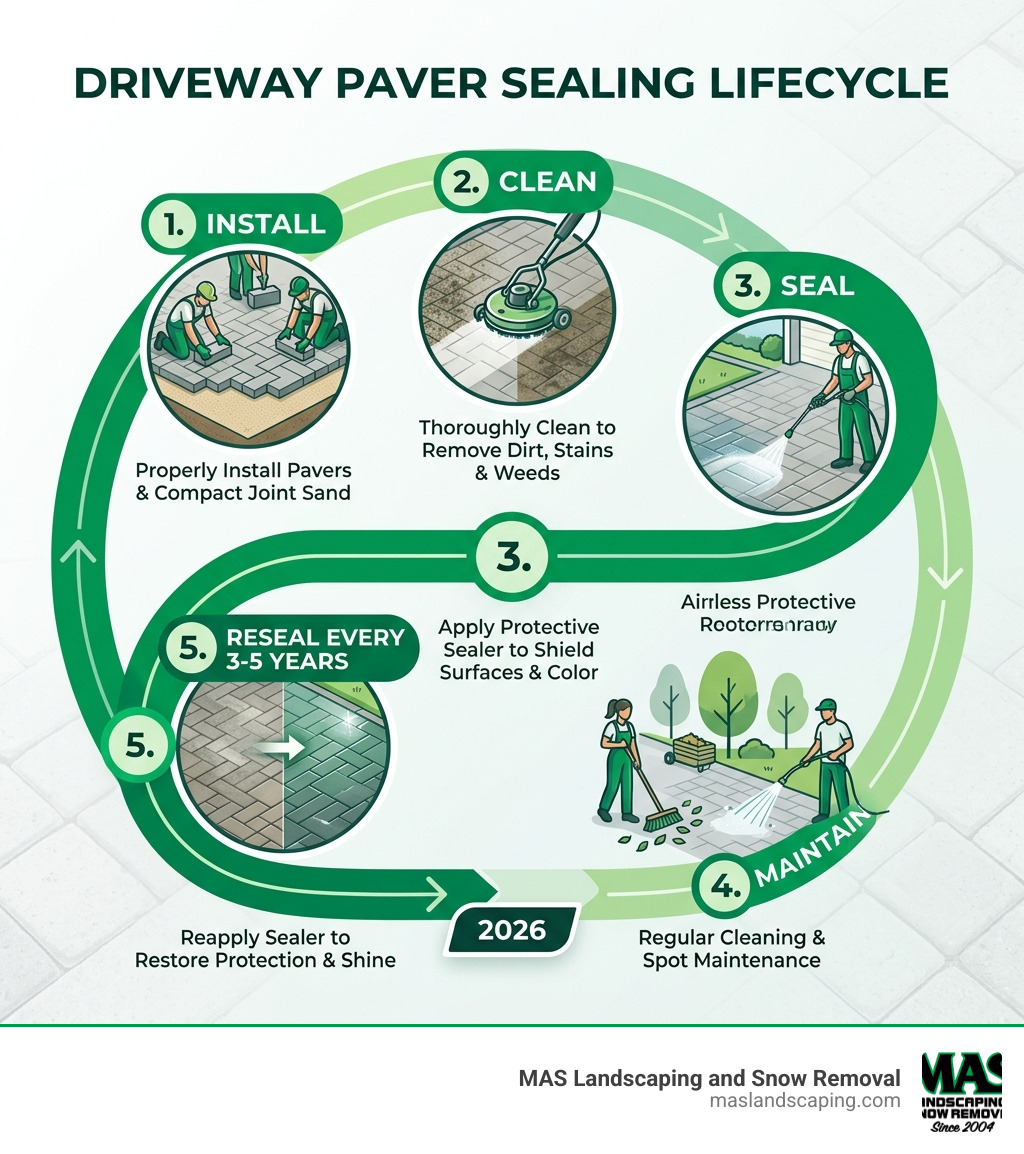
Applying the sealer is actually the fastest part of the job. The real work is in the preparation. If you seal over dirt or weeds, you’re just preserving the mess!
Preparing Your Driveway for Sealing
- Clear the Area: Remove vehicles, trash cans, and any furniture.
- Deep Cleaning: Use a pressure washer (carefully!) to remove dirt, moss, and stains. For oil spots, a professional-grade degreaser is necessary.
- Efflorescence Treatment: If you see white, powdery salt deposits, use an efflorescence cleaner to remove them before sealing.
- Joint Sand Replenishment: After pressure washing, some sand will be gone. We sweep in new polymeric sand or joint sand to ensure the pavers are locked tight.
- Dry Time: This is the most skipped step. The driveway must be completely dry. We usually recommend waiting at least 24 to 48 hours after washing before applying any sealer. You can find more details on this process in our guide on how to seal paving or this DIY guide from This Old House.
Professional Techniques for Driveway Paver Sealing
When we handle Driveway paver sealing for our neighbors in Essex and Middlesex counties, we typically use a “flood coat” method with a low-pressure sprayer. This ensures the sealer penetrates deep into the sand joints.
We often follow the sprayer with a roller (a technique called “back-rolling”) to ensure an even finish and to prevent puddling in the low spots of the pavers. Two thin coats are always better than one thick coat. A thick coat can peel or turn cloudy, whereas thin coats bond better to the surface.
Maintenance, Timing, and Estimated Costs
Timing is everything. You can’t seal a driveway in the middle of a Medford thunderstorm. The ideal conditions are temperatures between 50°F and 90°F with no rain in the forecast for at least 24 hours.
When to Seal New Pavers and Reapplication Cycles
If you just had a beautiful new paver driveway installed in Reading or Peabody, don’t rush to seal it immediately. Most manufacturers recommend waiting 60 to 90 days to allow “efflorescence” (natural salts) to work its way out of the concrete.
Once sealed, your driveway will generally need a refresh every 3 to 5 years. If you notice water is no longer beading on the surface or the color is starting to fade, it’s time for a paver restoration.
Estimated Costs and Professional Value
We know homeowners like to plan their budgets. Based on average internet data (and not actual costs for MAS Landscaping), the cost for professional sealing generally ranges from $0.50 to $5.00 per square foot, with a national average of approximately $1.50.
For a standard 2-car driveway (roughly 400–600 square feet), you might see prices ranging from $300 to $3,500 or more (against a national average of $1,000), depending on the level of cleaning required, the type of sealer used, and the condition of the joints. These are average ranges based on national data; the high end can be significantly more if extensive repairs or specialized high-solids sealers are requested.
While DIY is possible, hiring local paver sealing pros ensures you have access to commercial-grade sprayers and industrial-strength cleaners that aren’t available at big-box stores.
Frequently Asked Questions about Driveway Sealing
Can sealing make my driveway pavers slippery?
Yes, topical (film-forming) sealers can be slick. If you have a steep driveway in Melrose or Stoneham, we recommend using a penetrating sealer or adding a slip-resistant “shark skin” additive to the final coat to ensure safety for both cars and pedestrians.
How long should I wait to drive on my sealed pavers?
Patience is a virtue! While the sealer might feel dry to the touch in 4 hours, it hasn’t fully cured. We recommend waiting 24 hours for foot traffic and at least 48 to 72 hours before driving your car onto the surface. In high humidity, wait an extra day.
What happens if it rains immediately after sealing?
If it rains within a few hours of application, the sealer can wash out or develop a “blush” (cloudy spots). If this happens, don’t panic. Usually, the sealer can be stripped or re-emulsified by a professional to fix the finish.
Conclusion
Your driveway is more than just a place to park your car—it’s a major part of your home’s curb appeal and value. At MAS Landscaping and Snow Removal, we’ve spent years helping homeowners in Saugus, Everett, Malden, and throughout the North Shore protect their hardscape investments.
Whether you need a fresh installation or a professional seal coat to bring your old pavers back to life, we bring local expertise and professional-grade tools to every job. Don’t let the New England weather win—protect your pavers today.
