


Why Fire Pit Construction Can Transform Your Backyard
Fire pit construction is the process of building a safe, durable outdoor fire feature using materials like concrete blocks, fire brick, gravel, and construction adhesive — typically set into or above the ground in a circular or square shape.
Here’s what a basic fire pit build involves:
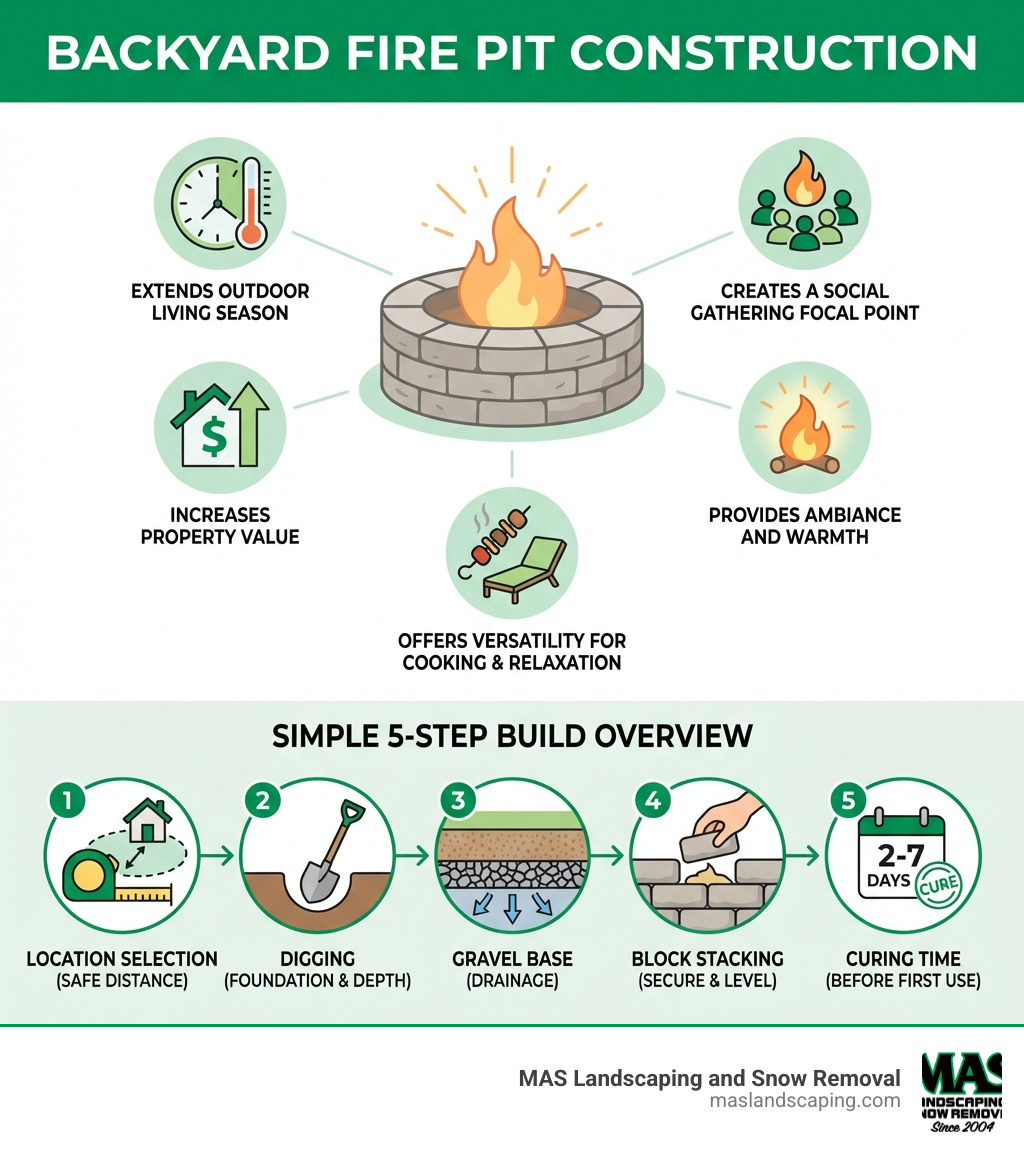
- Choose a safe location — at least 10 feet from your home (25 feet is ideal)
- Mark and dig the foundation — usually 7–18 inches deep depending on the design
- Add a gravel drainage base — 4–6 inches thick
- Stack fire-rated blocks or bricks — typically 3–4 courses high
- Secure with construction adhesive — and let it cure 2–7 days before first use
A well-built fire pit measures 36–44 inches in diameter, fits naturally into most backyards, and can cost as little as $100 for a simple DIY build.
Picture this: it’s a cool evening, and your backyard has become the place everyone wants to be. A crackling fire, good company, and a space that feels intentional and welcoming.
That’s what a well-built fire pit does. It’s not just a pile of bricks. It’s a social centerpiece that extends your outdoor season, adds real value to your property, and gives your yard a purpose.
But getting it right matters. The wrong materials can crack — or worse, explode — under high heat. Poor placement creates smoke problems and safety hazards. And skipping drainage leads to a soggy, unusable pit after every rain.
This guide walks you through everything you need to know — from picking the right spot to laying the final course of blocks.
Easy fire pit construction word list:
Planning Your Fire Pit Construction Project
Before you pick up a shovel, we need to talk about the “boring” stuff that keeps your house from catching fire. Planning is the most critical phase of fire pit construction. You need to balance aesthetics with strict safety protocols and local Massachusetts ordinances.
First, consider your fuel type. Are you a purist who loves the “crackle and pop” of real wood, or do you prefer the “flip-of-a-switch” convenience of gas? Each has its own construction requirements. Wood-burning pits are generally cheaper to build but require more maintenance and ash removal. Gas pits require running a line (which we highly recommend leaving to professionals) but offer a smokeless experience.
You should also check with your local fire department or municipal office in towns like Saugus, Lynnfield, or Everett. Local ordinances govern recreational fires, and some Homeowners Associations (HOAs) have specific rules about permanent structures. It’s also a smart move to notify your homeowner’s insurance company about your new addition.
To help you decide, here is a quick comparison:
| Feature | Wood-Burning Fire Pit | Gas Fire Pit |
|---|---|---|
| Ambiance | High (smell, sound, dancing flames) | Moderate (clean flames, no smoke) |
| Convenience | Low (requires wood, cleaning ash) | High (instant on/off) |
| Installation | Easier DIY project | Complex (requires gas line/tank) |
| Maintenance | Regular ash removal | Low (periodic burner cleaning) |
| Safety | Higher spark risk | Lower risk; adjustable flame |
For more inspiration on how to integrate these features into your yard, check out our Backyard Firepit Design guide.
Choosing a Safe Location for Fire Pit Construction
Location isn’t just about where the view is best; it’s about physics and safety. According to fire pit safety tips from Allstate, you should never place a fire pit under overhanging branches or near dry shrubbery.
Here are our non-negotiable rules for placement:
- The Distance Rule: Maintain a minimum of 10 feet from any house, shed, or flammable structure. However, 25 feet is the “gold standard” for safety.
- The Overhead Rule: Look up! Ensure there are no low-hanging tree limbs or power lines.
- The Ground Rule: Choose a level spot. If your yard slopes, you’ll need to dig deeper on the high side to ensure the base of the pit is perfectly flat.
- The Utility Rule: Always call 811 before you dig to ensure you aren’t hitting underground gas, water, or electric lines.
For a deeper dive into how placement affects your overall yard flow, see our Firepit Landscape Design Guide.
Selecting Essential Materials and Tools
One of the biggest mistakes in DIY fire pit construction is using the wrong stone. Never use river stones. They can trap moisture inside, and when that moisture turns to steam under high heat, the rocks can literally explode.
Instead, gather these essential materials:
- Blocks/Bricks: Use fire-rated bricks (refractory bricks) for the interior or high-quality concrete retaining wall blocks. Trapezoidal blocks are perfect for circular pits because they fit snugly without gaps.
- Steel Fire Ring: This is a game-changer. It protects your stone from direct heat and gives the pit a clean, finished look.
- Base Materials: You’ll need crushed gravel (for drainage) and paver sand (for leveling).
- Adhesive: Use a high-temperature masonry or construction adhesive to secure the blocks.
- Tools: Shovel, level, mallet, measuring tape, string, and marking paint.
If you are looking for a specific list of high-quality pavers, How to Build a Fire Pit offers great material suggestions.
Step-by-Step Guide to DIY Fire Pit Construction
Now for the fun part: getting your hands dirty. Building a fire pit is a rewarding weekend project, but it requires precision. If the first layer isn’t level, the whole thing will look crooked by the time you reach the third course.
Preparing the Foundation and Drainage
A fire pit without drainage is just a very small, very dirty swimming pool. To avoid this, you need a solid foundation.
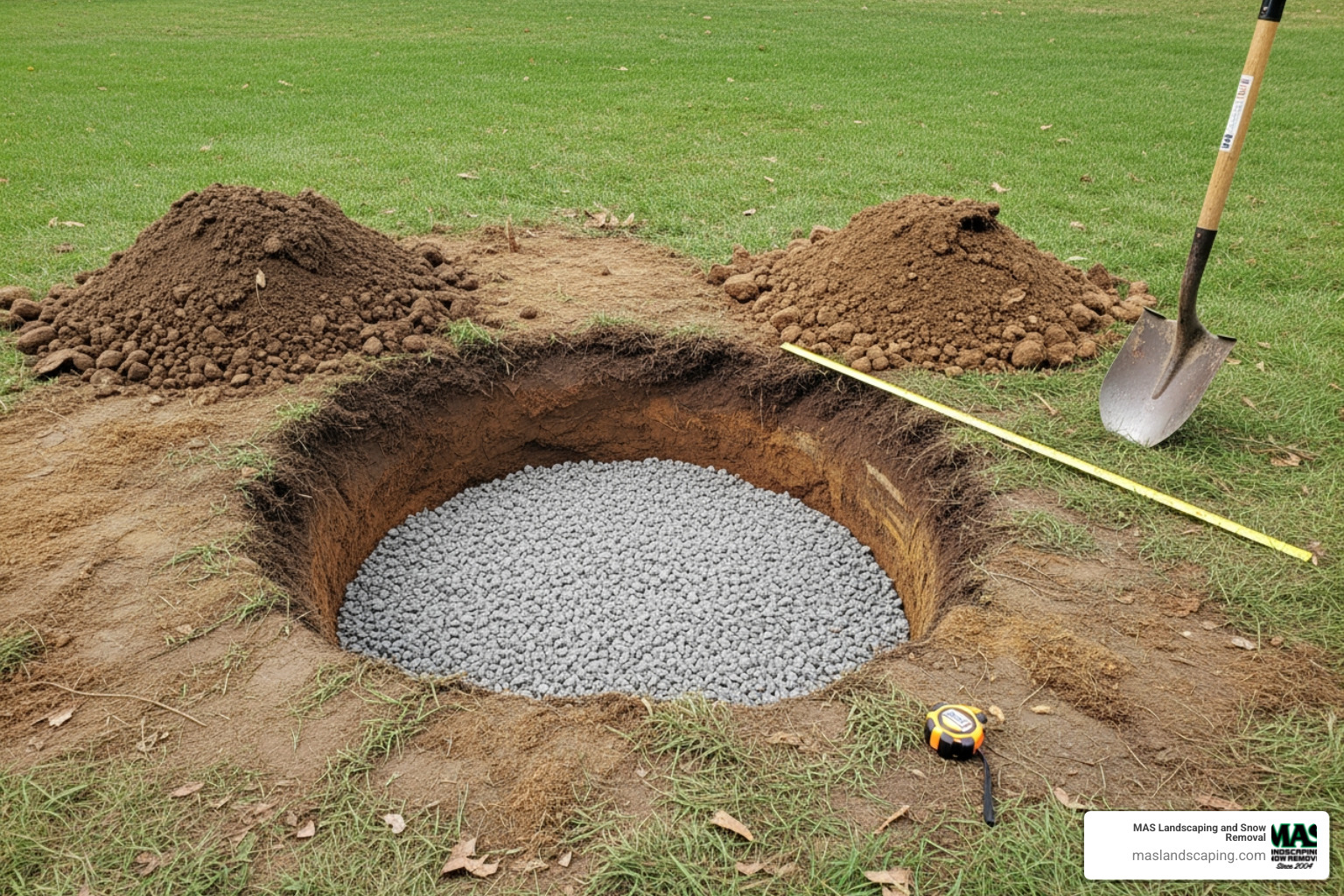
- Mark the Layout: Use a stake in the center and a string to draw a perfect circle with marking paint. For a standard 36-inch interior pit, your marked circle should be about 40–44 inches to account for the thickness of the blocks.
- Dig the Hole: Excavate the area to a depth of about 7–12 inches. If you are building an in-ground pit, you might go as deep as 18 inches.
- Establish Drainage: Fill the bottom 4–6 inches with crushed gravel. This allows rainwater to seep into the ground rather than sitting in the pit.
- Compact and Level: Use a hand tamper to pack the gravel down tight. Add a 1–2 inch layer of paver sand on top, and use your level to make sure it’s perfectly flat.
For more technical details on site prep, see our guide on Hardscape Install or follow the steps in How to Build an In-Ground Fire Pit.
Building the Walls and Securing Blocks
The walls provide the structure and safety of your pit. Most fire pits are 3 to 4 courses (layers) high, reaching about 12–20 inches off the ground.
- Lay the First Course: This is the most important step. Place your blocks on the leveled sand. Use a rubber mallet to tap them into place, checking the level of every single block.
- Stagger the Joints: When you start the second layer, place the blocks so they bridge the seams of the layer below. This “brick-bond” pattern provides maximum stability.
- Leave an Oxygen Gap: (Pro Tip!) Leave a small, half-inch gap between two blocks in the second course. This allows air to flow into the base of the fire, reducing smoke and helping the wood burn better.
- Apply Adhesive: Once you’ve test-fitted the blocks and the steel ring, apply beads of construction adhesive between the layers.
- Curing Time: Do not light a fire immediately! Construction adhesive usually needs 2 to 7 days to fully cure. Patience here prevents your blocks from shifting later.
For professional-grade tips on laying stone, see our Paver Installation services page.
Design, Seating, and Safety Enhancements
A fire pit is only as good as the area around it. You don’t want your guests huddling on the grass. Creating a dedicated seating area makes the space feel like a “room” in your backyard.
Creating a Functional Seating Area
When designing your seating area, think about “the 7-foot rule.” You want to keep the legs of your furniture about 6 to 7 feet away from the edge of the fire. This gives people enough room to move around without getting scorched.
- Materials: Crushed limestone or pea gravel are popular DIY choices for the seating area. They are affordable and provide a nice “crunch” underfoot.
- Preparation: Lay down landscape fabric before adding your gravel to prevent weeds from poking through.
- Dimensions: A 12-foot radius (24-foot diameter) around the pit is usually the “sweet spot” for a comfortable gathering of 4–6 people.
If you’re looking for professional help to design the perfect layout, searching for Backyard Patio Designers Near Me can connect you with local experts who understand the Massachusetts climate and soil. You can also explore our Patio Installation page for more ideas.
Essential Accessories for Fire Pit Construction
To take your fire pit construction to the next level, consider these “must-have” accessories:
- Spark Screens: Essential for wood-burning pits to prevent embers from flying onto your lawn or guests.
- Grilling Grates: Transform your fire pit into a rustic BBQ station.
- Protective Covers: A heavy-duty cover protects your stone from the harsh New England winters and keeps the pit dry and ready for use.
- Gas Inserts: If you want the look of stone but the ease of gas, a Natural Gas Firepit insert can be installed inside your stone walls.
For a classic look, How To Build a DIY Fire Pit provides excellent advice on finishing touches.
Maintenance and Cost Considerations
Your fire pit is an investment. To keep it safe and beautiful, you need a little “TLC.”
- Ash Removal: For wood-burning pits, remove ash after every 2–3 uses. Excess ash blocks airflow and makes it harder to start fires.
- Structural Inspection: Every spring, check your blocks for cracks. The freeze-thaw cycle in Massachusetts can be tough on masonry.
- Winterization: If you have a gas pit, follow our Gas Firepit Installation Complete Guide for winterizing your lines and burners.
Average Costs for Fire Pit Projects
Based on average internet data, the cost of fire pit construction can vary wildly depending on whether you do it yourself or hire a pro.
- DIY Basic Build: $100 – $500. This usually covers basic concrete blocks, gravel, and a simple metal ring.
- DIY Advanced/In-Ground: $500 – $1,500. This includes higher-end stone, a larger seating area with gravel, and better drainage systems.
- Professional Installation: $1,500 – $10,000+. For custom-built stone pits with integrated gas lines, seating walls, and professional Patio Installation, costs can reach the higher end of the spectrum.
Please note: These are average costs based on internet data and are not actual costs for MAS Landscaping. For a personalized quote, it is best to consult with a local professional. You can find more about budgeting in our Paver Patio Installation Cost guide.
Frequently Asked Questions about Fire Pit Construction
How deep should I dig for a fire pit foundation?
For a standard above-ground pit, 7 to 12 inches is sufficient. This allows for 6 inches of gravel and a layer of sand. For in-ground pits, you should dig 18 inches deep to ensure proper drainage and airflow.
What is the safest distance from my house to build a fire pit?
The absolute minimum is 10 feet, but we strongly recommend 25 feet. This keeps heat and stray sparks away from your siding, windows, and roofline.
Can I use regular bricks for my fire pit walls?
No. Standard “red” bricks are not designed for extreme heat and can crack or shatter. You must use fire-rated bricks (refractory bricks) for the interior or stones specifically rated for high-heat environments.
Conclusion
Whether you choose a simple DIY ring or a sprawling custom-built stone masterpiece, fire pit construction is one of the best ways to upgrade your life in Massachusetts. It turns a plain backyard into a destination.
At MAS Landscaping and Snow Removal, we take pride in helping our neighbors in Saugus, Lynnfield, Everett, and beyond create outdoor spaces they truly love. We understand the local geography, from the rocky soil of Essex County to the specific permitting needs of Middlesex County.
If you’re ready to move beyond the DIY phase and want a fire pit that is built to last a lifetime, we are here to help. From professional Hardscaping Services to complete backyard transformations, our team brings local expertise and a commitment to quality to every project.
Let’s get the fire started—safely and beautifully. Reach out to us today to discuss your next backyard project!