




Why Choosing the Right Concrete Walkways Contractor Matters
Concrete walkways contractors are professionals who design, install, and maintain pathways connecting your home or business to driveways and outdoor spaces. Here’s what to look for when searching for the right one:
Key Traits of a Qualified Concrete Walkways Contractor:
- Licensed and Insured – Protects you from liability and ensures professional standards
- Local Experience – Understands New England’s freeze-thaw cycles and soil conditions
- Portfolio of Work – Can show examples of past walkway projects with various finishes
- Clear Communication – Provides transparent quotes, timelines, and project details
- Warranty Offered – Stands behind their workmanship with comprehensive guarantees
A well-installed concrete walkway improves curb appeal, increases home value, and provides a safe path. A quality walkway can last 20-40 years with proper maintenance, making it a smart investment in your property’s exterior.
However, not all concrete contractors are created equal. The difference between a walkway that cracks in a few years and one that lasts decades is proper ground preparation, the right concrete mix, and skilled finishing. Hiring an inexperienced contractor can lead to costly damage.
With the right knowledge, you can find a contractor who will deliver a beautiful, durable walkway that withstands New England’s harsh weather.
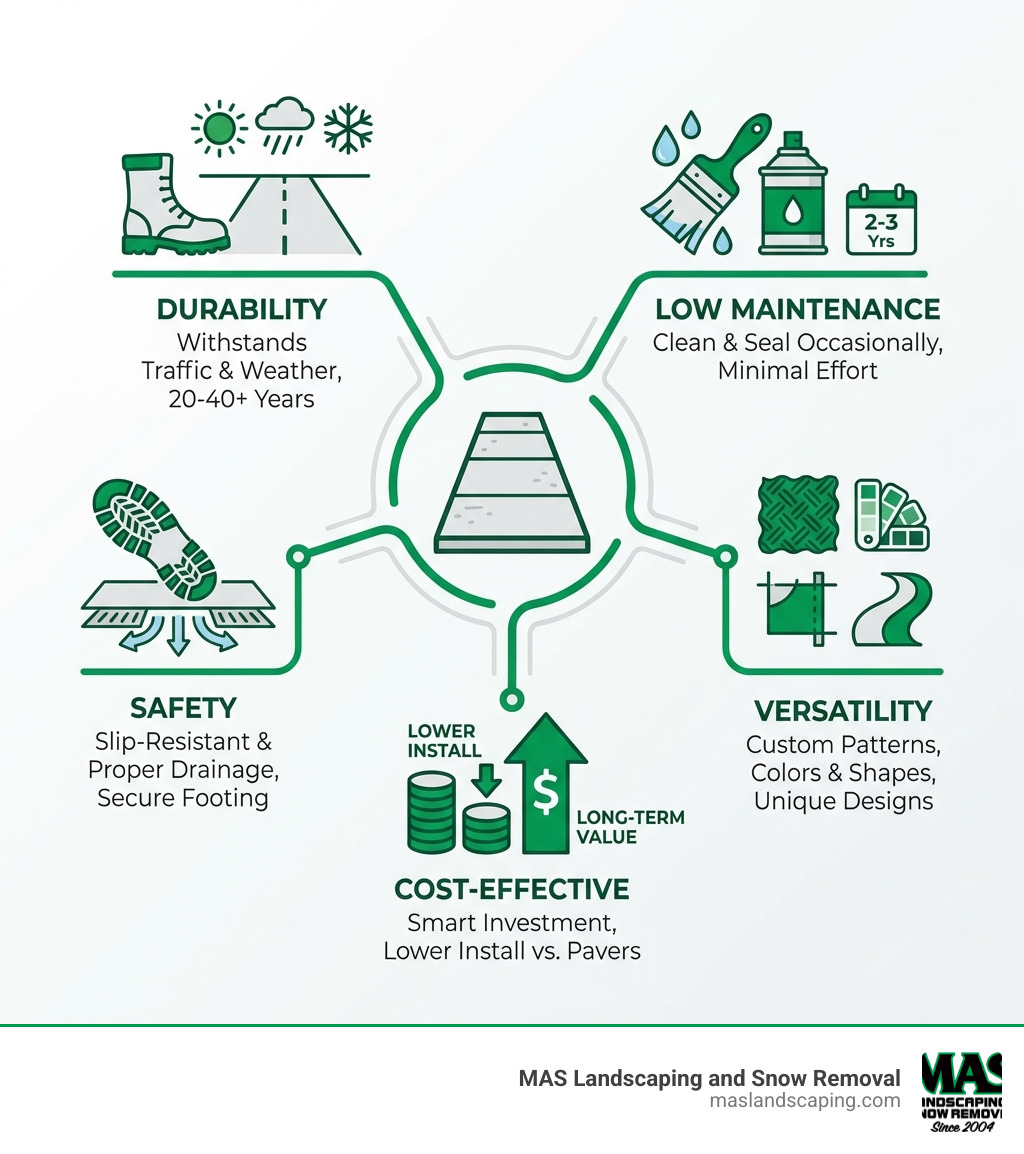
Key terms for concrete walkways contractors:
The Enduring Appeal of Concrete Walkways
For pathways in Saugus, MA, and surrounding areas like Everett, Lynnfield, Malden, Melrose, Medford, Revere, and Chelsea, concrete is a top contender. The benefits are compelling, making it a great investment in your property’s longevity and aesthetics.
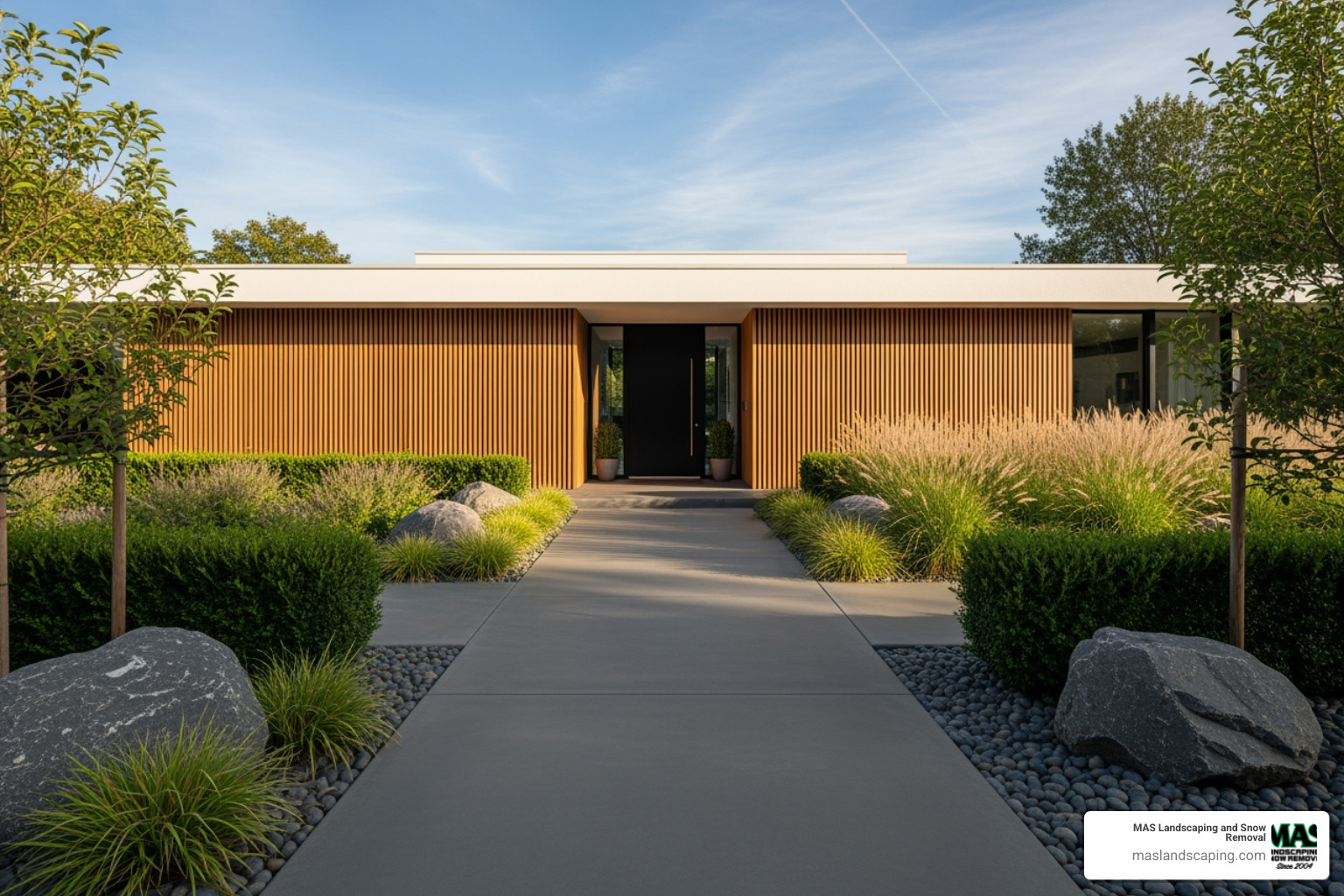
Concrete walkways are exceptionally durable, lasting 20-40 years with proper care. They withstand heavy foot traffic and seasonal changes with low maintenance needs. Upkeep is simple, involving just sweeping and occasional cleaning, a huge plus for busy property owners.
Beyond practicality, concrete is also versatile in design. It can be shaped, colored, and textured to match any style, from modern to rustic. This flexibility, combined with its strength, makes concrete a smart, affordable way to boost curb appeal and property value.
When you’re ready to explore how concrete can transform your outdoor space, remember we offer more info about our Hardscape Design Service.
Concrete vs. Other Materials
It’s natural to weigh your options when planning a new walkway. While concrete is a fantastic choice, it’s helpful to understand how it stacks up against other popular materials like pavers and gravel.
Pavers are individual units (brick, stone) laid in a pattern. They offer great customization and can be replaced individually if damaged. However, the numerous joints allow for weed growth and they are often more expensive upfront, with average costs from $8 to $25 per square foot, according to general internet data.
Concrete is poured as a single slab, meaning fewer joints and less weed growth, making it lower maintenance. While a large crack requires a different repair approach than replacing a single paver, techniques like resurfacing can restore the surface cost-effectively.
Gravel and flagstone paths offer a natural look and are budget-friendly upfront but require constant upkeep. Gravel scatters and isn’t a stable surface, while flagstone can be uneven with weed growth. Neither matches the smooth finish and low maintenance of concrete.
| Feature | Concrete Walkways | Paver Walkways | Gravel/Flagstone Walkways |
|---|---|---|---|
| Initial Cost | Generally lower, especially for large areas | Higher material and installation costs | Lowest upfront cost |
| Maintenance | Low (sweeping, sealing, occasional cleaning) | Moderate (weeding between joints, occasional leveling) | High (raking, replenishment, weeding, leveling) |
| Weed Growth | Minimal (fewer joints) | Moderate to high (many joints) | High (easy for weeds to sprout) |
| Durability | Very high, long lifespan (20-40 years) | High, individual units replaceable | Moderate, can shift and disperse |
| Aesthetic Flex. | High (stamping, coloring, custom shapes) | High (various materials, patterns, colors) | Natural, rustic, less formal |
| Repair | Crack repair, resurfacing | Individual unit replacement | Replenishment, re-leveling |
| Accessibility | Smooth, stable surface, ADA compliant options | Can be uneven, some ADA compliant options | Uneven, loose, not ADA compliant |
For more info about Paver Installation, explore our services.
Built to Last: How Concrete Handles Weather
Our New England climate poses a unique challenge for any outdoor surface. But concrete, when properly installed by experienced concrete walkways contractors, is surprisingly resilient.
The key to concrete’s performance in New England is using an “air-entrained” mix. This incorporates microscopic air bubbles that allow water to expand when it freezes, preventing cracking and spalling from freeze-thaw cycles.
Proper drainage is also critical. We grade the site to ensure water flows away from the walkway, preventing pooling and water absorption. A well-prepared sub-base prevents shifting and settling.
Finally, sealing every 2-3 years protects against water, salt, and chemicals. We can also add traction-improving additives to the sealer. The right finish and sealer provide excellent slip-resistance, even when wet or icy.
Our local expertise means we understand the specific soil conditions and climate challenges in Everett, Lynnfield, Malden, Melrose, Medford, Revere, Saugus, and Chelsea, MA. This knowledge allows us to implement the best practices for a concrete walkway that will stand strong for decades. To learn more about how we tackle these challenges, check out more info about our Hardscaping Services.
Designing and Installing Your Perfect Path
Installing a concrete walkway is a meticulous craft that, when done correctly, results in a durable and beautiful addition to your property.
Every project starts with a design consultation to discuss your vision, purpose, and aesthetic preferences. We determine the ideal width (e.g., 4-6 ft for main entrances, 2-3 ft for garden paths), shape, and finish.
Site preparation involves clearing and excavating the area, removing old materials, and grading for proper drainage. A compacted sub-base of gravel is then laid to create a stable foundation that prevents settling and cracking.
Forms are set to define the walkway’s shape, and reinforcement like rebar is added for strength. The concrete is then poured, leveled, and finished with your chosen decorative texture. The process concludes with a critical curing period and sealing to protect the surface, all managed with precision for a lasting result.
We handle every stage of your walkway project with expertise. For more info about our Walkway Installation services, explore our offerings.
From Stamped to Stained: Design & Finish Options
Modern concrete walkways offer an incredible array of design and finish options, allowing for a custom look that complements your property’s style.
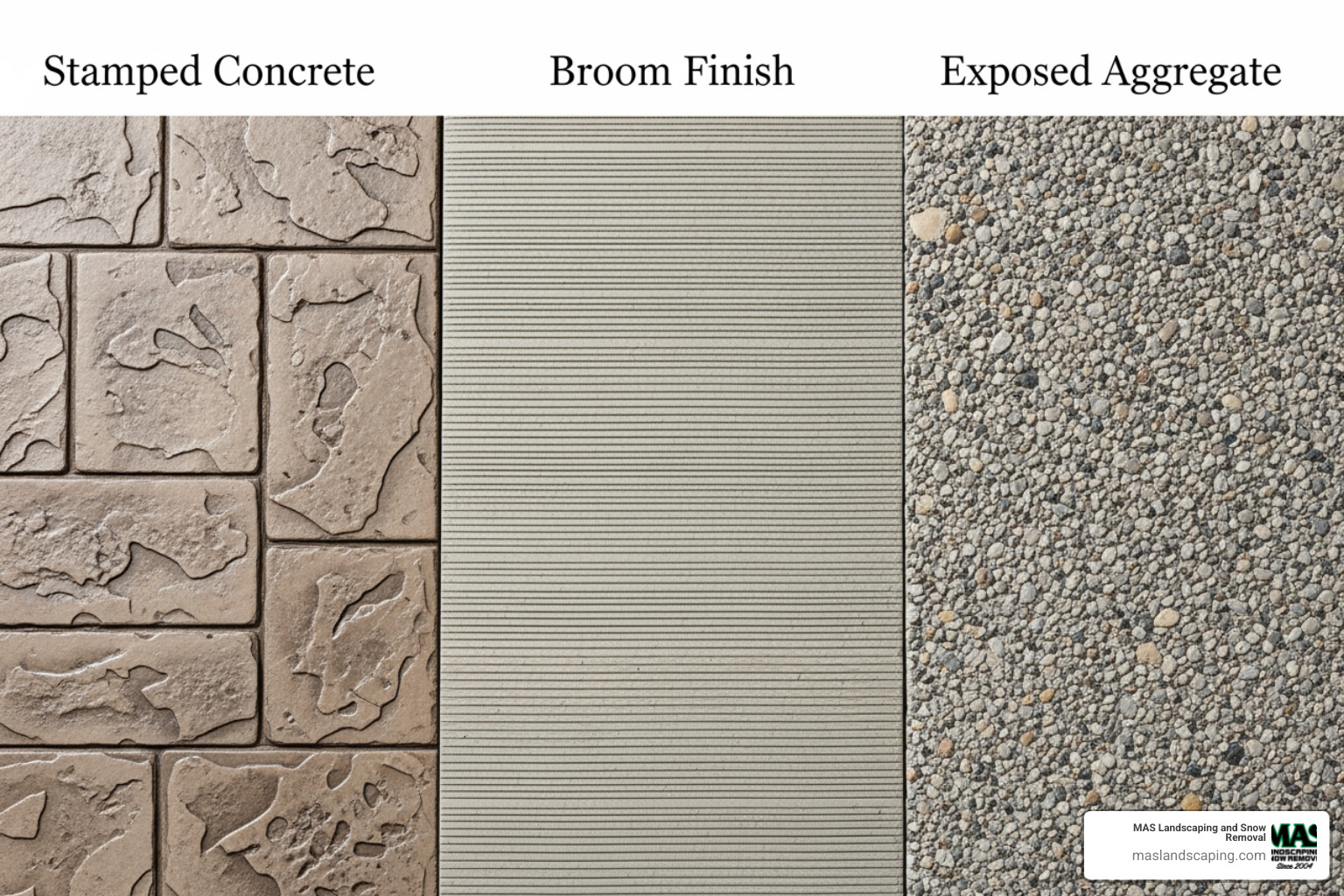
- Stamped Concrete: Get the look of natural stone, brick, or wood with the durability of concrete. Patterns are pressed into wet concrete to create realistic textures like slate, cobblestone, or wood grain.
- Colored Concrete: Pigments added to the mix or applied as a stain create a wide spectrum of colors, from earthy tones to bold hues, allowing for unique patterns and borders.
- Broom Finish: This classic, practical finish is created by dragging a broom across wet concrete. It provides a textured, slip-resistant surface ideal for the New England climate.
- Exposed Aggregate Finish: This finish reveals the small stones in the concrete mix by washing away the top layer of cement paste. It creates a rugged, natural look with excellent grip.
- Smooth Trowel Finish: This provides a sleek, modern, polished surface. It can be less slip-resistant when wet, so it’s best for covered areas.
- Salt Finish: Rock salt is pressed into wet concrete and washed away after it sets, leaving subtle pits. This creates a distinctive look with good grip, great for poolside areas.
Beyond finishes, we can customize the shape of your walkway, from straight lines to whimsical curves, and incorporate features like contrasting borders or integrated lighting.
To see how these options can transform your outdoor space, check out more info about Concrete Patio Design Near Me.
More Than Just Installation: Other Contractor Services
Beyond new installations, our services include a full range of maintenance, repair, and restoration for existing concrete walkways to combat wear and tear from the New England environment.
- Concrete Repair: We professionally repair cracks, chips, and spalling caused by ground movement or freeze-thaw cycles. Prompt repairs prevent water infiltration and more significant damage.
- Crack Filling: For minor cracks, specialized fillers seal them off, preventing water from seeping in and freezing.
- Resurfacing: For structurally sound but worn or stained concrete, resurfacing is a cost-effective solution. We apply a new overlay, which can include new colors and textures, to give your walkway a brand-new finish without a full replacement.
- Leveling: We correct sunken or uneven walkway sections caused by soil settlement. This eliminates tripping hazards and restores a smooth, safe surface.
- Concrete Sealing: We offer professional sealing services to protect concrete from water, stains, UV damage, and de-icing salts.
Our goal is to ensure your concrete walkways remain safe, functional, and beautiful. For ongoing care, explore more info about our Hardscape Maintenance Service.
Ensuring Safety and Accessibility
We design and install walkways with safety and accessibility as top priorities, incorporating features to ensure comfortable passage for everyone.
- Slip-Resistant Surfaces: Finishes like broom, exposed aggregate, and salt provide excellent traction, even when wet. We recommend the best finish for your walkway’s location and use.
- ADA Compliance: For commercial or residential needs, we design and install walkways that meet ADA standards for width, slope, and transitions, ensuring a smooth and accessible path.
- Proper Slope and Drainage: A well-engineered slope ensures water drains away quickly, reducing the risk of icy patches.
- Handrails: For walkways with inclines or steps, handrails provide additional support and safety.
- Integrated Lighting: Landscape lighting along the walkway improves visibility, prevents falls, and adds beautiful ambiance.
For more on how lighting can improve your outdoor spaces, see more info about Landscape Lighting Installation Services.
Vetting and Hiring Expert Concrete Walkways Contractors
Choosing the right concrete walkways contractors is a long-term decision for your property. Proper vetting saves you headaches and money. We encourage a thorough process so you can feel confident in your choice.
First, always verify that a contractor is licensed and insured. This protects you from liability and shows they meet professional standards. Ask for proof.
Next, investigate their experience and reputation. Check online reviews and ask for references you can contact. This provides insight into their work quality, communication, and professionalism.
A strong portfolio is a must. Review photos of past projects, looking for clean edges, consistent finishes, and quality craftsmanship.
Finally, get multiple quotes. Compare the scope of work, materials, timelines, and warranties—not just the price. This helps you understand market value and find the best comprehensive solution.
For a broader perspective on hiring outdoor professionals, check out The Ultimate Guide to Hiring Garden Paving Contractors.
Key Questions to Ask Potential Concrete Walkways Contractors
When interviewing contractors, come prepared with questions to evaluate their expertise, reliability, and suitability for your project.
Here are some essential questions to ask:
- “What is your experience with concrete walkway projects specifically, especially in the New England climate?”
- “Are you licensed and insured?”
- “Can you provide a detailed breakdown of the installation process?”
- “What design and finish options do you offer?”
- “What kind of warranty do you offer on your work?”
- “What is your estimated timeline for the project?”
- “Do you use subcontractors?”
- “Can I see examples of your past projects and provide references?”
- “How do you ensure the safety and accessibility of the walkway?”
- “Will you handle any necessary permit applications?”
Asking these questions will help you find a qualified contractor and ensure clear expectations.
The Advantage of Hiring Local Concrete Walkways Contractors
When installing a concrete walkway in our region, choosing local concrete walkways contractors offers a distinct advantage. As a company based in Saugus, MA, serving nearby communities like Everett, Lynnfield, Malden, Melrose, Medford, Revere, and Chelsea, we understand this better than anyone.
Here’s why hiring a local contractor is a smart move:
- Local Knowledge and Expertise: A local contractor understands the area’s soil, climate challenges (like New England winters!), and building codes. This expertise directly impacts your walkway’s longevity.
- Better Communication: A nearby contractor means smoother communication. They are more accessible for site visits and addressing concerns, leading to a less stressful experience.
- Faster Response Times: If an issue arises, a local team can respond much faster, preventing minor problems from becoming major ones.
- Efficient Project Completion: Local contractors have relationships with local suppliers and spend less time traveling, leading to a more efficient and faster project.
- Project Flexibility: Local teams understand local regulations and can adapt to unexpected weather, keeping your project on track.
- Supporting the Local Economy: Hiring local means investing in your community. You support local businesses, jobs, and suppliers.
Choosing local means choosing a partner who understands your specific needs. For more insights into finding reliable local professionals, explore more info about Landscaping Companies Near Me.
Budgeting, Permits, and Long-Term Care
A concrete walkway project requires careful planning of costs, permits, and maintenance. Understanding these details upfront ensures a smooth process and a long-lasting investment.
For all your hardscaping needs, remember we offer more info about our Hardscape Install.
How Much Does a Concrete Walkway Cost?
A common question is about cost. While we provide custom quotes after a consultation, we can share general averages based on internet data. These are average costs and vary by location, complexity, and finishes.
- Basic Concrete Walkway: For a standard walkway with a broom finish, average costs might range from $6 to $18 per square foot.
- Stamped or Colored Concrete Walkway: Decorative options like stamping or coloring generally average between $10 and $30 per square foot.
- High-End Custom Designs: For intricate patterns, multiple colors, or unique shapes, the cost can range from $15 to $45+ per square foot.
Factors Influencing Price:
- Size and Shape: Larger or more complex shapes increase costs.
- Site Preparation: The amount of excavation and grading needed can impact the price.
- Finish and Design: Decorative options are more expensive than a basic finish.
- Accessibility: Difficult site access can increase labor costs.
- Reinforcement: The use of rebar or wire mesh adds strength.
- Permits: Required permits add to the overall cost.
- Geographic Location: Costs vary by region.
It’s always best to get a free, detailed estimate from a qualified concrete walkways contractor for your specific project.
Do You Need a Permit for a Concrete Walkway?
The need for a permit often depends on your location. Regulations vary significantly between towns, including our service areas of Everett, Lynnfield, Malden, Melrose, Medford, Revere, Saugus, and Chelsea, MA.
Generally, a permit may be required if:
- The walkway connects to a city-owned sidewalk. Work in the public Right of Way almost always requires a permit.
- The walkway is part of a larger construction project.
- There are significant changes to grading or drainage.
- Your property is governed by a Homeowners Association (HOA).
It’s always best to check with your local building department. A reputable concrete walkways contractor should be familiar with local permit requirements and can often handle the application process for you.
Regardless of permit needs, always call 811 before digging. This free service marks underground utility lines to prevent dangerous and costly accidents.
For those considering removing an old concrete slab before a new installation, be aware that this process can also be complex and requires professional handling to avoid damaging underlying structures. Information on removing old concrete can provide more details on this aspect.
Maintaining Your Investment
A concrete walkway is a durable investment that benefits from proper care. Regular maintenance ensures its longevity, preserves its appearance, and prevents costly repairs.
Here’s our expert advice on maintaining your concrete walkway:
- Regular Cleaning: Sweep regularly to remove dirt and debris that can cause stains. For stubborn grime, use a stiff brush and mild detergent.
- Pressure Washing: An annual pressure wash can remove embedded dirt and mildew. Use a moderate setting to avoid damaging the surface.
- Sealing Every 2-3 Years: This is critical in New England. A quality sealer protects against moisture, freeze-thaw damage, and stains. Reapplication is generally needed every 2-3 years.
- Prompt Crack Repair: Address minor cracks promptly with a concrete crack filler. This prevents water from seeping in, freezing, and expanding the crack.
- Avoiding Harsh De-Icing Salts: Many de-icing salts are corrosive to concrete. In winter, use sand or concrete-safe de-icers for traction.
- Protect from Heavy Loads: Avoid parking heavy vehicles on walkways not designed for such loads.
By following these maintenance tips, you can significantly extend the life and beauty of your concrete walkway.
Frequently Asked Questions about Concrete Walkways
We know you’ve got questions, and we’ve got answers! Here are some of the most common inquiries we receive about concrete walkways.
Is a concrete walkway cheaper than pavers?
Generally, yes. In terms of initial installation, concrete is often more affordable. According to general internet data, basic concrete walkways average $6-$18 per square foot, while pavers can range from $8 to $25 per square foot or more.
Paver materials and the labor to lay individual units are often more expensive. Poured concrete typically requires less labor per square foot for a basic installation.
However, consider the long-term value:
- Maintenance: Concrete has fewer joints, meaning less weed growth than pavers.
- Repair: A single damaged paver can be replaced, while a large concrete slab might need specialized repair or resurfacing.
- Lifespan: Both materials offer long lifespans with proper installation.
- Property Value: Both can increase property value, with decorative concrete often mimicking high-end pavers for less.
How long does a professionally installed concrete walkway last?
A professionally installed concrete walkway, especially one built for the New England climate, can last 20 to 40 years or even longer.
Longevity depends on several factors:
- Proper Installation: A well-prepared sub-base, correct grading, the right concrete mix, and proper reinforcement are all vital for a long lifespan.
- Quality of Materials: Using high-grade concrete and durable sealers makes a difference.
- Climate: A walkway must be properly installed to withstand New England’s challenging weather.
- Maintenance: Regular cleaning and sealing every 2-3 years are key to protecting the surface.
With our local expertise in Everett, Lynnfield, Malden, Melrose, Medford, Revere, Saugus, and Chelsea, MA, we ensure our installations are built to last.
Can you pour a concrete walkway in the winter?
While technically possible, pouring concrete in a New England winter is challenging and is generally not recommended for optimal results.
Here’s why:
- Slower Curing: Cold weather drastically slows the curing process, delaying when the walkway can be used.
- Risk of Freezing: If concrete freezes before it has cured, it can be permanently damaged, leading to a weaker surface prone to cracking.
- Specialized Techniques and Costs: Winter pouring requires costly measures like heated mixes, accelerators, and insulating blankets, which add complexity and expense.
- Quality Control: It’s much harder to maintain consistent quality in freezing conditions.
For these reasons, most reputable concrete walkways contractors in our region recommend installation from spring to fall for the best quality and longevity.
Create a Lasting First Impression with a Professional Walkway
Your home’s exterior is the first impression it makes, and a well-designed concrete walkway plays a pivotal role. It’s more than a path—it’s a statement of style and quality. We’ve covered its durability, low maintenance, and design versatility, as well as the importance of professional installation by local concrete walkways contractors who understand the New England climate.
At MAS Landscaping and Snow Removal, we bring functional beauty to outdoor spaces across Saugus, Everett, Lynnfield, Malden, Melrose, Medford, Revere, and Chelsea, MA. Our expertise ensures your walkway will be stunning, safe, and durable, enhancing your property’s value for decades.
Ready to transform your outdoor space with a durable, stylish, and expertly installed concrete walkway? Don’t just walk; glide. Find your expert walkway contractor today!
