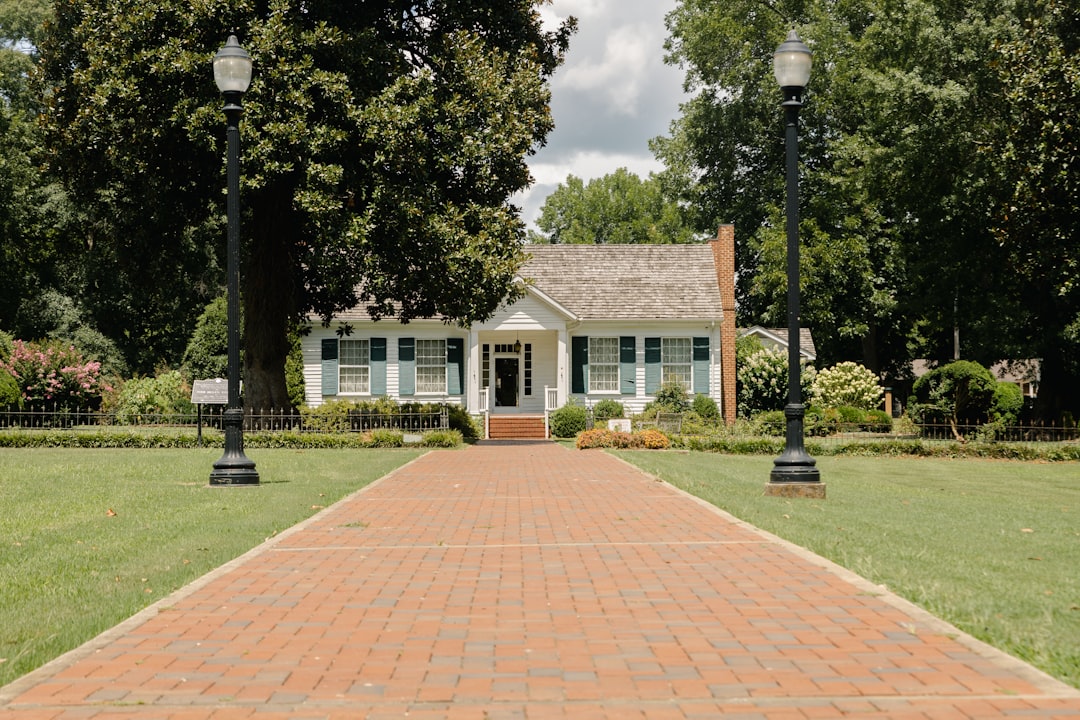



Transform Your Home With a Brick Paver Walkway
A brick paver walkway is one of the most rewarding upgrades you can make to your property. It replaces muddy, worn paths with a durable, attractive surface that lasts for decades — and adds real curb appeal from the moment visitors arrive.
Here’s a quick overview of what it takes to build one:
- Plan your path — choose your width (3–4 feet is standard), layout, and brick pattern
- Gather materials — paving bricks, crushed gravel, coarse sand, polymeric sand, and edging
- Excavate — dig 6–8 inches deep along your path
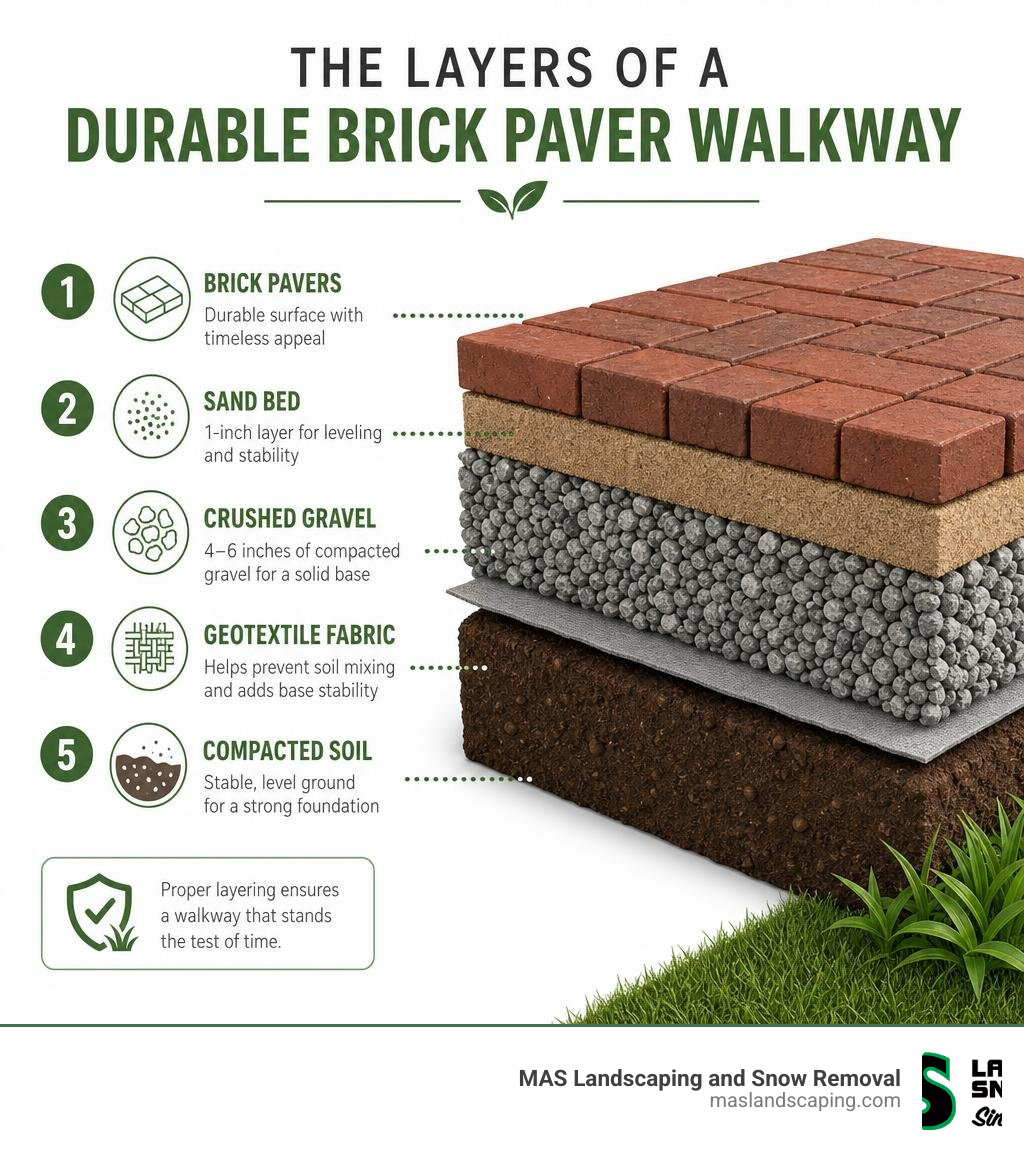
- Build the base — compact 4–6 inches of gravel, then add a 1-inch sand bed
- Lay the bricks — set them in your chosen pattern using a rubber mallet
- Finish up — install edge restraints and sweep polymeric sand into the joints
A properly installed brick walkway can last 20 to 50 years with minimal upkeep. For a 20-foot path, most homeowners can complete the project in a single weekend.
That said, the Boston area’s freeze-thaw winters add a layer of complexity that makes base preparation especially critical. Skip that step, and even beautiful brickwork will shift, sink, or heave within a few seasons.
This guide walks you through everything — from choosing the right pattern to keeping your walkway looking great for years to come.
Why Choose a Brick Paver Walkway for Your Landscape?
When you decide to install a new garden path or front entry path, you are faced with several material choices. The most common options are brick pavers, poured concrete, and loose gravel. While each has its place, a brick paver walkway offers a unique combination of timeless beauty, exceptional durability, and long-term value that other materials simply cannot match.
To help you explore your options, we have compiled Walkways and Paver Walkways for Every Home, but let’s break down how brick compares directly to its competitors.
Unlike poured concrete, which is highly prone to cracking when our Massachusetts soils freeze and thaw, a brick paver system is flexible. Because it is made of individual units set on a compacted sand and gravel bed, the joints absorb ground movement without cracking the surface. If a single brick ever does get damaged or stained, you can easily pop it out and replace it without having to patch or demolish the entire walkway.
Gravel, on the other hand, is inexpensive but requires constant maintenance. It washes away in heavy rains, gets kicked into the lawn (where it can ruin lawnmower blades), and is incredibly difficult to clear of snow during a classic New England winter. Brick pavers provide a smooth, solid surface that is easy to shovel or snowblow while offering natural slip resistance when wet.
| Feature | Brick Pavers | Poured Concrete | Loose Gravel |
|---|---|---|---|
| Lifespan | 20 to 50+ years | 15 to 25 years (cracks easily) | 1 to 5 years (requires constant top-offs) |
| Flexibility | Excellent (moves with freeze-thaw) | Poor (rigid, prone to cracking) | High (but washes away easily) |
| Maintenance | Very low (occasional sweeping/sanding) | Medium (sealing, crack repairs) | High (raking, weeding, replacing lost stone) |
| Aesthetics | Classic, high-end curb appeal | Plain, industrial, or modern | Rustic, but can look messy over time |
| Slip Resistance | High (textured clay surface) | Medium (can be slick when wet or icy) | High (but unstable underfoot) |
Planning Your Walkway: Patterns, Costs, and Materials
A successful walkway project always begins on paper. Before you pick up a shovel, you need to consider how your path will integrate with your home’s architecture, how water will drain away from your foundation, and how many materials you need to order from local suppliers like Georgetown Building Supply, georgetown ma, georgetown ma … .
Start by mapping out the layout. Front walkways should ideally be 3 to 4 feet wide so that two people can walk side-by-side comfortably. Garden paths can be narrower, but always ensure they are wide enough to accommodate wheelbarrows or lawnmowers. If you are planning a path that navigates around mature trees or connects to a backyard patio, consider using curves to soften the landscape.
You also need to calculate your materials carefully. For a standard walkway, you will need approximately 4.5 to 5 brick pavers per square foot. We always recommend adding a 10% overage to your final calculations to account for cuts, mistakes, and future repairs.
Popular Patterns for Your Brick Paver Walkway
The pattern you choose to lay your bricks does more than just determine the final look of your path; it also impacts the structural stability of the walkway. Here are the three most popular patterns used in Massachusetts hardscaping:
- Herringbone: In this pattern, bricks are laid at 45-degree or 90-degree angles to one another, creating a zigzag design. This is the strongest pattern because the interlocking bricks distribute weight evenly and resist shifting under foot traffic. It is highly recommended for straight paths and heavy-use areas, though it requires more cuts at the edges.
- Running Bond: This is the classic “brick wall” look where bricks are laid end-to-end in parallel rows, with the joints offset by half a brick in each row. It is the easiest pattern for DIYers to install because it requires very few cuts along straight edges. It works beautifully for gently curving paths.
- Basketweave: This pattern features pairs of bricks laid side-by-side, alternating between horizontal and vertical orientations. It offers a charming, historic look that pairs wonderfully with older homes in towns like Danvers and Peabody.
For more design inspiration and layout concepts, check out our collection of Brick Walkway Ideas to see how these patterns look in real-world settings.
Estimating the Cost of a Brick Paver Walkway
When budgeting for your hardscaping project, you must account for both material costs and labor. Based on average internet data, material costs for a standard 20-foot DIY brick walkway typically range from $200 to $1,500 or more, depending on the quality of the clay pavers you select, such as premium options from Brick Pavers – Stone Curators .
If you choose to hire professional installers, the total project cost will reflect local labor rates, site preparation complexity, and accessibility. On average, nationwide internet data indicates professional installation costs can range from $15 to $45+ per square foot (representing a wide range where high-end custom installations can be at least 3x the average base pricing).
Please note: These price ranges are average costs based on national internet data and do not represent actual pricing for MAS Landscaping and Snow Removal. Every property is unique, and custom quotes are required for accurate local project costs.
To get a better understanding of the variables that influence your budget, read our detailed guide on the Cost of Paver Walkway.
How to Install a Brick Walkway: A Step-by-Step DIY Guide
Building a brick paver walkway is a physically demanding intermediate DIY project. If you have a weekend, a strong back, and a commitment to precision, you can achieve professional-grade results. Let’s break down the process step-by-step.
Step 1: Tools and Materials Checklist
Before you begin excavating your yard, make sure you have all the necessary tools and materials on hand.

Materials Required:
- Clay paving bricks (rated for severe weather and ground contact)
- Crushed gravel base (3/4-inch dense-grade aggregate)
- Coarse bedding sand (concrete sand, not play sand)
- Polymeric joint sand
- Heavy-duty geotextile landscape fabric
- Plastic or aluminum paver edging
- 10-inch steel spikes
Tools Required:
- Shovel and wheelbarrow
- Tape measure and marking paint
- Wooden stakes and mason’s string line
- Line level or laser level
- Two 1-inch diameter metal conduit pipes (for screeding)
- Straight 2×4 board (screed board)
- Plate compactor (highly recommended to rent) or heavy hand tamper
- Rubber mallet
- Angle grinder with a diamond blade or a wet masonry saw
- Push broom and garden hose with a spray nozzle
- Safety glasses, work gloves, and ear protection
Step 2: Excavation and Base Preparation
A walkway is only as good as the foundation beneath it. In fact, most walkway failures are blamed on the bricks when the real culprit was a poorly prepared base.
First, call 811 to have underground utility lines marked before you dig. Once cleared, mark your path using stakes and string lines.
Excavate the trench to a depth of 7 to 8 inches. This depth allows for:
- 4 to 6 inches of compacted gravel base (6 inches is highly recommended in frost-prone areas like Andover and Lynnfield)
- 1 inch of bedding sand
- The thickness of your brick pavers (typically 2 to 2-1/4 inches)
Make sure your excavation extends about 6 inches wider than the actual planned walkway on both sides to provide a stable shoulder for the edge restraints.
As you dig, establish a slope of 1/4 inch per foot away from your home’s foundation to ensure proper water drainage. Compact the native soil at the bottom of the trench using your plate compactor.
Next, lay down heavy-duty geotextile landscape fabric over the compacted soil. This step is crucial; it prevents the gravel base from sinking into the subsoil over time while allowing water to drain.
Add your crushed gravel in 2-inch layers (lifts). Dampen the gravel slightly with water, then run the plate compactor over it until it is rock-hard. Repeat this process until you have a fully compacted 4-to-6-inch base. For detailed visual guides on base preparation, you can read How to Lay a Brick Paver Walkway – This Old House .
Step 3: Screeding the Sand Bed and Laying Bricks
Once your gravel base is perfectly flat and compacted, it is time to add the bedding sand. This layer provides a smooth, uniform surface for setting the bricks.
Place your two 1-inch metal conduit pipes parallel to each other on top of the gravel base. Pour coarse concrete sand over the pipes. Standard play sand is too fine and will wash out, so stick to coarse sand.
Run your straight 2×4 screed board across the top of the conduit pipes, pulling the excess sand along with it. This leaves a perfectly level, uncompacted 1-inch bed of sand. Once finished, carefully remove the pipes and fill in the remaining grooves with a hand trowel. Do not walk on or compact the sand bed once it has been screeded.
Start laying your bricks in your chosen pattern, beginning at a straight edge or corner. Place each brick straight down onto the sand bed — do not slide them into place, as this will disturb the sand. Tap each brick gently with a rubber mallet to set it. Use your string lines constantly to ensure your rows remain straight and level. For more advanced tips on setting bricks and handling stone accents, refer to How to Build Pathways: Brick and Stone Pathways (DIY) | Family Handyman .
Step 4: Edging and Polymeric Sand Application
With all the full bricks laid, use your angle grinder or masonry saw to make any necessary cuts for the edges or curves.
Next, install your plastic paver edging tight against the outer edges of the bricks. Secure the edging by driving 10-inch steel spikes through the pre-drilled holes into the compacted gravel base. Space the spikes every 12 inches along straight runs, and every 6 inches along curves.
To lock the bricks together, you must fill the joints with polymeric sand. This specialized sand contains chemical binders that activate when wet, turning into a powerful, flexible mortar that keeps your bricks in place.
Ensure the surface of your bricks is completely dry. Pour the polymeric sand over the walkway and use a push broom to sweep it into the joints. Run the plate compactor (with a protective cardboard or carpet barrier underneath to avoid scratching the bricks) over the walkway to vibrate the sand deep into the joints. Sweep in more sand as needed until the joints are filled to within 1/8 inch of the brick surface.
Crucial Step: Sweep every bit of excess sand and dust off the surface of the bricks. Any left-over sand will bond to the surface when wet and leave permanent white stains.
Set your garden hose nozzle to a fine mist and gently spray the walkway. Avoid using a heavy stream, which will wash the sand out of the joints. Let the water soak in for a few minutes, then mist it a second time. Allow the polymeric sand to cure undisturbed for 24 to 48 hours.
Long-Term Maintenance and Preventing Common Issues
A brick walkway is incredibly durable, but simple preventative maintenance will keep it looking pristine and prevent shifting over time.
Preventing Weed Growth and Joint Erosion
Weeds are the enemy of any beautiful hardscape. While many believe weeds grow up from the soil beneath, 95% of weeds actually start from seeds blown into the joints from above.
The best defense is keeping your joints filled. Regularly inspect your walkway, and top off any eroded areas with fresh polymeric sand. Sweep your path weekly to remove organic debris, dirt, and seeds before they can take root.
If you do need to wash your walkway, avoid using high-pressure settings. Keep your pressure washer under 1200 PSI and use a wide-angle nozzle held at least 12 inches away from the surface to avoid washing out the joint sand.
Handling Frost Heave and Sinking Bricks
In our region — from Saugus and Revere up to Lynnfield and Beverly — winter brings severe freeze-thaw cycles. When water in the soil freezes, it expands, pushing upward on your hardscaping.
If you installed a proper 6-inch compacted gravel base over geotextile fabric, your walkway should resist frost heave beautifully. However, if a section does sink or shift over time, the beauty of a sand-set system is that it is easily repairable.
Simply pry up the affected bricks, add a small amount of coarse sand to level the low spot, compact it, replace the bricks, and sweep in fresh polymeric sand. If you are looking for design variations that handle our local climate well, check out our Backyard Paver Walkway Ideas for inspiration.
Frequently Asked Questions About Brick Walkways
Can I lay bricks directly on dirt?
No. Laying bricks directly on dirt is a temporary solution that will quickly fail. Soil holds onto moisture, which makes it highly susceptible to shifting during freeze-thaw cycles. Without a compacted gravel base, your bricks will settle unevenly under foot traffic, creating tripping hazards and allowing weeds to run rampant within a single season.
What is the difference between a brick paver and a regular wall brick?
Brick pavers are engineered specifically for ground-level use. They are made from high-density clay and fired at extremely high temperatures, making them highly durable, slip-resistant, and virtually non-porous. This density allows them to withstand heavy foot traffic and resist cracking during freezing winters.
Regular wall bricks are much softer, highly porous, and often have hollow holes through the center. If laid flat on the ground, they will quickly absorb water, freeze, and crumble into pieces within a couple of winters.
When should I hire professional brick paver installers?
While a straight, flat garden path is a manageable DIY project, you should seriously consider hiring professional Brick Paver Installers if your project involves:
- Complex curves and intricate patterns (which require precision cuts and professional masonry saws)
- Steep slopes or grading challenges (which require retaining walls or step integrations to prevent erosion)
- Buried utility lines or large tree roots
- Permitting or historic district guidelines (common in historic Massachusetts towns)
If you are on the fence, our guide on Finding Brick Walkway Contractors can help you decide whether to tackle the project yourself or bring in the experts.
Conclusion
Investing in a brick paver walkway is one of the best ways to elevate your property’s curb appeal, improve outdoor safety, and add lasting value to your home. Whether you choose to take on the challenge of a DIY installation or partner with professionals, focusing on a rock-solid base and proper drainage will ensure your path stands strong against New England’s toughest winters.
If you would prefer to leave the heavy lifting, precise grading, and expert stone-cutting to a local, trusted team, MAS Landscaping and Snow Removal is here to help. Based in Saugus, MA, we proudly serve homeowners throughout Essex and Middlesex counties, including Lynnfield, Everett, Malden, Medford, Melrose, Peabody, and Stoneham.
Ready to bring your dream landscape to life? Schedule a professional walkway installation with us today, and let’s design a custom entrance you’ll love coming home to.