




How to Plant a Lawn: Ultimate 4-Step Oasis
Why a Beautiful Lawn Starts with the Right Foundation
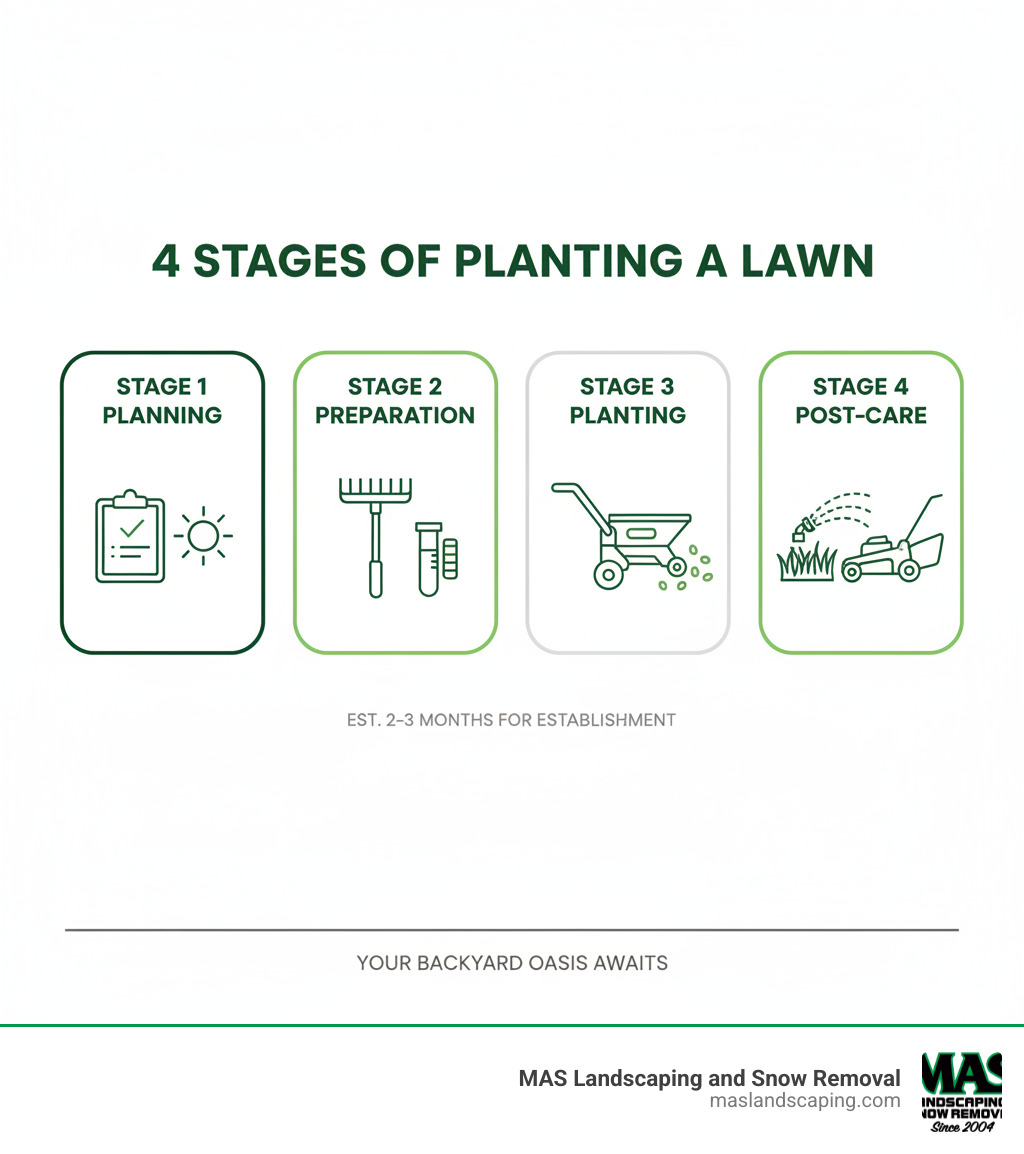
How to plant a lawn successfully comes down to four essential stages: planning your grass type and timing, preparing the soil properly, sowing seeds correctly, and caring for new grass until it’s established. Most homeowners can achieve a thriving lawn in 2-3 months by following these steps, though results vary based on grass type and weather conditions.
Quick Overview: The 4 Stages of Planting a Lawn
- Planning – Choose the right grass seed for your climate and assess your yard’s sunlight, drainage, and intended use
- Preparation – Clear debris, test and amend soil, till to proper depth, and grade for drainage
- Planting – Calculate seed amounts, distribute evenly with a spreader, and protect seeds with light mulch
- Post-Care – Water frequently until germination, mow at proper height, and delay weed control until after several mowings
If you’ve ever envied a neighbor’s lush green lawn, you’re not alone. A healthy lawn doesn’t happen by accident—it takes proper planning and execution from day one.
The good news? Planting a lawn from seed is more affordable than laying sod and gives you access to a wider variety of grass types suited to your specific conditions. Whether you’re starting fresh after construction, repairing bare patches, or replacing a struggling lawn, understanding the fundamentals makes the difference between success and disappointment.
Grass seeds prefer temperatures between 15° and 26°C to germinate, which is why timing matters so much. Most turfgrasses also prefer neutral soils, so testing and amending your soil before planting sets you up for long-term success rather than ongoing struggles.
This guide walks you through every step, from choosing between cool-season and warm-season grasses to knowing when it’s safe to apply weed control. You’ll learn how much seed you actually need (approximately 1 kg covers 35m²), the best methods for even distribution, and how to keep your new grass thriving through its vulnerable early weeks.
For Greater Boston homeowners, the fall season offers ideal conditions for planting cool-season grasses like fescue, bluegrass, and ryegrass. The soil stays warm while air temperatures cool down, giving new grass time to establish strong roots before winter.
How to plant a lawn terms to remember:
Step 1: Planning Your Perfect Lawn
Before you grab a shovel or scatter a single seed, let’s take a moment to think through your lawn project. Consider this your blueprint stage—the planning you do now will save you time, money, and frustration down the road.
Start with a site assessment of your yard. Walk around and really observe what you’re working with. Notice where puddles form after rain (that’s your drainage pattern), which areas get baked by afternoon sun, and where shade dominates most of the day. Think about your lawn goals too. Are you creating a play space where kids and dogs will run wild? Or do you want a picture-perfect ornamental lawn that’s more for admiring than using?
Pay special attention to sunlight exposure—this single factor will largely determine which grass varieties will thrive. Areas that receive less than four to six hours of direct sun daily will need shade-tolerant grass mixes. Similarly, high-traffic zones near walkways or play areas require tougher grass varieties that can handle the wear and tear.
If you’re planning a more comprehensive outdoor change beyond just the lawn, our landscape design services can help you create a cohesive vision for your entire property.
What is the Best Time of Year to Plant Grass Seed?
Timing can make or break your success when learning how to plant a lawn. Plant at the wrong time, and you’ll be fighting an uphill battle. Get the timing right, and nature does half the work for you.
Here in the Greater Boston area—including Saugus, Everett, Lynnfield, Malden, Melrose, Medford, Revere, and Chelsea—we’re firmly in cool-season grass territory. For these varieties, late summer to early fall is your golden window, typically from mid-August through October.
Why does fall work so beautifully? The soil still holds warmth from summer, which seeds love for germination. Meanwhile, the air temperatures are cooling down, which means less stress on tender seedlings. You’ll also face fewer weeds during this time since most aggressive weeds slow their growth in cooler weather. This combination lets your new grass establish a deep, strong root system before winter arrives.
Grass seeds prefer temperatures between 15° and 26°C to germinate, which is exactly what fall provides. For more detailed timing information, check out this helpful guide on when to plant grass seed.
Spring planting (April through May) is your second-best option, though it comes with more challenges. As temperatures rise, young grass faces heat stress. Spring also brings a surge of weed growth, meaning your seedlings will compete for water, nutrients, and sunlight. More frequent spring rains can create conditions for fungal diseases if you’re not careful with watering.
Summer planting? It’s possible but demanding. You’ll need to water vigilantly—sometimes multiple times daily—to keep seeds from drying out in the heat.
Choosing the Right Grass Seed for Your Yard
Not all grass seed is created equal, and choosing the right type makes an enormous difference in your lawn’s long-term success. This isn’t just about aesthetics—it’s about matching grass to your specific conditions.
Cool-season grasses are what we work with most in New England. These varieties grow actively during spring and fall, often going semi-dormant during summer heat. Here are the main players:
Kentucky bluegrass creates that classic, dense, beautiful lawn you see in magazines. It spreads through underground runners called rhizomes, which means it can repair itself when damaged. It’s excellent for high-traffic areas and has that rich green color everyone loves. The trade-off? It needs more maintenance, regular watering, and good drainage to truly thrive.
Fine fescues (including Creeping Red, Chewings, and Hard fescues) are your shade champions. These grasses have a fine texture and generally require less water and fertilizer than bluegrass. Creeping Red Fescue, in particular, tolerates both shade and dry soil exceptionally well. If you have large trees or north-facing areas, fescues should be your go-to choice.
Perennial ryegrass is the quick starter of the bunch, germinating in just three to five days under good conditions. It handles foot traffic well and is often included in mixes for fast establishment. It’s particularly useful if you need a lawn quickly or want to overseed bare spots.
Warm-season grasses like Bermuda, Zoysia, and Centipede grow actively when temperatures climb above 80°F. While less common for new lawns in Massachusetts, you might encounter them in transition zones or specialty applications.
When shopping for seed, read the label carefully. Look for the percentage of named varieties (not just “Kentucky bluegrass” but specific cultivar names), the germination rate (higher is better—aim for 80% or above), and crucially, the weed seed content. You want this as close to 0% as possible.
We recommend avoiding seed products that include “filler” materials meant to help with spreading. They often don’t cover as much area as advertised and aren’t as cost-effective as buying quality seed and using a proper spreader. For regional guidance on what grows best in your specific location, these climate zone maps can be incredibly helpful.
Seeding vs. Sod: Which is Right for You?
When you’re ready to install a new lawn, you face a fundamental choice: plant grass seed or lay sod? Both methods can create beautiful results, but they suit different situations, budgets, and timelines.
Seeding is significantly more budget-friendly than sod, sometimes costing a fraction of the price. It also gives you access to a much wider variety of grass types and specialty mixes—you can choose exactly the blend that matches your shade patterns, traffic needs, and aesthetic preferences. The downside? Seeding requires patience. You’ll wait weeks for germination and months for a fully established lawn.
Sod gives you an instant lawn—literally. One day you have bare soil, the next day you have green grass. It’s ideal if you’re working on a tight timeline, dealing with erosion-prone slopes, or want to use your yard right away. The trade-offs are higher cost, more intensive labor during installation, and fewer variety options since sod farms grow only the most popular grass types.
Here’s a quick comparison to help you decide:
| Feature | Planting Grass Seed | Laying Sod |
|---|---|---|
| Cost | Significantly lower—often a fraction of sod’s price | Higher initial investment |
| Installation Time | Quick to spread seed, but weeks to see results | Labor-intensive installation, but immediate green lawn |
| Labor | Minimal physical effort to spread seed | Heavy lifting and precise placement required |
| Variety | Wide selection of grass types and custom mixes | Limited to what sod farms grow |
| Establishment Period | 2-3 months until fully usable | Usable in 2-3 weeks after installation |
For detailed guidance on sod installation, see our guide on how to lay sod. And if you’re curious about the financial side of either option, our article on new lawn installation cost breaks down what to expect.
The right choice depends on your specific situation. Seeding works beautifully for patient homeowners on a budget who want specific grass varieties. Sod makes sense when you need quick results, are working with challenging slopes, or want to avoid the vulnerable seedling stage entirely.
