

Should You Seal Your Patio Pavers?
Patio Paver Sealing is a key step to keeping your outdoor spaces looking great and lasting longer. Many homeowners wonder if sealing is truly necessary for their hardscape investment.
Here’s a quick guide to help you decide:
Seal Your Pavers If You Want To:
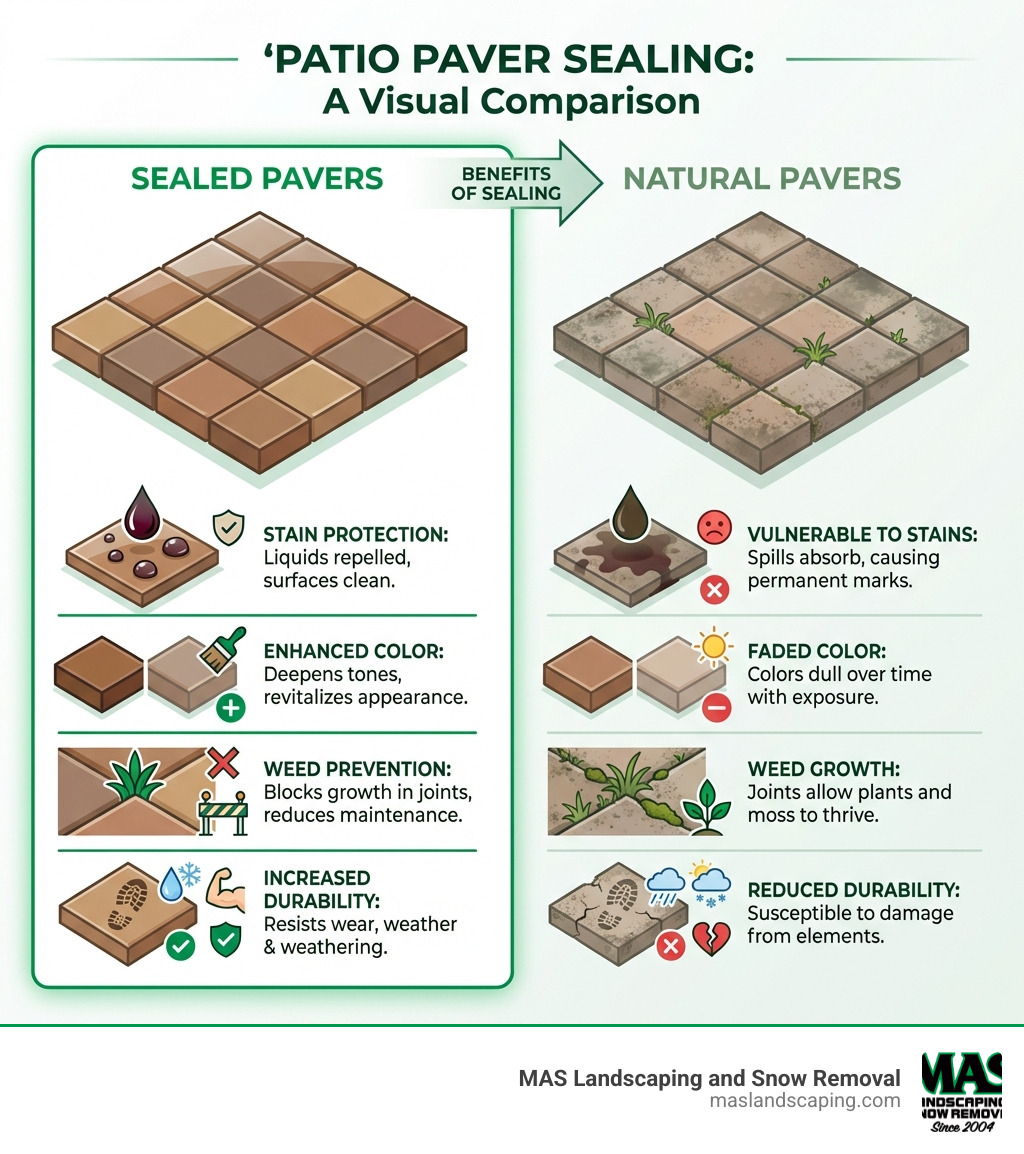
- Protect against stains from spills, oil, or rust.
- Enhance and preserve the original color and appearance.
- Prevent weed and moss growth in paver joints.
- Increase durability and resistance to weather damage.
- Make cleaning and maintenance easier.
- Extend the overall lifespan of your patio, driveway, or walkway.
You Might Skip Sealing If:
- You prefer a completely natural, matte look for your pavers.
- The area has very low foot traffic and minimal exposure to stains.
- You are comfortable with the natural weathering and aging process of pavers.
- You want to avoid the commitment of periodic reapplication.
The decision to seal your pavers depends on your personal preferences for aesthetics, level of protection, and maintenance goals.
Caring for the durability and visual appeal of your paver patio, driveway, or hardscaping starts with prioritizing its protection. Pavers are a significant investment, and sealing helps maintain their beauty and structural integrity against the wear and tear of weather, foot traffic, and daily life. It creates a protective barrier, reducing the impact of harsh elements and common spills.
Explore more about Patio Paver Sealing:
Patio Paver Sealing: The Ultimate Protection for Your Hardscape
When we talk about Patio Paver Sealing, we are essentially discussing a shield for your stones. Whether you have concrete, brick, or natural stone, these materials are porous. This means they act like a sponge, soaking up water, oil from the grill, or that glass of red wine you accidentally tipped over during your last neighborhood barbecue in Lynnfield.
Choosing the right sealer is the first step toward a successful project. Generally, sealers fall into two main categories: film-forming and penetrating.
| Feature | Film-Forming Sealers | Penetrating Sealers |
|---|---|---|
| Appearance | Glossy, “Wet Look,” or Satin finish | Matte, “Natural Look” |
| Mechanism | Creates a physical barrier on top | Absorbs into the pores |
| Joint Stability | Often helps harden joint sand | Minimal joint stabilization |
| Breathability | Lower (can trap moisture if applied wrong) | High (allows moisture to escape) |
| Maintenance | Reapply every 1–3 years | Reapply every 3–5 years |
Most sealers are either solvent-based or water-based. Solvent-based sealers are known for their high durability and ability to darken the stone significantly, though they have a stronger odor. Water-based sealers have become much more advanced in recent years; they are eco-friendly, have low VOCs (Volatile Organic Compounds), and are much easier to clean up.
If you want to keep your patio looking exactly as it did the day it was installed, a Natural Look Paver Sealer is your best bet. However, if you want that vibrant, “just rained” aesthetic, our Wet Look Paver Sealer Guide will show you how to achieve that deep color enhancement. Regardless of the finish, a quality sealer provides vital UV resistance, preventing the sun’s rays from fading the rich pigments in your pavers.
Enhancing Aesthetics with Film-Forming Patio Paver Sealing
Film-forming sealers, often made of acrylic, are the go-to choice for homeowners who want to “pop” the color of their hardscape. These products create a protective coating that sits on the surface, reflecting light and giving the pavers a gloss or semi-gloss finish.
Beyond just looks, these sealers are excellent for joint stabilization. By soaking into the sand between the pavers and hardening, they prevent the sand from washing away during heavy Massachusetts rainstorms. Brands like Wet Look offer that classic high-sheen finish that transforms a dull gray patio into a sleek, modern outdoor lounge.
Long-Term Durability through Penetrating Patio Paver Sealing
For those of us in areas like Saugus or Reading, where the freeze-thaw cycle is a real concern, penetrating sealers are often the unsung heroes. These sealers don’t change the look of the stone; instead, they dive deep into the pores to repel water from the inside out.
The biggest advantage here is breathability. Penetrating sealers allow moisture to evaporate through the stone. This is crucial for preventing efflorescence—that white, chalky salt buildup that can ruin the look of a patio. Using a Natural Look invisible protector ensures your pavers stay strong and stain-resistant without looking like they’ve been “painted” or coated.
When and How Often to Seal Your Patio
Timing is everything. If you’ve just finished a Patio Installation, you might be tempted to seal it immediately. Hold your horses!
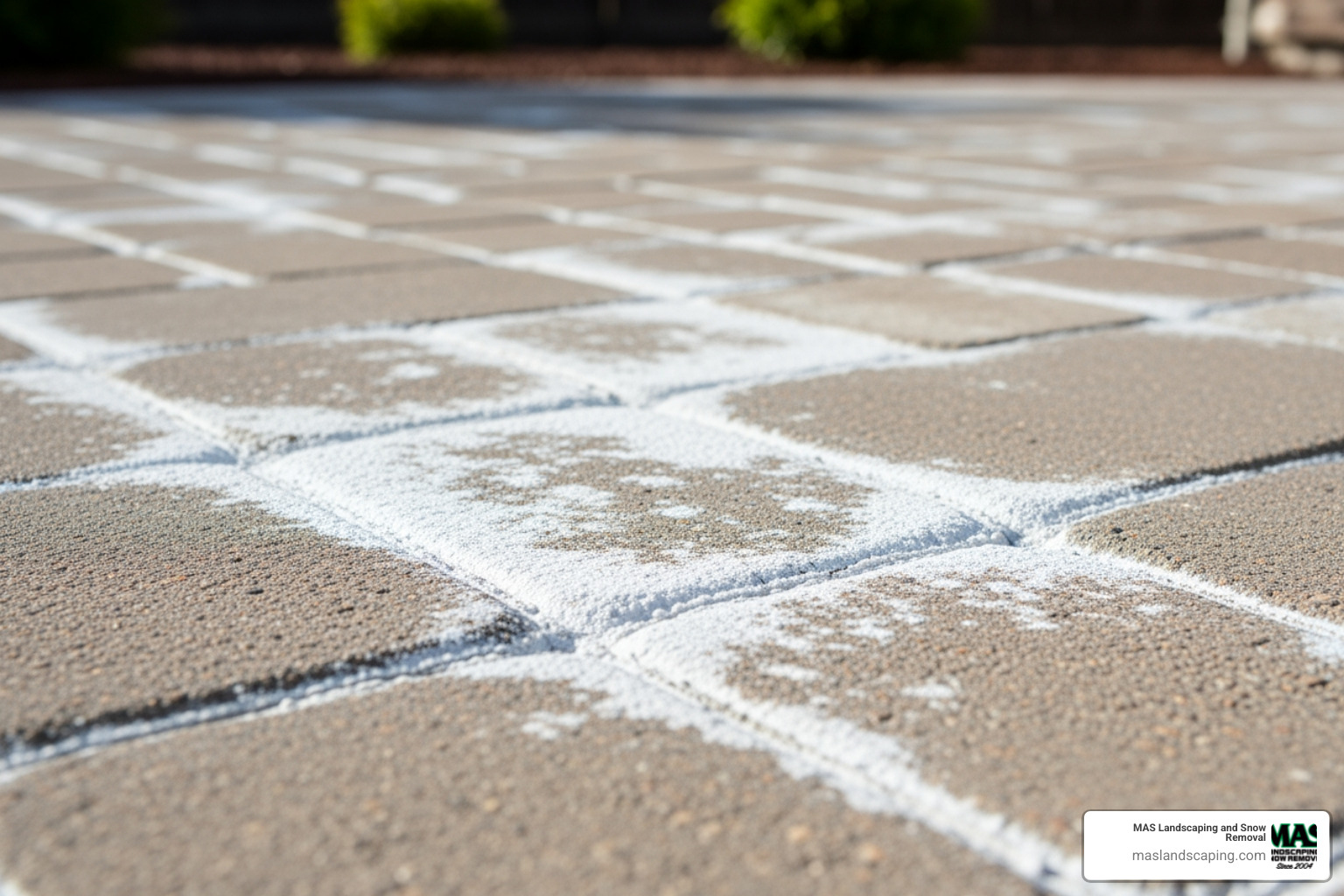
New pavers need time to “breathe” out the natural salts (efflorescence) that are part of the manufacturing process. If you seal too early, you’ll trap those salts under the sealer, creating a permanent hazy white film that is a nightmare to remove.
- The 60-90 Day Rule: For most standard pavers, we recommend waiting at least 60 to 90 days before the first sealing.
- The 3-5 Year Cycle: Generally, Patio Paver Sealing is not a “one and done” job. To keep the protection active, you should plan to reseal every three to five years. If you notice water is no longer beading on the surface, or the color is starting to fade, it’s time to consult our Choosing the Best Paver Sealer for Your Patio: A Buyer’s Guide.
Weather conditions are also a major factor. The “sweet spot” for application is a clear day with temperatures between 50°F and 90°F (75°F is ideal). Humidity should be low, and you must ensure there is no rain in the forecast for at least 24 to 48 hours.
5 Methods for Professional-Grade Results
Achieving that “pro” look isn’t just about the liquid in the can; it’s about the technique. Whether you are doing this yourself or hiring a team, following these five steps for How to Seal Paving will guarantee the best results.
Method 1: The Deep Clean and Power Wash
You wouldn’t wax a dirty car, and you shouldn’t seal a dirty patio. Any dirt, moss, or oil stains left on the surface will be permanently trapped under the sealer. We use a power washer to clear away years of grime.
For tough spots, a specialized degreaser or masonry cleaner is necessary to lift organic stains and oil. Once the washing is done, the most important part of this method is the wait: the pavers must dry for 24 to 48 hours. If there is moisture inside the stone, the sealer won’t bond properly.
Method 2: Joint Stabilization with Polymeric Sand
Before the sealer goes down, we check the joints. If the sand has washed out, we replace it with polymeric sand. This isn’t just regular play sand; it contains polymers that harden when misted with water. This provides incredible weed prevention and erosion control. For a deep dive on sand selection, check out Paver Perfection: Your Go-To Guide for Selecting the Right Sealant.
Method 3: Low-Pressure Spray Application
To get even coverage without leaving “lap marks,” we recommend using a low-pressure pump sprayer. This allows for total saturation of the paver and the joints. We move the sprayer in a consistent circular motion, ensuring every inch of the surface is wet. This method is often faster and more effective than rolling alone, especially for large driveways. You can find more tips on this in the guide on How to Apply Paver Sealer to a Driveway, Hardscape & More.
Method 4: The Back-Rolling Technique
Even when spraying, “back-rolling” is a secret weapon for a perfect finish. After the sealer is sprayed on, we use a foam roller (specifically a slit foam roller) to even out the liquid. This prevents pooling in the low spots of the pavers and removes excess sealer that might otherwise turn into a sticky mess. If you’re wondering about the best rollers to use, see our guide on How to Seal Patio Pavers.
Method 5: Multi-Coat Protection and Curing
One thick coat is never as good as two thin coats. Applying a second coat (usually about two hours after the first) ensures maximum durability. Once applied, the curing process begins.
- 24 Hours: Safe for foot traffic.
- 72 Hours: Safe for vehicle traffic (on driveways).
- Keep it Dry: Ensure your sprinklers are turned off during this window!
Common Mistakes and Cost Considerations
Even with the best intentions, things can go wrong. The most common “fail” we see in places like Danvers or Peabody is “blushing”—when the sealer turns a milky white. This is almost always caused by trapped moisture. If it rained the night before you sealed, or if you didn’t wait long enough after power washing, that water has nowhere to go but up into the sealer.
Another mistake is over-application. More is not better; too much sealer can make the surface incredibly slippery and prone to peeling.
If you are looking for Patio Paver Sealer Companies Near Me, it helps to know the general market rates.
Average Costs (Based on Internet Data):
- Sealer Materials: $80 to $450 per gallon (depending on quality and type).
- Professional Labor: $50 to $240 per hour.
- Sealer Stripper (for fixing mistakes): $20 to $150 per gallon.
Note: These are average costs based on internet data and not actual costs for MAS Landscaping. Every project is unique, and we provide personalized quotes based on your specific needs.
Frequently Asked Questions about Paver Maintenance
Should I seal new pavers immediately?
No. As mentioned, you should wait for the efflorescence to clear. For non-film-forming sealers, you might wait 30 days, but for most film-forming products, a 90-day recommendation is much safer to ensure the stone is fully cured and stable.
Will sealing make my patio slippery?
It can, especially if you choose a high-gloss film-forming finish. However, you can add non-slip additives (which are essentially fine, clear granules) to the sealer to provide extra texture and safety, particularly around pool decks or steps.
How long does it take for the sealer to cure?
While it may feel dry to the touch in a few hours, it takes about 24 hours to handle foot traffic and 48-72 hours to fully cure for heavy furniture or vehicles. High humidity can extend these times significantly.
Conclusion
At MAS Landscaping and Snow Removal, we take pride in helping our neighbors in Saugus, Everett, and Lynnfield protect their outdoor investments. We know that a patio is more than just stone—it’s where you host birthdays, relax after work, and build memories.
Whether you need a fresh Patio Paver Installation or you want to revitalize an existing one with professional Patio Paver Sealing, we bring local expertise and personalized service to every job. Let us help you keep your “outdoor oasis” looking as good as new for years to come!