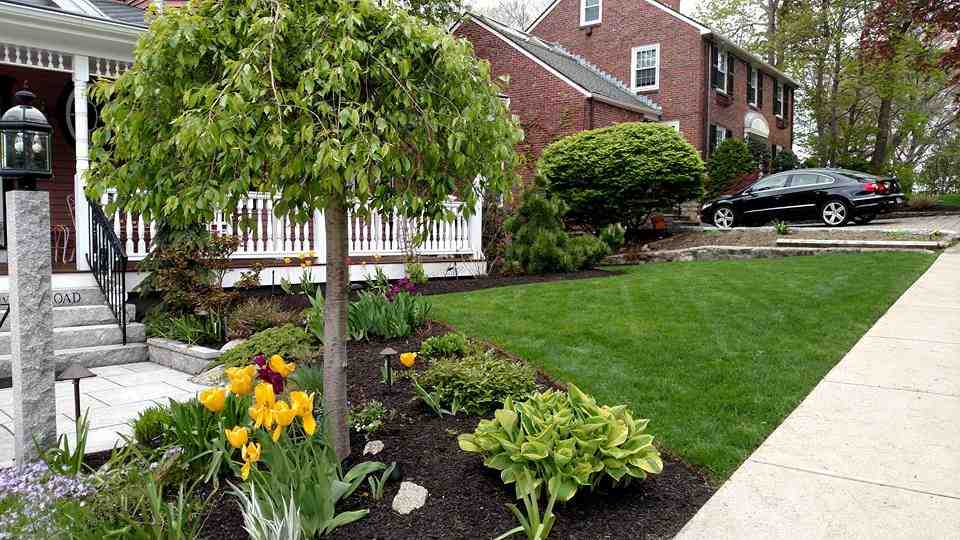



What Melrose MA Homeowners Need to Know About Driveway Pavers
If you’re researching driveway pavers Melrose MA, here’s a quick overview of what to expect:
- Materials: Concrete, clay brick, natural stone, and permeable pavers are all common choices for Melrose homes
- Durability: Professionally installed paver driveways can last 25–50 years with proper maintenance
- Climate fit: Pavers handle New England freeze-thaw cycles better than solid asphalt or concrete because individual units can flex and shift without cracking the entire surface
- Repairability: Damaged pavers can be replaced one at a time — no need to repave the whole driveway
- Maintenance: Expect seasonal cleaning, joint sand top-ups, and resealing every few years
- Best time to install: Late spring through early fall is the ideal installation window in Massachusetts
Your driveway is one of the first things people notice about your home. In a city like Melrose — with its mix of classic New England architecture, mature tree-lined streets, and real winter weather — the material you choose matters a lot.
Poured concrete and asphalt are common, but they crack, stain, and age in ways that are hard to fix without major work. Paver driveways solve those problems differently. They’re built in individual units, so the surface can move with the ground instead of fighting it. When something goes wrong, you fix the affected section — not the whole driveway.
Melrose’s soil conditions and seasonal freeze-thaw cycles put extra stress on any paved surface. A well-installed paver driveway — with proper excavation depth, a compacted stone base, and drainage built in from the start — is one of the most resilient options available to local homeowners.
This guide covers everything: materials, installation, costs, maintenance, permits, and how to find the right contractor in Melrose.
Driveway Pavers Melrose MA word list:
Why Driveway Pavers Melrose MA Homeowners Choose for Long-Lasting Driveway Upgrades
Driveway pavers are popular in Melrose because they solve several local problems at once: weather movement, drainage, curb appeal, and long-term repairability.
Unlike one continuous slab of concrete or asphalt, a paver driveway is made from many interlocking units. That matters in Massachusetts. When the ground freezes, expands, thaws, and settles, a flexible paver system can absorb small movements better than a rigid surface. If a section settles or a paver gets stained, the repair is usually localized.
For homes in Melrose, Saugus, Malden, Stoneham, Wakefield, Reading, and nearby North Shore communities, pavers also fit the look of older New England neighborhoods. They can feel classic, clean, and high-end without looking out of place.
| Paver type | Best look | Maintenance needs | Drainage options | Melrose climate fit |
|---|---|---|---|---|
| Concrete pavers | Traditional or modern | Cleaning, joint sand, optional sealing | Standard or permeable | Very strong when rated for vehicles |
| Clay brick pavers | Historic New England style | Cleaning, joint maintenance | Standard joints | Good, but choose durable driveway-rated units |
| Natural stone pavers | Premium, organic, timeless | Cleaning, occasional resetting | Depends on joint design | Excellent when properly installed |
| Permeable pavers | Eco-friendly, clean, functional | Vacuuming or debris clearing, joint care | High drainage capacity | Excellent for runoff control |
| Granite or bluestone accents | Borders, aprons, edging | Low to moderate | Usually decorative, not full drainage system | Excellent as accents |
Main Benefits of Paver Driveways in Melrose
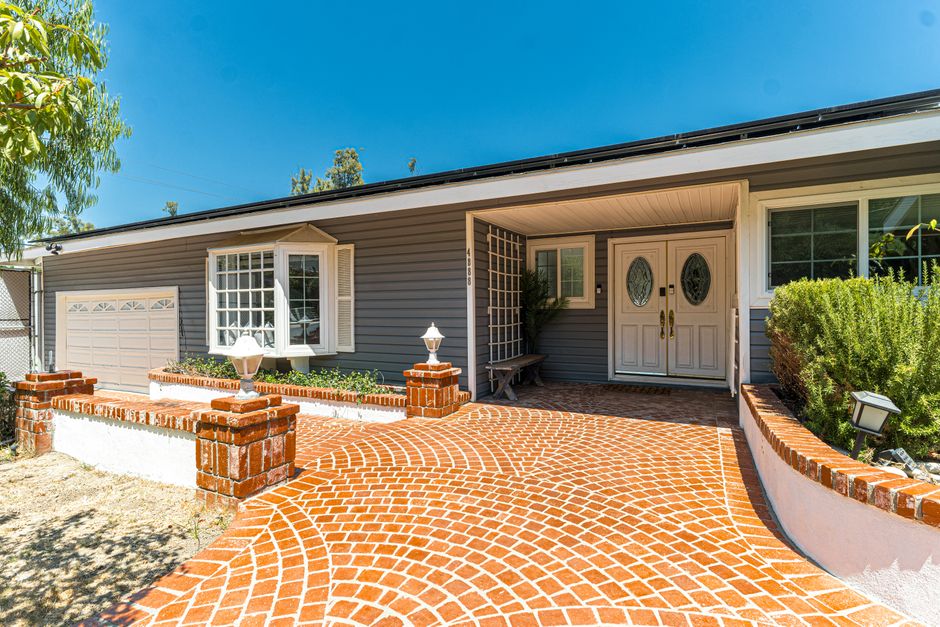
Here are the biggest reasons homeowners choose paver driveways over asphalt or poured concrete:
- Better freeze-thaw performance: Individual units can move slightly without creating one long crack across the driveway.
- Easy spot repairs: If a paver chips, stains, or sinks, it can be removed and replaced.
- Strong curb appeal: Pavers create a more finished, custom look than plain blacktop.
- More design flexibility: Patterns, borders, color blends, and textures can match the home.
- Improved traction: Many pavers have textured surfaces that help with grip in wet or snowy weather.
- Drainage control: Proper pitch, base material, and permeable options can reduce puddling.
- Long-term value: A well-built paver driveway can be a premium hardscape feature for buyers.
- Lower visible cracking: Pavers can still move or settle if installed poorly, but they do not crack like one continuous slab.
There is one catch: pavers are only as good as the base beneath them. We like to say the pavers get the compliments, but the gravel base does the actual work. It is not glamorous, but neither is a driveway that turns into a wave pool every February.
Best Paver Materials for Melrose’s Climate and Soil
The best driveway paver material depends on your home style, budget goals, drainage needs, and how the driveway will be used.
Concrete pavers are the most common choice for driveway projects. They come in many shapes, colors, and finishes, and many are manufactured specifically for vehicle loads. For Melrose homes, concrete pavers offer a strong balance of durability, style, and availability.
Clay brick pavers give a traditional look that works beautifully with colonial, Victorian, and older New England homes. For driveways, it is important to use brick pavers rated for vehicular use, not thin patio brick.
Natural stone pavers offer a premium finish and excellent durability. Granite, cobblestone, and similar materials can handle heavy use when installed correctly. They are especially popular for aprons, borders, and accent bands.
Bluestone and granite accents can be used to frame the driveway, connect to steps, or tie into walkways. These accents are great for homes that already have stone walls, granite steps, or masonry features.
Permeable pavers are designed to let water pass through the joints into an open-graded stone base below. They can be a smart option when runoff, puddling, or stormwater management is a concern.
For more on material selection and installation options, see our guide to brick paver installers.
Driveway Pavers Melrose MA Design Options for Style and Function
A paver driveway should look good, but it also needs to handle turning tires, snow removal, runoff, and daily use.
Popular design choices include:
- Herringbone pattern: One of the strongest patterns for driveways because it resists shifting from vehicle movement.
- Running bond: A clean, linear look that works well for narrow driveways and modern designs.
- Basketweave: A more traditional pattern, often used for classic brick-style projects.
- Contrasting borders: Helps define the driveway edges and gives a finished look.
- Decorative aprons: A granite, cobblestone, or contrasting paver apron near the street can elevate the entrance.
- Color blends: Gray, charcoal, tan, brown, and mixed earth tones can complement Melrose homes.
- Tumbled pavers: A softer, aged appearance that works well with older architecture.
- Modern slabs: Larger-format pavers for a cleaner contemporary style.
- Permeable grids: Useful where water management is a design priority.
A driveway often looks best when it connects visually with the front walk, steps, and landscape beds. You can learn more about coordinated front-yard hardscapes on our driveways and walkways page.
How Proper Installation Creates Drainage, Strength, and Longevity
A beautiful paver driveway can fail early if the installation skips the fundamentals. In New England, proper installation is not optional. It is the whole ballgame.
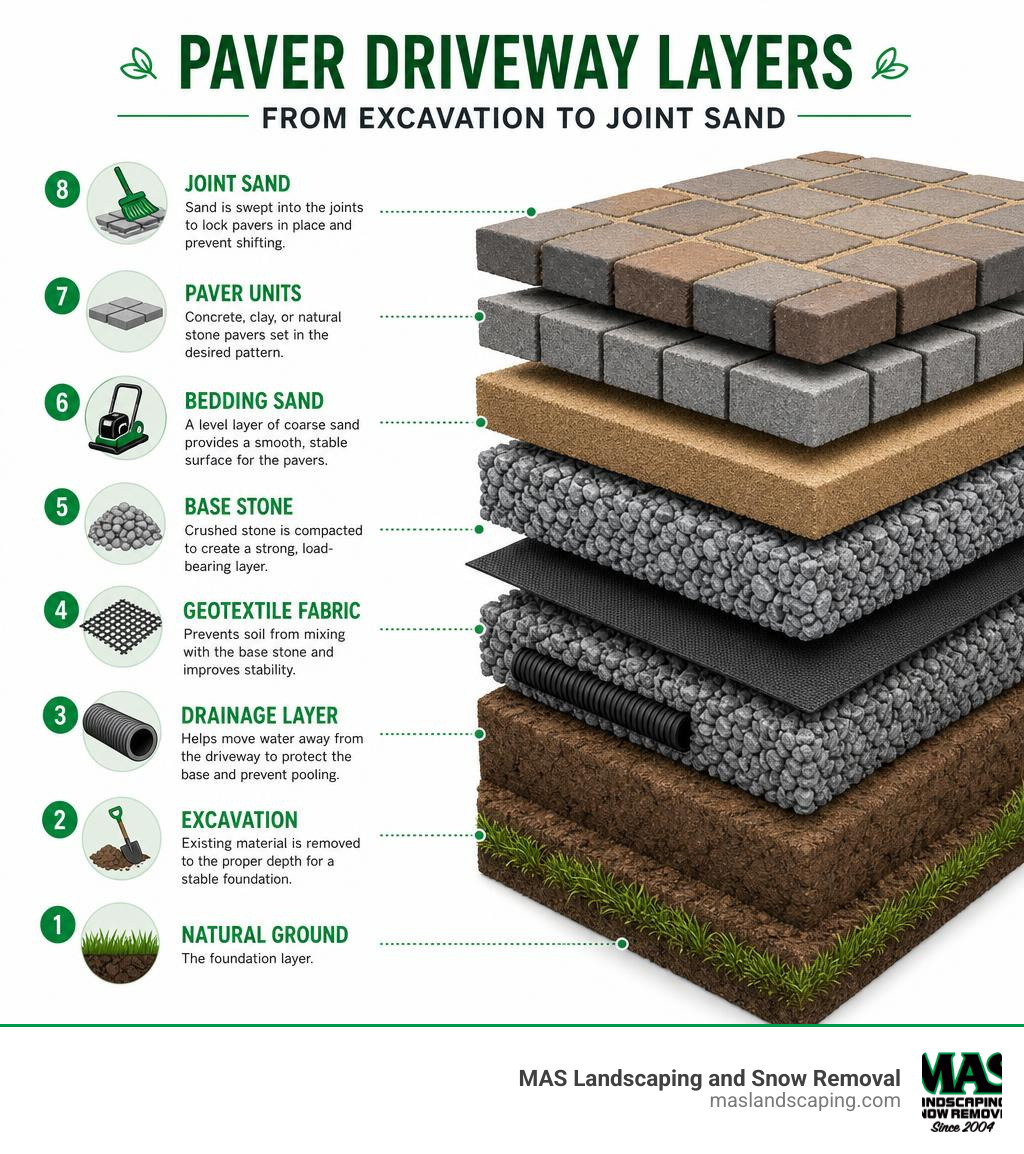
A strong paver driveway typically includes:
- Site assessment
- Excavation to the right depth
- Stable subgrade preparation
- Geotextile fabric where needed
- Compacted crushed stone base
- Bedding layer
- Proper pitch away from the home
- Edge restraints
- Paver installation
- Joint sand or polymeric sand
- Final compaction
- Drainage planning
Base Preparation for New England Freeze-Thaw Cycles

The base is what determines whether a paver driveway stays flat or starts to settle.
For many New England driveway projects, excavation may be around 8 to 12 inches or more depending on soil, slope, drainage, and vehicle load. The goal is to remove weak soil and replace it with compacted crushed stone that drains well and resists frost movement.
Important base details include:
- Compacted subgrade: The soil below the driveway must be firm and stable.
- Geotextile fabric: Helps separate soil from stone in certain conditions.
- Crushed stone base: Provides strength and drainage.
- Compaction in lifts: Stone should be compacted in layers, not dumped in all at once.
- Correct bedding layer: The pavers sit on a thin, even bedding layer.
- Driveway-rated pavers: Patio pavers and driveway pavers are not always the same.
- Edge restraints: These help prevent the pavers from spreading outward over time.
Clay-heavy or poorly draining soils need extra attention. If water sits below the pavers and freezes, it can lift the surface. That is why drainage and base depth are so closely connected.
Drainage Details That Prevent Puddling and Heaving
Drainage is one of the most important parts of any Driveway Pavers Melrose MA project. A driveway should move water away from the garage, foundation, walkway, and neighboring properties.
Common drainage details include:
- Surface pitch to guide water away from the house
- Careful garage threshold planning to prevent water from entering the garage
- Trench drains where slope is limited
- Dry wells where appropriate and allowed
- Permeable joints for infiltration
- Coordination with roof leaders so downspouts do not dump water onto the driveway
- Stable edge grading to prevent washout
- Snowmelt planning to reduce winter ice patches
Poor drainage can lead to puddles, ice, joint washout, base saturation, and heaving. In winter, a small puddle can become a skating rink. We prefer driveways, not surprise hockey rinks.
For larger drainage-first outdoor projects, see our hardscaping services.
Expected Lifespan of a Professionally Installed Paver Driveway
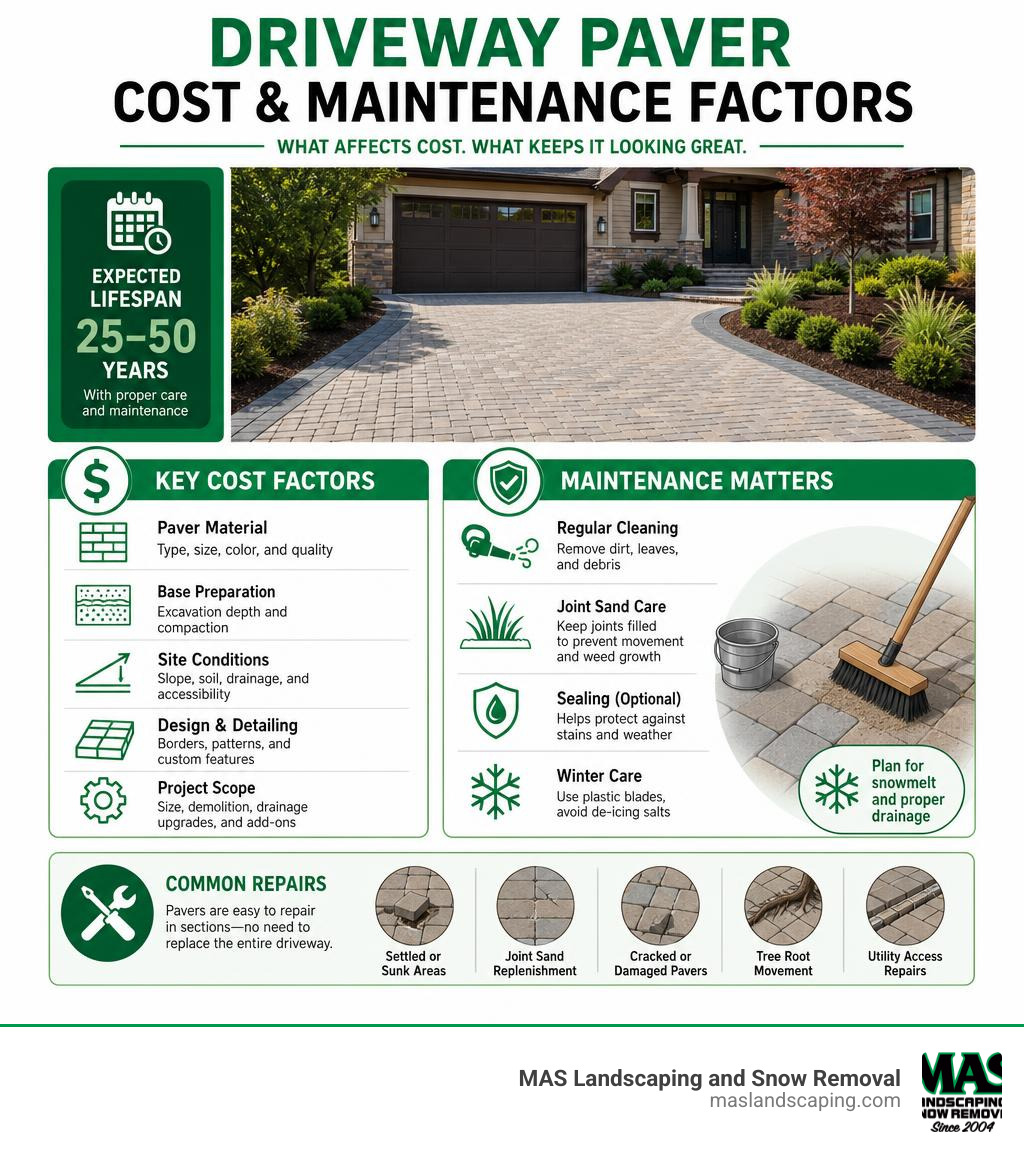
A professionally installed paver driveway can often last 25 to 50 years with proper care. The exact lifespan depends on:
- Material quality
- Base depth and compaction
- Soil conditions
- Drainage performance
- Snow removal methods
- Joint sand upkeep
- Sealing schedule
- Traffic load
- Tree root pressure
- Whether repairs are handled early
One major advantage is that paver driveways are repairable in sections. If a tree root lifts one area or a utility line needs access, the affected pavers can often be removed and reset rather than demolished.
Average Driveway Paver Costs, Maintenance, and Common Repairs in Melrose
Driveway paver projects vary widely because every property is different. A flat, accessible driveway with good drainage is very different from a sloped driveway with old asphalt removal, tight equipment access, drainage upgrades, and custom stone borders.
We are not listing MAS Landscaping pricing here because real pricing requires a site visit and a proper scope. Online cost information should only be treated as general internet-based guidance, not a quote.
What Homeowners Can Expect to Pay
Based on general internet data, driveway paver installation is usually priced higher than basic asphalt and often higher than standard poured concrete. That is because paver work includes more detailed excavation, base preparation, layout, cutting, edge restraint, jointing, and finishing.
The biggest cost factors are:
- Driveway size
- Existing driveway removal
- Excavation depth
- Soil conditions
- Drainage improvements
- Material type
- Pattern complexity
- Borders and aprons
- Permeable system requirements
- Site access
- Disposal needs
- Steps, walkways, walls, or landscaping tied into the project
Concrete pavers are often the most practical choice for many homeowners. Clay brick and natural stone may increase complexity depending on the product and layout. Permeable systems can also require a more specialized base.
For a related breakdown of how hardscape project costs are influenced by materials and site conditions, visit our guide to paver patio installation cost.
Maintenance Schedule for Paver Driveways
Paver driveways are low maintenance, not no maintenance. A simple seasonal routine goes a long way.
Spring
- Sweep debris and leftover winter sand
- Inspect for settling or edge movement
- Check joints and refill sand if needed
- Rinse salt residue from the surface
- Look for drainage issues after heavy rain
Summer
- Clean oil or grease stains quickly
- Wash the driveway as needed
- Remove weeds before roots establish
- Consider sealing if the surface is due
Fall
- Remove leaves regularly to prevent staining
- Clear joints before winter
- Check that drains and edges are open
- Trim nearby vegetation
Winter
- Use plastic-edged shovels when possible
- Avoid aggressive metal scraping
- Use ice melt carefully and follow paver manufacturer guidance
- Do not pile heavy snow in one weak edge area repeatedly
- Watch for refreezing in shaded areas
Sealing is often recommended every few years depending on the paver type, exposure, and appearance goals. Sealers can help with color enhancement, stain resistance, and joint stabilization, but they must be applied correctly.
For cleaning help, read our guide on choosing a driveway paver cleaner. For sealing details, see our driveway paver sealing guide.
Common Issues and How to Prevent or Repair Them
Most paver driveway problems come from base, drainage, or edge issues.
Common problems include:
- Settling: Usually caused by poor compaction, weak soil, or water below the base.
- Shifting: Often caused by missing or failed edge restraints.
- Edge spread: Happens when the driveway edges are not properly contained.
- Puddling: Usually a grading or drainage issue.
- Washout: Water moves bedding sand or joint material out of place.
- Weeds: Seeds settle in joints, especially where debris collects.
- Efflorescence: A white mineral haze that can appear on concrete pavers.
- Oil stains: Common in driveways but easier to treat when cleaned early.
- Cracked pavers: Usually isolated and replaceable.
- Root pressure: Mature Melrose trees can lift sections over time.
The good news is that many paver issues are repairable. A contractor can lift the affected section, correct the base, and relay the pavers. That is a major advantage over concrete slabs, where repairs often look like patches.
Permits, Contractors, Property Value, and Customization in Melrose
Before installing a driveway, homeowners should think beyond the surface material. Local rules, drainage, contractor quality, and long-term property value all matter.
Local Regulations and HOA Considerations Before Installation
Before starting a driveway project in Melrose, homeowners should check with the City of Melrose or the appropriate local department about rules that may apply. Requirements can vary depending on the scope of work.
Possible considerations include:
- Driveway expansion rules
- Curb cut approval
- Work in the public right-of-way
- Sidewalk or apron impacts
- Stormwater management
- Impervious surface limits
- Conservation or wetland restrictions
- Historic district considerations
- Utility access
- HOA or neighborhood association rules, if applicable
Before excavation, utility markings are essential. In Massachusetts, homeowners and contractors should use Dig Safe before digging. Even shallow hardscape work can run into utilities, irrigation, lighting wires, or old surprises that no one invited to the party.
How to Choose a Reputable Paver Driveway Contractor
Choosing the right contractor is one of the most important decisions in the project. The best-looking paver in the world will not save a poorly prepared base.
Ask these questions before signing:
- Do you have experience with driveway pavers in Melrose or nearby Massachusetts communities?
- What excavation depth do you recommend for my property, and why?
- What base material will you use?
- Will the base be compacted in layers?
- How will you handle drainage?
- Are the pavers rated for vehicular traffic?
- Will you install edge restraints?
- What type of joint sand will be used?
- How will the driveway connect to the street, garage, and walkways?
- Do you provide a written scope of work?
- Can I see photos of similar projects?
- Are you insured?
- What is the expected timeline?
- What cleanup is included?
- What warranty or workmanship policy applies?
A clear proposal should include materials, base preparation, drainage details, timeline, and cleanup expectations. Vague scopes lead to vague results. And in driveway work, vague is where puddles are born.
How Paver Driveways Improve Curb Appeal and Resale Value
A driveway takes up a large part of the front yard, so upgrading it can dramatically change how a home feels from the street.
Paver driveways improve curb appeal by adding:
- A cleaner entry sequence
- A premium hardscape finish
- Better connection to walkways and steps
- Color and texture that complement the house
- Defined borders and edges
- A more intentional front-yard design
- Low-maintenance appeal for future buyers
In Melrose neighborhoods, where many homes have character and mature landscaping, pavers can help the driveway feel like part of the property rather than just a place to park.
For help coordinating your driveway with planting, grading, and hardscape design, visit our page for landscaping companies near Melrose MA.
Permeable and Eco-Friendly Driveway Paver Options
Permeable pavers are a strong option for homeowners who want to manage runoff more responsibly. Instead of sending water across the surface into the street or low spots, permeable systems allow water to move through wider joints into a specially designed stone base.
Benefits can include:
- Reduced puddling
- Lower surface runoff
- Better snowmelt drainage
- Groundwater recharge
- Less stress on storm drains
- Improved performance in tight drainage areas
- A more sustainable driveway design
Permeable driveways require proper design. The base is different from a standard paver driveway, and the joints need to remain open enough for water to pass through. Leaves, sediment, and debris should be cleared so the system keeps working.
If you are starting to compare local installation options, our paver installation near me guide can help.
Frequently Asked Questions About Driveway Pavers Melrose MA
Here are quick answers to the questions we hear most often from homeowners exploring Driveway Pavers Melrose MA projects.
Are Driveway Pavers Melrose MA Projects Good for Winter Conditions?
Yes, when installed correctly. Paver driveways are well suited for winter because they are flexible, repairable, and drain well when properly designed.
The key winter advantages are:
- Individual units can move slightly during freeze-thaw cycles
- Textured surfaces can improve traction
- Damaged pavers can be replaced individually
- Proper drainage reduces ice buildup
- Permeable options can help snowmelt move through the surface
Snow removal should be done with care. Plastic-edged shovels are safer for the surface than sharp metal edges. If a plow is used, the blade should be set properly to avoid catching edges or raised pavers.
How Long Does Installation Usually Take?
Small paver driveway projects may take only a few days, while a typical driveway often takes about a week depending on size, weather, access, excavation, drainage, and design complexity.
The general process includes:
- Site preparation and demolition
- Excavation
- Base installation and compaction
- Drainage work
- Bedding layer
- Paver installation
- Cutting and borders
- Joint sand installation
- Final compaction and cleanup
- Walkthrough
Weather can affect the schedule, especially during wet periods. Drainage upgrades, custom borders, and difficult access can also add time.
Can Paver Driveways Be Matched to Walkways, Patios, and Steps?
Absolutely. In fact, that is one of the best reasons to choose pavers.
A driveway can be designed to coordinate with:
- Front walkways
- Granite steps
- Paver patios
- Retaining walls
- Garden borders
- Porch entries
- Outdoor lighting
- Planting beds
- Stone veneer or masonry details
A cohesive hardscape plan helps the whole property feel connected. The driveway does not have to match everything perfectly, but colors, borders, and textures should feel intentional.
For more design ideas, explore our pages on hiring a paver patio contractor and comparing paver companies.
Conclusion
A paver driveway is one of the most attractive and durable upgrades a Melrose homeowner can make, but success depends on the details: the right material, proper excavation, a compacted base, strong edge restraints, and drainage planned from the beginning.
At MAS Landscaping and Snow Removal, we bring local experience, personalized service, and a practical understanding of Massachusetts weather to every hardscape project. We serve Melrose, Saugus, Malden, Lynnfield, Everett, Stoneham, Wakefield, Reading, and nearby communities with a focus on outdoor spaces that are both beautiful and built to work.
If you are planning a driveway upgrade, we would be happy to help you think through materials, layout, drainage, and long-term maintenance.
Ready to start planning? Explore our landscape contractor services.