


Do I need additional top soil when planting grass seed Top 3
Why Understanding Your Topsoil Needs is Essential for a Healthy Lawn
Do i need additional top soil when planting grass seed? The answer depends on your existing soil quality. Here’s the quick answer:
When You Need Additional Topsoil:
- Your existing soil is heavily compacted clay
- The soil is mostly rocky, sandy, or nutrient-poor
- You’re establishing a completely new lawn on bare ground
- Your existing soil depth is less than 4-6 inches
When You May Not Need Additional Topsoil:
- Your existing soil is healthy, loamy, and well-draining
- You’re overseeding an established lawn
- You’ve recently amended the soil with compost and organic matter
As homeowners in the Greater Boston area prepare for lawn season, a common question arises: do you actually need to add topsoil when planting grass seed?
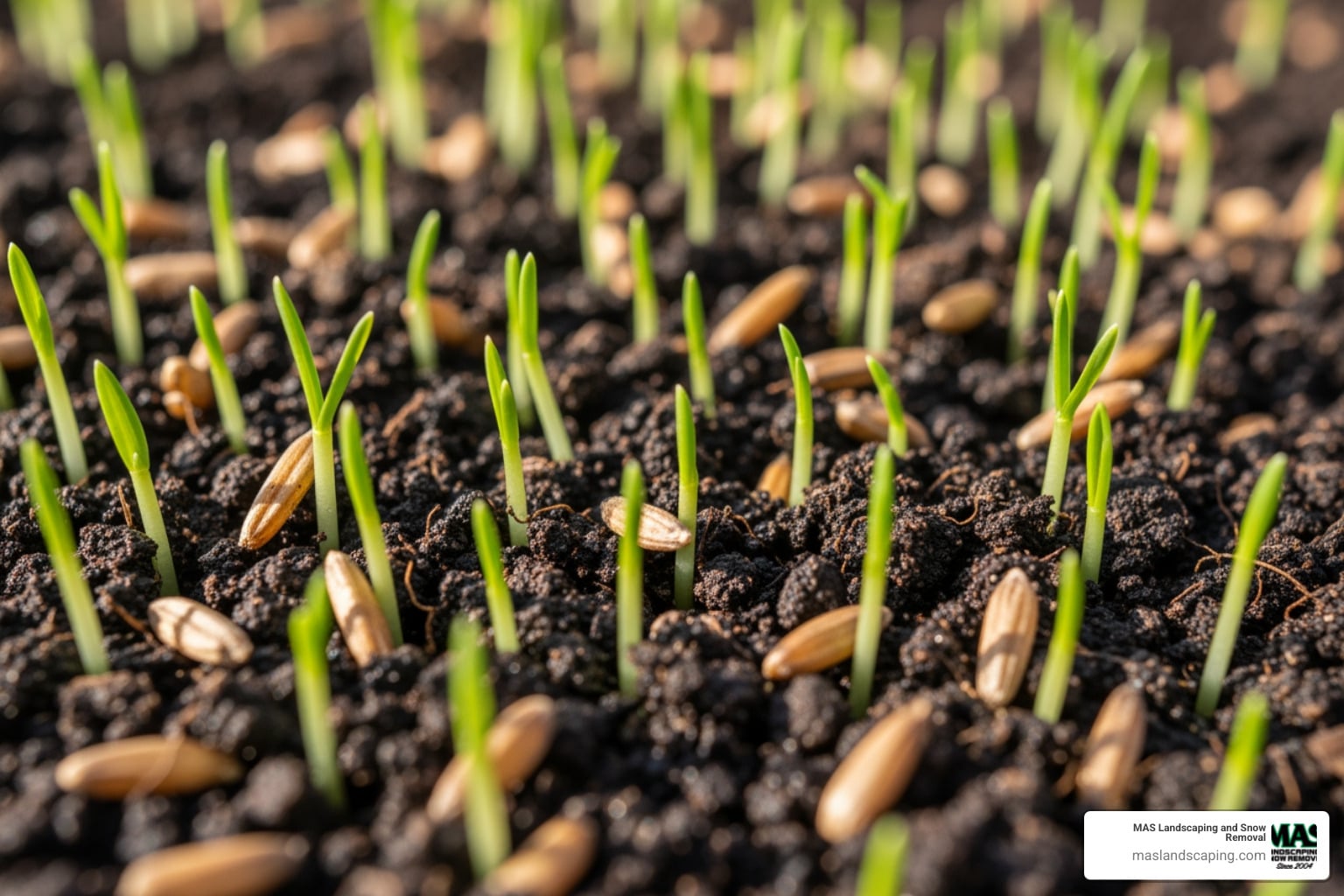
Grass seeds are extremely sensitive and must be planted at a shallow depth of just ⅛ to ¼ inch. However, the quality of the soil beneath them is tremendously important for healthy growth.
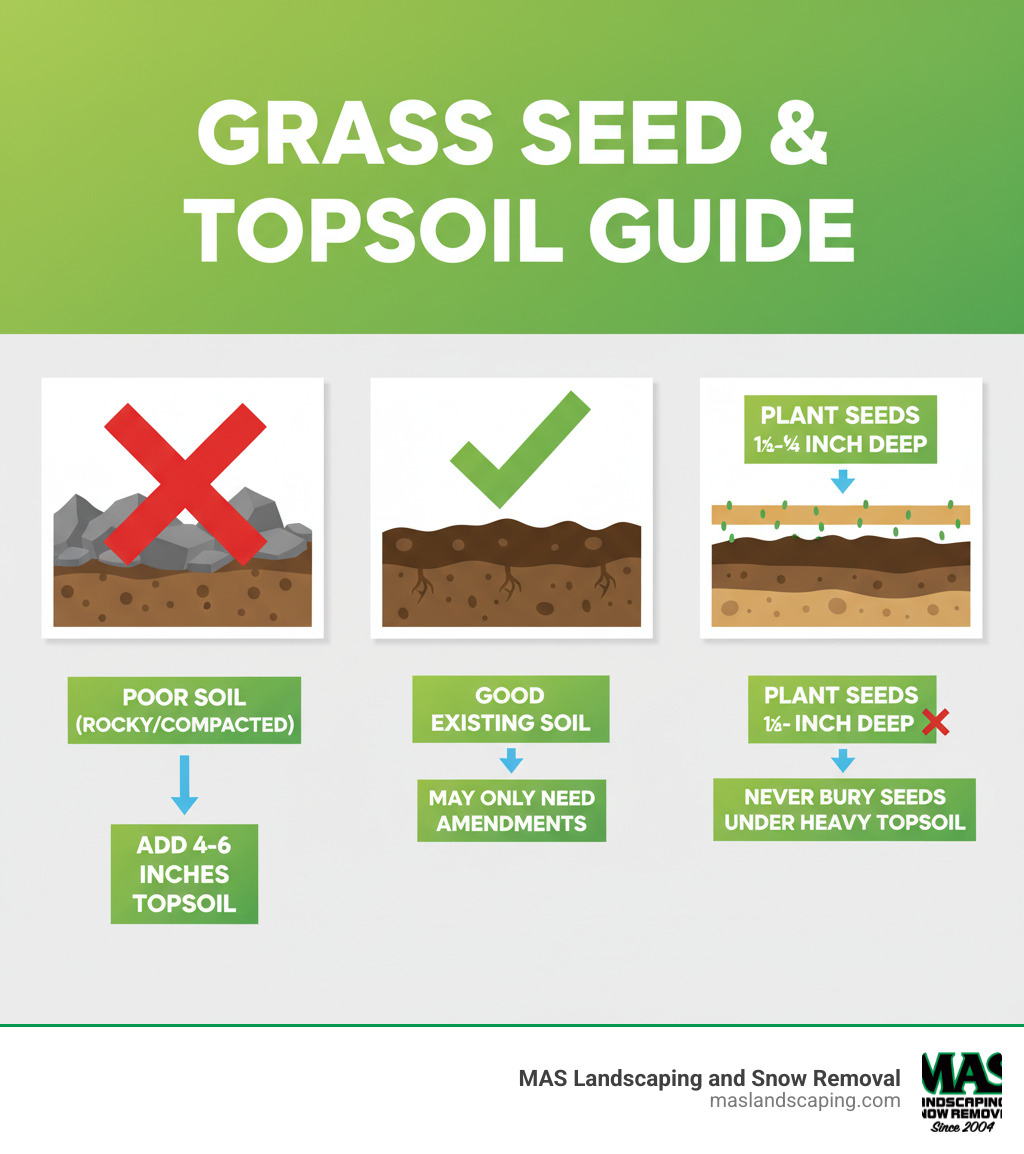
Confusion often stems from two different uses of topsoil: preparing the soil base before planting, and covering seeds after planting. These are separate steps, and confusing them can lead to a weak lawn. Adding quality topsoil before seeding provides the nutrients and structure for deep roots, while piling topsoil on top of seeds will suffocate them.
Let’s break down when to use additional topsoil, how much you need, and the correct application for a thick, green lawn.
The Role of Topsoil in Lawn Establishment
Think of topsoil as the living foundation of your lawn. It’s not just dirt; it’s an ecosystem that feeds, hydrates, and supports your grass. When asking “do I need additional top soil when planting grass seed?” you’re evaluating if your current soil can supply nutrients, retain adequate water, drain excess moisture, and allow air circulation for roots to thrive.
The gold standard is loamy soil—a balanced mix of sand, silt, and clay with rich organic matter. This blend gives grass roots a loose structure to grow through, access to moisture, and drainage to prevent rot. In contrast, heavy clay soil compacts easily and holds too much water, leading to shallow roots. Sandy soil lets water and nutrients drain away too quickly. If you need to improve your soil, our loam delivery service can provide the right blend for your project.
Quality topsoil provides a steady nutrient supply from organic matter and microbial activity. It acts like a sponge for water retention during dry spells but also ensures proper drainage to prevent root rot. Most importantly, it creates the ideal environment for deep root development, which is the key to a resilient, drought-resistant lawn. For a full range of quality landscaping materials to support your project, we’ve got you covered.
Why Quality Soil is Non-Negotiable
You can’t fake good soil; it’s the one element where cutting corners will impact your lawn every season. Good soil structure, with ample air pockets, is essential for roots to breathe and for water to penetrate deeply. Organic matter is the key ingredient that transforms dirt into living soil, as it slowly releases nutrients, improves water retention, and feeds the beneficial microbes that keep your soil healthy. This microbial activity is vital for nutrient cycling and protecting grass from disease.
Compaction from foot traffic or heavy rain squeezes out the air pockets roots need to survive. Quality topsoil with good structure and regular aeration resists compaction and maintains these crucial air channels. Investing in good soil is the foundation for a lawn that requires less water and fertilizer and is more resistant to pests and heat stress.
Do I Need Additional Top Soil When Planting Grass Seed?
This is a common question for homeowners in Everett, Lynnfield, and Malden. The answer to “do i need additional top soil when planting grass seed?” depends entirely on your current soil’s condition. Before deciding, a quick soil assessment is necessary.
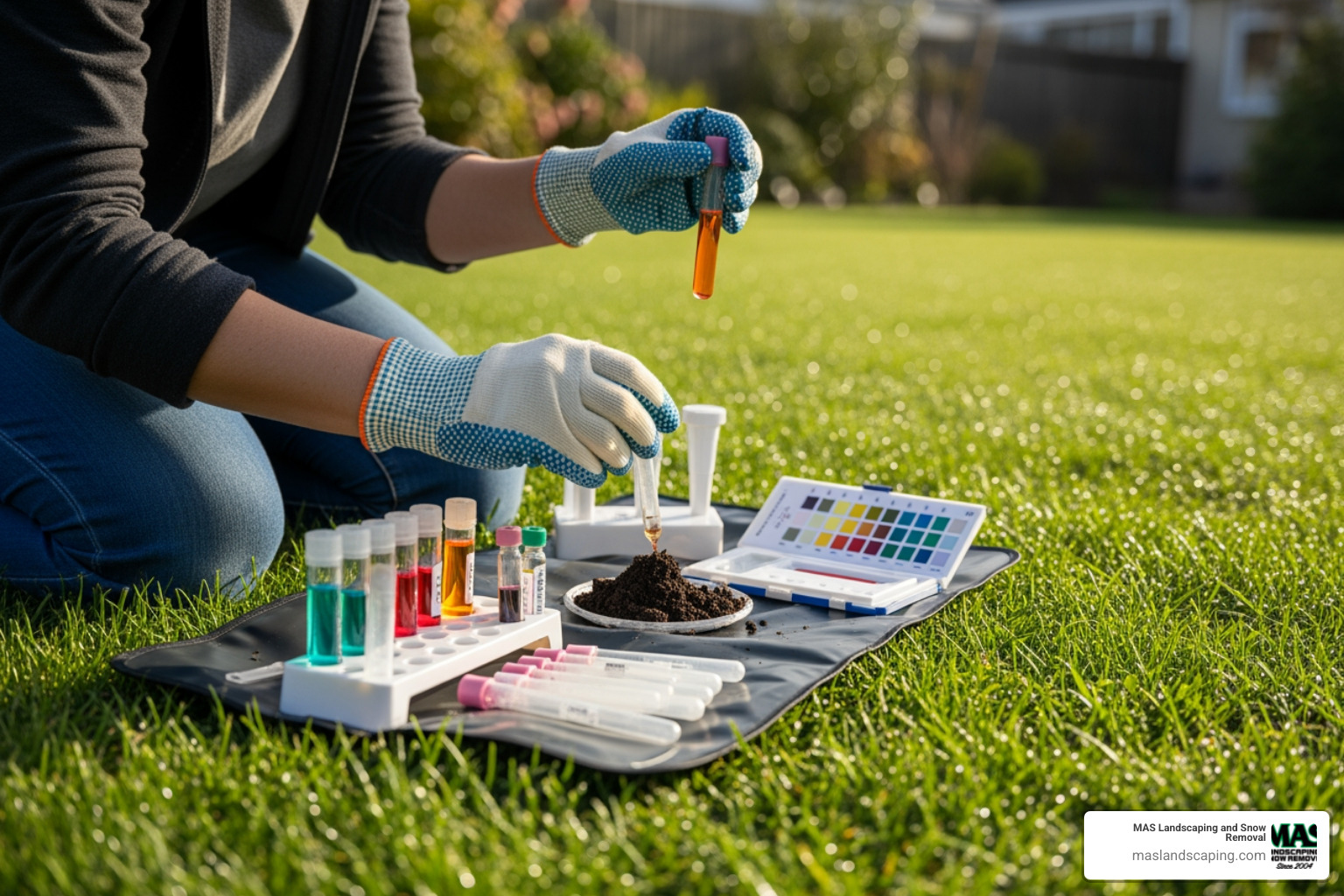
A proper soil assessment starts with examining your existing soil quality. Is it rocky, full of debris, hard as concrete when dry, or overly sandy? If so, you will need additional topsoil. Next, perform a simple compaction test by pushing a screwdriver into the ground. If it’s difficult to push 6-12 inches deep, your soil is compacted, which chokes roots and blocks water.
Finally, check your nutrient levels and soil pH with an inexpensive kit from a garden center. The test reveals nutrient deficiencies and your soil’s pH level. Most lawns thrive in a pH range of 6.0 to 7.5. According to research on lawn soil pH, an improper pH can prevent grass from absorbing available nutrients. If your assessment reveals heavy clay, sandy soil, compaction, or nutrient/pH issues, bringing in quality topsoil is the best path forward.
How Much Topsoil Do I Need When Planting Grass Seed?
For a new lawn or major renovation, aim for a total topsoil depth of 4 to 6 inches. This allows grass roots to grow deep and strong. You don’t need to add 6 inches of new soil on top of your existing base. A smarter approach is to add 2 to 4 inches of new topsoil and use a rototiller to blend it with the top 2 to 3 inches of your existing soil. This creates a uniform, nutrient-rich zone perfect for a healthy lawn.
Calculating volume is simple: measure your lawn’s square footage and decide on the depth of new topsoil. Your supplier can help you convert this to cubic yards. For smaller repairs or overseeding, a thin layer of ¼ to ½ inch of compost or topsoil is often sufficient. For comprehensive help, check out our new lawn installation services.
What is the Best Type of Topsoil to Use When Planting Grass Seed?
Not all topsoil is created equal. For the best results, choose screened topsoil, which has been sifted to remove rocks, sticks, and other debris, creating a fine texture ideal for seed-to-soil contact. The ideal soil type is loam, a balanced mixture of sand, silt, and clay that provides excellent drainage and moisture retention.
Look for topsoil with a compost blend or high organic content. Organic matter acts as a slow-release fertilizer and improves soil structure. A quality topsoil from a reputable supplier also helps you avoid weed seeds, which are often present in cheap, unscreened soil. Be cautious when amending heavy clay with sand, as the wrong ratio can create a concrete-like substance; compost is a safer amendment. Always buy from a reputable supplier who can detail the soil’s composition and origin. If you need help with grading or moving soil, our bobcat services can handle the heavy lifting.
Step-by-Step Guide: Preparing and Planting with Topsoil
You’ve figured out your topsoil needs and found the right material. Now comes the fun part—actually getting your lawn started! The difference between a patchy, struggling lawn and a lush, green carpet often comes down to how well you prepare and plant. Let’s walk through each step together, so you can feel confident tackling this project. For a complete overview of establishing a new lawn, explore our how to plant a lawn resources.
Step 1: Prepare the Area
Start by creating a clean slate. Clear all debris, including rocks, sticks, and old construction materials. Next, focus on old grass and weed removal. It’s best to remove existing turf and weeds to prevent them from competing with your new grass. You can do this by hand, with an herbicide (following label directions for wait times), or through solarization. If the clearing process is too much, our yard clean-up services can help. Finally, ensure proper grading for drainage, making sure the yard slopes gently away from your house to prevent water from pooling.
Step 2: Add and Prepare the Topsoil
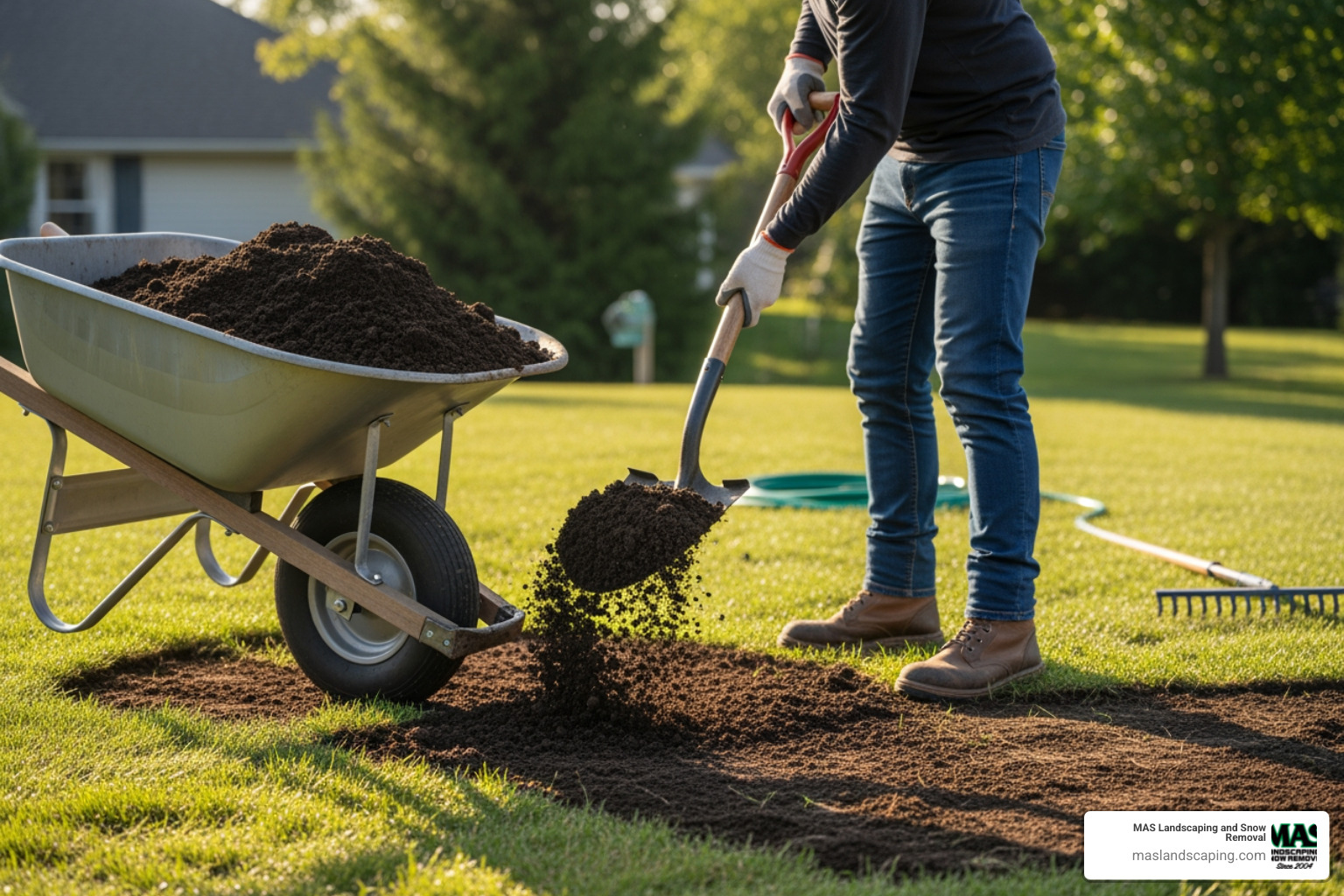
Now it’s time to add your new topsoil. Spread a 2-3+ inch layer evenly across the prepared area. Use a rototiller to blend the new topsoil with the top few inches of your existing soil, creating a unified bed about 6 inches deep. Use a landscaping rake to level the surface, removing bumps and filling in low spots. Based on your soil test results, amend the soil by working in lime, sulfur, or compost as needed. Finish with a light rolling using a lawn roller to firm the soil and remove large air pockets, ensuring good seed-to-soil contact later. For more detailed guidance on this crucial preparation phase, check out our guide on how to prepare ground for sod.
Step 3: Sow the Grass Seed
With your seedbed prepared, it’s time to plant. Use a seed spreader for even distribution over large areas. Make two passes in a crisscross pattern to avoid bare spots, and follow the recommended seeding rate on the package—over-applying seed can cause seedlings to crowd each other out. After spreading, lightly rake the area to ensure good seed-to-soil contact. The goal is to nestle the seeds into the topsoil at a shallow planting depth of only ⅛ to ¼ inch. For small patches, you can pre-mix grass seed with topsoil in a wheelbarrow before applying. For more techniques, see our guide on laying a new lawn with grass seed.
Step 4: Protect and Water the Seeds
Your seeds are vulnerable and need protection and consistent moisture. It is critical that you do not cover grass seed with a thick layer of topsoil, as this will suffocate them. Instead, apply a very thin layer (no more than ¼ inch) of clean straw or peat moss. This light covering helps retain moisture, prevents seeds from blowing away, and deters birds. As these mulching materials break down, they add nutrients to your soil. Our mulch delivery and installation services can help with materials.
Watering is the most important step now. Water lightly but frequently to keep the top ¼ to ½ inch of soil consistently damp. Avoid heavy watering that can wash seeds away. The germination period is typically two to four weeks. Be patient, keep watering, and avoid walking on the area. Once the grass is an inch tall, you can gradually water less frequently but more deeply to encourage strong root growth.
Frequently Asked Questions about Planting Grass Seed
We get many questions from homeowners in Saugus, Everett, and Malden about establishing a new lawn. Here are the most common ones.
Should I put topsoil over grass seed?
No, you should not cover grass seed with a thick layer of topsoil. Grass seeds are small and need light and air to germinate. Piling soil on top will suffocate them. The primary topsoil layer should be prepared before you seed. After seeding, apply only a very light covering of weed-free straw, peat moss, or compost to help retain moisture and protect the seeds.
What is the best time of year to plant grass seed in Massachusetts?
For Massachusetts, the best time to plant grass seed is early fall (late August through mid-September). The soil is warm from summer, which speeds up germination, while cooler air temperatures reduce stress on new seedlings. There is also less competition from weeds. Spring (April to mid-May) is the second-best option, but it requires more diligent watering and weed control.
Can I mix grass seed with topsoil before planting?
This depends on the project size. For small repairs like filling bare patches, mixing grass seed with topsoil or compost in a wheelbarrow is an excellent technique. It ensures great seed-to-soil contact. For larger areas like a new lawn, this method is impractical and can lead to uneven seed distribution. For big projects, it’s better to prepare the entire topsoil bed first, then broadcast the seed evenly over the top.
Achieve Your Dream Lawn
Now you can confidently answer the question: do i need additional top soil when planting grass seed. The key is understanding your specific soil needs and taking the right steps for lasting results.
A healthy lawn starts beneath the surface with quality topsoil that provides the nutrients, drainage, and support your grass needs. By assessing your soil, adding the right amount of topsoil before seeding, and protecting seeds with a light covering after planting, you are setting your lawn up for success.
The key takeaway is simple: Topsoil goes down first, seeds go on top, and only a light protective layer goes over the seeds. This sequence is the difference between a patchy lawn and the thick, green turf you want.
For homeowners in Saugus, Everett, Lynnfield, and Malden, creating a beautiful lawn can be a big project. Professional expertise can save you time, frustration, and costly mistakes. Whether you need quality loam delivered, precise grading, or a complete lawn installation, MAS Landscaping and Snow Removal has the local knowledge to get the job done right.
Ready to transform your yard? Explore our lawn installation services to get started, and let’s build your dream lawn together.