


Precast concrete garden walls: Top 5 Benefits
Why Precast Concrete Garden Walls Are Changing Modern Landscapes
Precast concrete garden walls are revolutionizing modern landscapes by offering a faster, stronger, and more consistent alternative to traditional masonry. These walls are created using precast concrete, a process where panels are manufactured in a controlled factory environment and then transported to your property for installation. This method ensures superior quality and durability.
Why Choose Precast Concrete Garden Walls?
- Superior Quality: Factory production ensures consistent strength and appearance.
- Fast Installation: Projects are completed in days, not weeks.
- Exceptional Durability: Resistant to weather, rot, insects, and freeze-thaw cycles.
- Design Versatility: Available in textures that mimic natural stone, wood, or brick.
- Low Maintenance: Requires no repointing or regular sealing.
- Long-Term Value: Cost-effective due to reduced labor and upkeep.
The factory-controlled process is the key advantage. By carefully monitoring temperature, moisture, and mixing ratios, each panel is cured to exact specifications. The result is a wall with remarkable longevity—often lasting 50 to 100 years—that provides the perfect blend of form and function for Greater Boston’s demanding climate.
The Precast Advantage: Benefits Over Traditional Masonry
While classic brick and natural stone have their charm, precast concrete garden walls are a game-changer for Massachusetts homeowners. In communities like Everett, Lynnfield, and Malden, we’ve seen how this modern solution outperforms traditional options in our demanding local climate.
The superior durability of precast concrete is best. Engineered to handle New England’s brutal freeze-thaw cycles, these walls resist the rot, insect damage, and mortar decay that plague other materials. This resilience is thanks to the consistency and quality control of factory manufacturing, where every panel is produced to exact specifications. Plus, the speed of installation is a huge advantage. Prefabricated panels allow us to complete projects in days, not weeks, reducing labor costs and disruption.
Here’s how precast concrete stacks up:
| Factor | Precast Concrete Garden Walls | Traditional Masonry (Brick/Stone) |
|---|---|---|
| Speed | Days to install (prefabricated) | Weeks to install (on-site labor) |
| Durability | High (weather, insect, rot resistant) | Moderate to High (mortar degradation) |
| Maintenance | Low (simple cleaning, no repointing) | Moderate to High (repointing, sealing) |
| Consistency | High (factory-controlled quality) | Variable (on-site conditions) |
| Design Flexibility | High (mimics various textures) | Moderate (limited by material) |
For a deeper dive, check out our guide to hardscape retaining walls.
Unbeatable Strength and Longevity
When we install precast concrete garden walls, we’re building a feature with a lifespan of 50 to 100 years. The secret is a high-strength concrete mix that creates an incredibly dense, non-porous material. This structure resists water absorption, neutralizing the destructive freeze-thaw cycles that damage traditional masonry. The structural integrity remains solid for decades, making it a wise investment. Learn more about durable walls on our page on hardscape retaining walls.
Efficiency in Installation
The installation of precast concrete garden walls is exceptionally efficient. Prefabricated panels arrive ready to be set in place, eliminating on-site mixing and curing. This means less disruption, a cleaner job site, and a reduced project timeline that lowers labor costs. Unlike traditional masonry, which is highly weather-dependent, precast installation faces minimal weather delays. See our process in our guide on retaining wall installation.
Low Maintenance Living
Precast concrete garden walls are perfect for homeowners who want to spend more time enjoying their yard and less time maintaining it. The solid panel construction means no repointing is ever needed. The material resists fading because the color is integrated, not just surface-applied. Simple cleaning with a garden hose is typically all that’s required, and no sealing is necessary to protect it from the elements. For more tips, see our hardscape maintenance services.
Designing Your Dream Garden: Styles, Textures, and Finishes
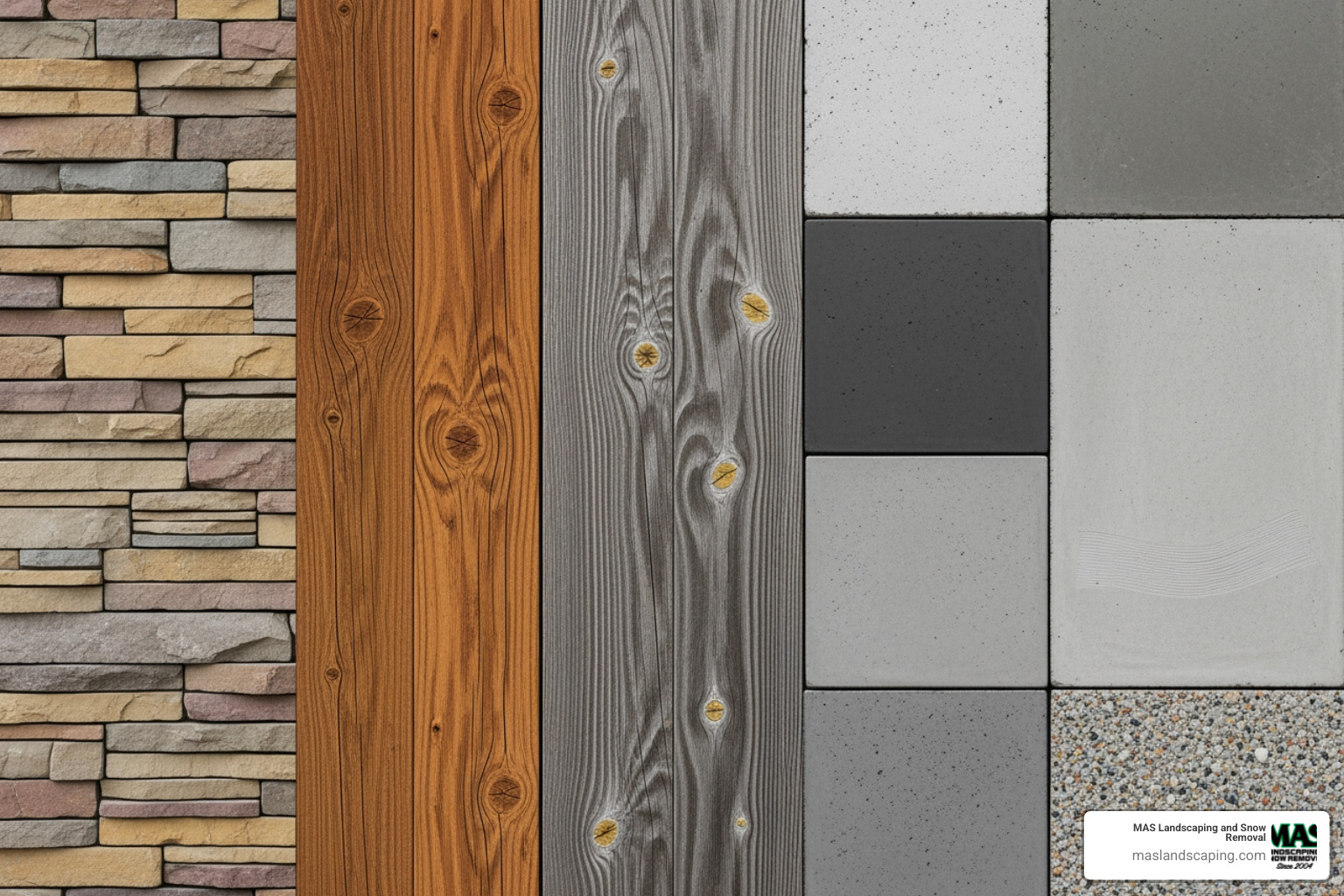
One of the best secrets about precast concrete garden walls is their incredible design flexibility. You can achieve the look of rustic stone, clean modern lines, or even warm wood grain without compromising on durability.
Unlike traditional materials, precast concrete opens up a world of customization. Panels can be produced with integral color, where pigment is mixed directly into the concrete for a consistent, fade-resistant hue. This flexibility allows your walls to perfectly complement your home’s exterior and existing hardscaping.
Whether you’re creating a backdrop for perennials or defining a patio, precast concrete garden walls give you the freedom to design what you envision. Explore more ideas in our collection of garden wall designs.
What Styles are Available for Precast Concrete Garden Walls?
The range of styles for precast concrete garden walls is truly exciting.
- Natural Stone: Systems are available that beautifully replicate the look of ledgestone or the rustic feel of fieldstone. The textures are so authentic, it’s hard to tell it’s not quarried stone.
- Wood Grain: Get the warmth and character of timber without the rot or maintenance. These panels capture the intricate patterns of real wood, blending natural beauty with concrete’s durability.
- Classic Brick: Achieve a timeless brick aesthetic with various colors and patterns, but without the labor-intensive installation or mortar upkeep.
- Modern Finishes: Smooth, sleek finishes create clean lines perfect for contemporary landscape designs and architectural plantings.
The variety ensures your garden walls reflect your personal style. See more options at our garden wall designs page.
Integrating Walls into Your Landscape Design
Precast concrete garden walls are powerful tools for creating structure and visual interest. Much like interior walls define rooms, garden walls create distinct outdoor “rooms” for dining, playing, or relaxing. This organization makes your landscape feel more intentional and cohesive.
Walls also add crucial vertical interest, drawing the eye upward and providing a backdrop for layered plantings. The contrast between the solid wall and soft plant forms is where the magic happens. A rough stone texture can highlight delicate ferns, while a smooth modern wall can turn bold plants into living sculptures. The right wall improves everything around it by creating a harmonious whole. Learn more about how we integrate hardscaping and softscaping in our guide to hardscape and landscape integration.
More Than a Border: Creative Applications for Precast Concrete Garden Walls
Precast concrete garden walls are capable of much more than just creating simple borders. Their strength and design flexibility allow them to solve real landscape challenges while creating stunning, functional outdoor living spaces.
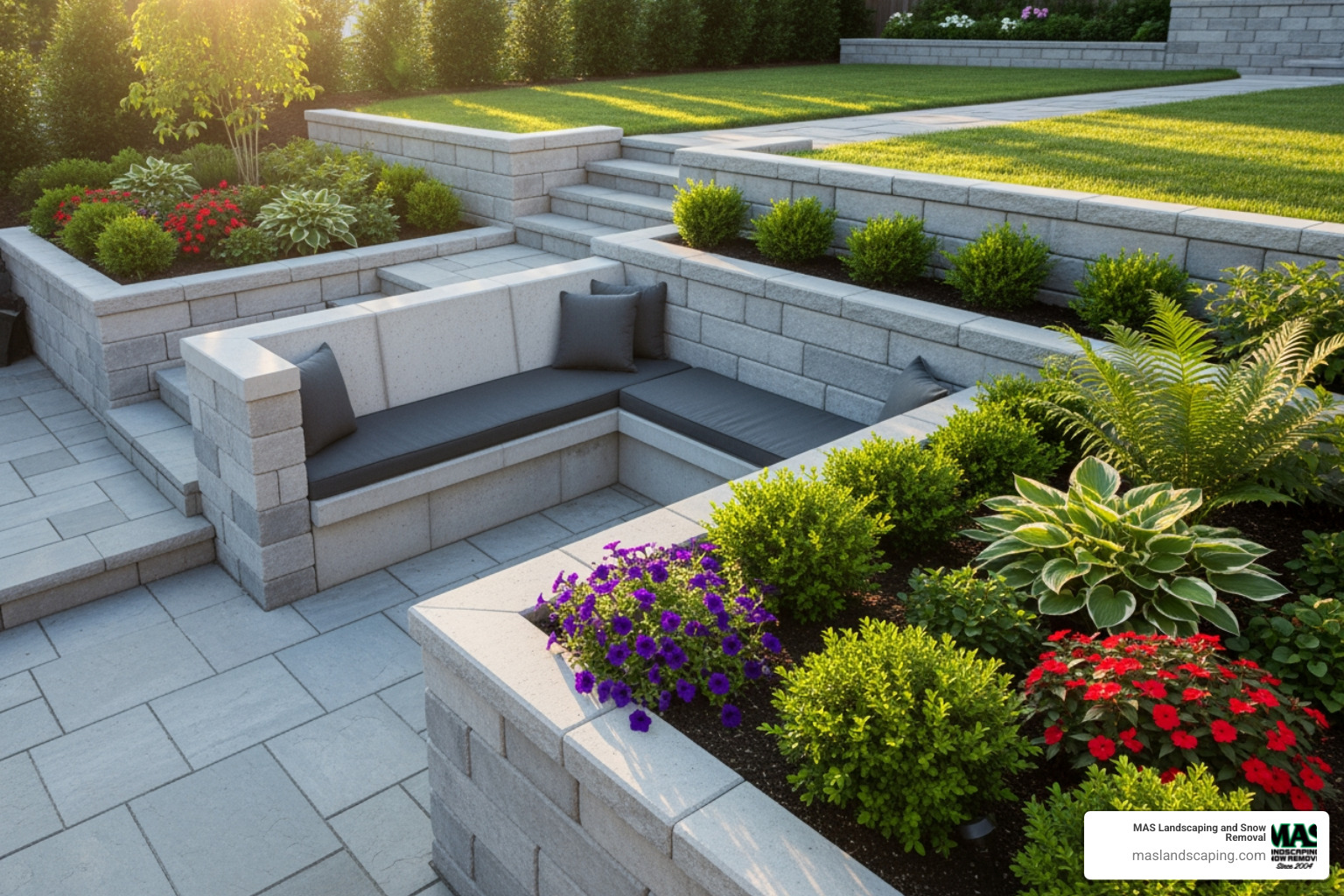
The structural integrity of precast concrete is perfect for retaining earth on steep slopes, while its versatility allows for creative features like built-in seating, raised planters, and multi-level terraces. A sloped yard can be transformed into a series of usable, level areas for dining or gardening. These applications go beyond aesthetics—they solve problems and add lasting value.
If you’re dealing with a sloped yard, these walls can be game-changers. Find more ideas for hardscaping a sloped yard.
Tiered Landscapes and Retaining Earth
Many properties in Massachusetts have sloped yards, which can lead to soil erosion and unusable space. Precast concrete garden walls are the ideal solution. By installing a series of terraced walls, we can hold back soil, prevent erosion, and create multiple level areas.
That steep backyard can become a series of functional spaces: a flat lawn, a patio, or easy-to-tend garden beds. The engineered strength of precast concrete is essential for withstanding the immense pressure of the earth, and proper drainage systems ensure long-term stability. This is about protecting your property and maximizing every square foot. For a deeper dive, refer to our precast concrete retaining wall guide.
Integrated Seating and Planters
We love using precast concrete garden walls to create multi-purpose features. Why have just a wall when it can also be a bench or a planter?
- Built-in Benches: We can design walls with extended caps to create durable, permanent seating around a patio or fire pit.
- Raised Garden Beds: Precast walls create sturdy, long-lasting planters that make gardening easier on your back and knees.
- Patio Edges & Fire Pits: Use walls to define patio boundaries or build a safe, polished fire pit surround.
These integrated features make your outdoor spaces both beautiful and genuinely useful. Explore more ideas with our paver patio with retaining wall ideas.
From Factory to Yard: Installation Process and Cost Breakdown
The journey of your precast concrete garden walls from factory to yard is an efficient process that demands skilled execution. While faster than traditional masonry, proper installation is key to ensuring your walls last for decades.
The process involves several critical steps:
- Site Preparation: We excavate and compact the ground to create a stable, level base that prevents settling.
- Foundation: A compacted gravel base is installed to provide drainage and a solid platform for the panels.
- Panel Installation: Using heavy equipment, we carefully place the interlocking prefabricated panels into position, ensuring each one is level and plumb.
- Backfilling and Drainage: We install drainage systems (like crushed stone and perforated pipes) behind the wall and backfill in compacted layers. Proper drainage is essential to prevent hydrostatic pressure, especially in our Massachusetts climate.
This professional approach ensures a structurally sound wall. Our guide on how to build a landscaping wall with blocks offers more insights into the building process.
What Factors Influence the Cost of Precast Concrete Garden Walls?
The cost of precast concrete garden walls is unique to each project. The final investment depends on several key factors:
- Wall Size: The height and length of the wall are the primary cost drivers.
- Site Accessibility: Difficult access for equipment and materials can increase labor hours and costs.
- Soil Conditions: Rocky or unstable soil may require more extensive excavation and base preparation.
- Finish Complexity: Standard finishes are more affordable than intricate textures or custom colors.
- Labor: Professional installation ensures the wall is built to last, preventing costly future repairs.
Based on general internet data—not specific MAS Landscaping pricing—retaining wall projects can range from $2,000 for small decorative walls to well over $100,000 for extensive, engineered systems. The best way to get an accurate price is to schedule a consultation. For more detailed pricing information, explore our cost guide for concrete retaining walls.
Cost-Effectiveness Compared to Other Options
While upfront cost is a consideration, the true value of precast concrete garden walls lies in their long-term cost-effectiveness.
The faster installation process reduces labor hours, leading to initial savings. However, the biggest financial advantage is longevity. A precast wall can last 50-100 years, while a timber wall might need replacement every decade. Over a lifetime, the durability dividend is enormous.
Furthermore, maintenance costs are minimal. Unlike brick or stone, precast concrete requires no expensive repointing. Compared to wood, there is no sealing or treating required. When you factor in reduced labor, minimal maintenance, and exceptional longevity, precast concrete garden walls are often the most economical choice over their lifetime. To see how precast compares with natural stone, check out our rock retaining wall cost guide.
Frequently Asked Questions about Precast Concrete Garden Walls
We know choosing the right garden wall is a big decision. Here are answers to the most common questions we hear from homeowners in the Greater Boston area.
What is the typical lifespan of a precast concrete garden wall?
A properly installed precast concrete garden wall is a long-term investment, built to last 50 to 100 years with minimal care. This remarkable longevity comes from the high-strength, factory-cured concrete that resists New England’s harsh weather. Unlike wood that rots or traditional mortar that crumbles from freeze-thaw cycles, precast concrete maintains its structural integrity for decades.
How do precast concrete walls contribute to sustainability?
Precast concrete garden walls offer several sustainability benefits. The factory manufacturing process creates significantly less on-site waste. The incredible lifespan of 50-100 years conserves resources by reducing the need for replacements. Additionally, many precast products incorporate recycled materials, and regional manufacturing can lower transportation emissions.
Can I install a precast concrete garden wall myself?
While the DIY spirit is admirable, installing precast concrete garden walls is a job best left to professionals, especially for any wall that retains soil. Here’s why:
- Weight: Large precast panels can weigh thousands of pounds and require heavy machinery to move and place safely.
- Structural Integrity: A retaining wall must withstand immense pressure. Proper foundation, excavation, and drainage are complex and critical for safety and performance.
An improperly installed wall can fail, leading to property damage and safety hazards. The cost of fixing a failed wall far exceeds the initial investment in professional installation. Our team at MAS Landscaping has the equipment and local expertise to ensure your wall is built right the first time. If you’re ready to explore professional options, you can find retaining wall builders near you to discuss your project.
Transform Your Landscape with Expertly Installed Precast Walls
Your garden deserves walls that are as durable as they are beautiful. Precast concrete garden walls deliver on both fronts, offering superior strength, stunning design flexibility, and best long-term value.
These walls stand strong against the Massachusetts climate, require virtually no maintenance, and can be installed in a fraction of the time of traditional masonry. From retaining earth on slopes to creating built-in seating, their versatility can truly transform how you use and enjoy your yard.
At MAS Landscaping, we serve communities like Everett, Lynnfield, Malden, and Saugus, bringing local expertise to every project. We understand our climate’s challenges and ensure your walls are built not just to look good, but to last for generations.

Ready to see what precast concrete garden walls can do for your property? Start your project with our precast concrete retaining wall guide, or give us a call to discuss your ideas. We’d love to help you create an outdoor space that’s beautiful, functional, and built to last.