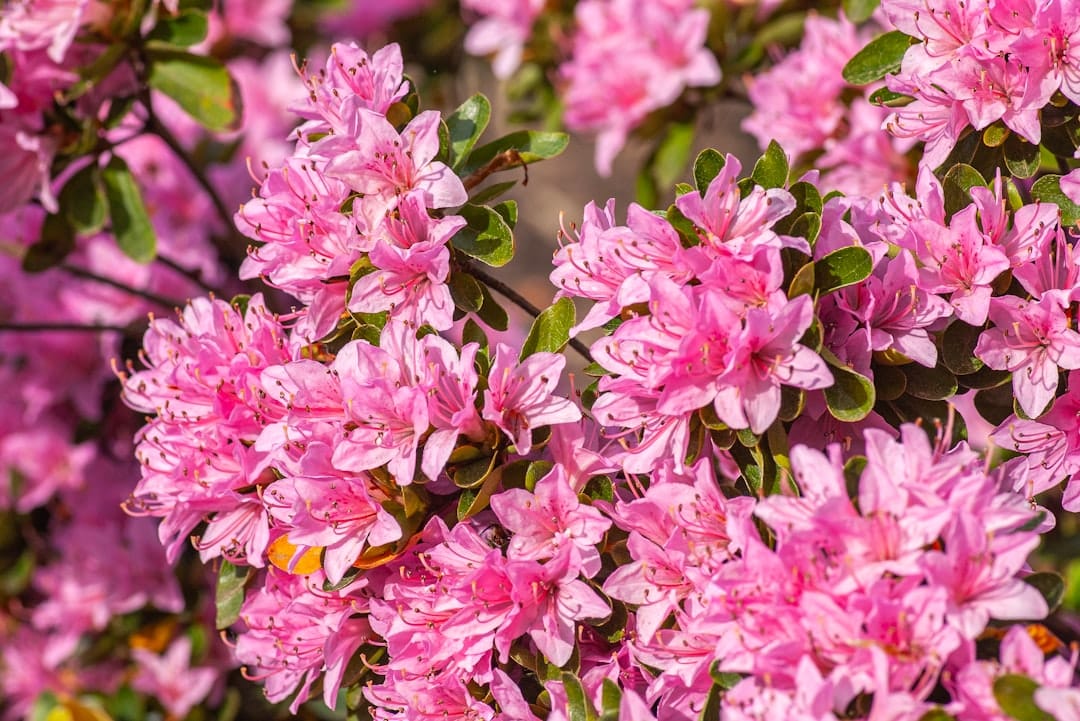



Why Proper Azalea Bush Care is Essential for Your Landscape
Mastering azalea bush care is the secret to unlocking a breathtaking explosion of spring color in your yard.
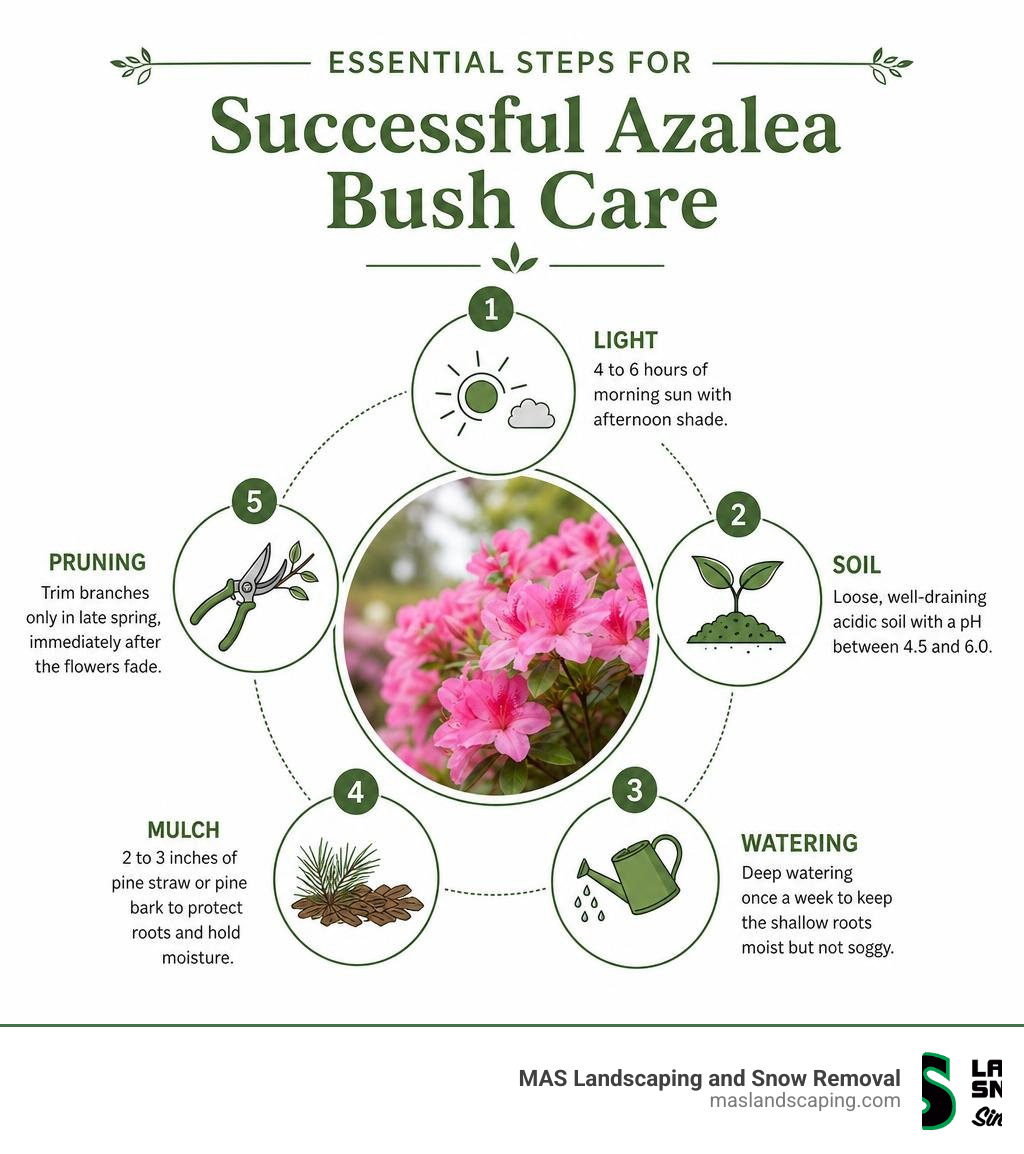
If you want a quick guide to keeping your azaleas healthy, here is what they need to thrive:
- Light: 4 to 6 hours of morning sun with afternoon shade.
- Soil: Loose, well-draining acidic soil with a pH between 4.5 and 6.0.
- Watering: Deep watering once a week to keep the shallow roots moist but not soggy.
- Mulch: 2 to 3 inches of pine straw or pine bark to protect roots and hold moisture.
- Pruning: Trim branches only in late spring, immediately after the flowers fade.
Most flowering shrubs are pretty forgiving. You can ignore them for a season, prune them at the wrong time, and they still find a way to grow.
Azaleas are not in that group.
These stunning plants have incredibly shallow roots that live in the top six to eight inches of soil. Because of this, they are highly sensitive to water stress, poor drainage, and harsh weather. One dry spell or a bad pruning cut can ruin your blooms for the entire next year.
If you want to keep your property looking its best without spending hours troubleshooting yellowing leaves or dying branches, understanding the basics of their care is essential.
Here is a quick look at the core steps we will cover in this guide to help you succeed:
Quick azalea bush care terms:
Understanding Azaleas: Varieties and Botanical Basics
To master azalea bush care, it helps to understand what these plants actually are. Azaleas belong to the Rhododendron genus, which is a massive family containing nearly 1,000 species and upwards of 20,000 hybrids. While all azaleas are technically rhododendrons, not all rhododendrons are azaleas.
The main botanical difference lies in the flowers and leaves. Azaleas typically have thinner, softer, and hairier leaves compared to the thick, leathery foliage of traditional rhododendrons. Additionally, azalea flowers are funnel-shaped and possess 5 to 6 stamens, whereas standard rhododendron blooms are bell-shaped and carry 10 or more stamens.
To help you tell them apart in your yard, we have put together a quick reference table:
| Feature | Azaleas | Rhododendrons |
|---|---|---|
| Stamen Count | 5 to 6 stamens per flower | 10 or more stamens per flower |
| Flower Clusters | Distributed evenly or in small groups (1-3 per stem) | Large, dense, round clusters (trusses) |
| Leaf Texture | Thin, soft, often covered in fine hairs | Thick, leathery, smooth, and glossy |
| Plant Habit | Generally smaller, more spreading and delicate | Larger, upright, and robust |
| Foliage Type | Can be evergreen or completely deciduous | Almost strictly evergreen |
Knowing these botanical differences is highly beneficial when planning your garden layouts. For more practical advice on designing your home landscape, check out our best local gardening tips 2025.
Deciduous vs. Evergreen Azaleas
When selecting azaleas for Massachusetts landscapes, you will choose between evergreen and deciduous varieties.
- Evergreen Azaleas: These varieties keep their leaves year-round, though they do go through a natural “molting” process in autumn where older, inner leaves turn yellow and drop. Most evergreen varieties originate from Asia and are generally hardy in USDA Zones 6 through 9.
- Deciduous Azaleas: These native North American shrubs drop all of their leaves in the fall, often putting on a spectacular autumn foliage show of yellow, orange, and red before doing so. Because they go completely dormant, deciduous azaleas are incredibly cold-tolerant, with many varieties surviving easily in Zones 3 through 5.
Selecting the Right Cultivar for Your Climate
In our local Massachusetts climate—spanning from Saugus and Lynnfield down to Everett and Malden—we experience freezing winters and humid summers. Choosing a cultivar that matches our hardiness zones (typically Zones 5b to 7a) is the first step to easy azalea bush care.
- The Encore® Series: These highly popular reblooming azaleas produce a massive flush of flowers in the spring, followed by smaller bloom cycles in summer and autumn. Cultivars like Encore Autumn Amethyst are exceptionally cold-hardy and perform beautifully in our local area.
- Kurume Hybrids: These are compact, slow-growing evergreen azaleas that top out around 2 to 3 feet. They are excellent for foundation plantings and small garden borders.
- Southern Indian Hybrids: While gorgeous with their massive 3-inch blooms, these are bred for warmer southern climates and will not survive our freezing Massachusetts winters.
- Native Deciduous Cultivars: If you want a bullet-proof plant that laughs at New England blizzards, look for native deciduous varieties like the Pinxterbloom Azalea or the Flame Azalea. They offer unmatched cold hardiness and highly fragrant spring blooms.
For those curious about how these plants behave in much warmer climates, you can read the Florida Azaleas Guide to see how southern gardeners manage heat stress and sandy soil conditions.
Planting Azaleas for Success

How you plant your azalea determines whether it will struggle for years or thrive from day one. Because of their shallow, fibrous root systems, these shrubs require a very specific planting technique.
While spring is a popular time to buy flowering shrubs, autumn is actually the best time to plant azaleas. Planting in the fall gives the root system several months to establish in cool, moist soil before the stress of summer heat arrives. For a deep dive into professional planting timelines and cultivar selections, refer to the UGA CAES Selecting and Growing Azaleas bulletin.
Soil and Light Requirements for Azalea Bush Care
Before you dig, you must find the perfect spot. Azaleas have two non-negotiable requirements: acidic soil and dappled sunlight.
Azaleas must have acidic soil with a pH between 4.5 and 6.0. If your soil pH is too high (alkaline), the plant cannot absorb iron, leading to a condition called chlorosis where the leaves turn pale yellow while the veins stay dark green. If you need to prepare a highly acidic planting area from scratch, read our guide on how to craft the perfect acidic soil bed.
In terms of light, aim for a spot that receives 4 to 6 hours of direct morning sun followed by afternoon shade. The morning sun encourages heavy bud development, while the afternoon shade protects the delicate leaves from getting scorched by the hot summer sun. Avoid deep, heavy shade, as this will result in leggy growth and very few flowers.
Step-by-Step Planting Guide
Follow these steps to plant your azalea correctly:
- Dig a Wide, Shallow Hole: Dig a hole that is 2 to 3 times wider than the root ball, but no deeper. The bottom of the hole should be firm ground so the plant does not settle too deep over time.
- Inspect and Prep the Roots: Gently slide the plant out of its container. Because azaleas have dense, fibrous roots, they easily become root-bound. Use a clean knife to make three or four shallow vertical cuts (about 1/2-inch deep) around the sides of the root ball, and gently tease the roots apart. This encourages them to grow outward into the surrounding soil.
- Amend the Soil: If you have heavy clay or sandy soil, blend the native soil you removed with 25% to 40% organic matter, such as aged pine bark fines or composted leaves. To give your young shrub an extra boost, learn how to get additional nutrients into your plants.
- Set the Planting Depth: This is the most critical step! Place the root ball in the hole so that the top of the crown sits 1 to 2 inches above the surrounding soil grade. Never bury the top of the root ball level with the ground, as this often leads to root rot. Slope the amended soil gently up to the edges of the root ball.
- Water and Settle: Fill the hole halfway with soil, water thoroughly to settle any air pockets, and then finish backfilling.
Essential Azalea Bush Care: Watering, Mulching, and Fertilizing

Once your azalea is safely in the ground, your ongoing azalea bush care routine will revolve around managing moisture and nutrients. Because their roots are concentrated in the top foot of soil, these plants have zero tolerance for being completely dried out or drowned in standing water. For a detailed breakdown of seasonal maintenance schedules, you can consult the Clemson Cooperative Extension Azalea Care Guide.
Watering Shallow-Rooted Azaleas
An established azalea requires about one inch of water per week, either from rainfall or manual irrigation.
- Avoid Overhead Watering: Always water at the base of the plant. Overhead sprinklers wet the foliage, which creates a perfect breeding ground for fungal diseases like powdery mildew and petal blight.
- Use Soaker Hoses or Drip Irrigation: Running a soaker hose at a slow trickle for 30 to 45 minutes is the ideal way to water. This allows moisture to seep deep into the top 12 inches of soil where the roots can access it.
- Check Soil Moisture First: Before watering, pull back the mulch and push your finger 2 to 3 inches into the soil. If it feels moist, hold off on watering. Overwatering in heavy, poorly drained soil is the fastest way to kill an azalea via phytophthora root rot.
Mulching and Fertilizing for Vibrant Blooms
Because azalea roots sit so close to the surface, they need a protective blanket of mulch year-round. Mulch insulates the roots from extreme summer heat and winter freezes while preventing rapid evaporation.
Apply a 2- to 3-inch layer of organic mulch—such as pine straw, pine bark mini-nuggets, or shredded oak leaves—around the entire drip line of the shrub. Always keep the mulch 1 to 2 inches away from the main wooden stem to prevent bark rot and rodent damage.
Azaleas are light feeders. In fact, over-fertilizing can easily burn their sensitive roots. If your soil is rich in organic matter, you may not need to fertilize at all. However, if growth seems weak or the leaves look slightly pale, apply a slow-release, acid-forming fertilizer (specifically formulated for azaleas, rhododendrons, and blueberries) in early spring, right after the flowers fade.
Never fertilize after late June. Feeding your plants in late summer encourages tender new growth that will not have time to harden off before our freezing Massachusetts winter temperatures arrive. For more information on choosing the right soil amendments, see our guide to plant additives.
Pruning and Shaping Azaleas
Pruning is not strictly necessary for the health of your azalea, but it is highly effective for maintaining a neat shape, controlling size, and encouraging a denser canopy with more flowers.
The single most important rule of azalea bush care pruning is timing. Azaleas set their flower buds for the following spring during the mid-to-late summer. If you prune your shrubs in late summer, autumn, or winter, you will cut off all of next year’s flower buds, resulting in a green, bloom-free plant in the spring.
To understand how professional pruning differs from simple trimming across various plant types, you can read our guide on how to keep your ornamental grass looking sharp.
Seasonal Pruning for Long-Term Azalea Bush Care
The perfect pruning window is a brief six-week period immediately after the spring flowers fade. This gives the plant plenty of time to push out new growth and set strong flower buds for the next year.
- Hand Pruners vs. Shears: Always use sharp, sterilized hand pruners rather than electric hedge shears. Shearing cuts the tips of all the branches uniformly, creating a dense outer shell of foliage that blocks sunlight from reaching the interior of the plant. Hand pruners allow you to make selective cuts that preserve the shrub’s natural, cloud-like shape.
- Thinning Cuts: To open up the canopy and improve air circulation, make selective cuts deep inside the shrub, removing dead, crossing, or diseased branches. This helps prevent fungal diseases.
- Heading Cuts: If a branch has grown too long and is ruinous to the shape of the plant, cut it back to a side branch or a visible leaf bud.
- Renewal Pruning: If you have an old, overgrown, leggy azalea, you can perform renewal pruning. Cut the entire shrub back to 6 to 12 inches from the ground in early spring before new growth begins. While you will sacrifice that spring’s blooms, the plant will respond by pushing out vigorous, bushy new shoots from the base.
Troubleshooting Common Azalea Problems
Even with the best azalea bush care routine, you may occasionally run into pests, diseases, or environmental stressors. Identifying the issue early is the key to protecting your plants.
Identifying Pests and Diseases
- Azalea Lace Bugs: These are the most common pests affecting azaleas. They feed on the undersides of the leaves, sucking out plant sap. The top of the leaf will develop a dry, speckled, or bleached yellow appearance, while the underside will be covered in tiny, sticky black spots (their waste). Treat them in spring or fall by spraying the undersides of the leaves thoroughly with insecticidal soap or horticultural oil.
- Spider Mites: These tiny pests thrive in hot, dry weather. They cause the leaves to look dull, bronzed, or dusty. To check for them, hold a white sheet of paper under a branch and tap the foliage; if you see tiny specks crawling on the paper, you have mites. Spray the foliage with a strong stream of water or treat with a miticide.
- Powdery Mildew: This fungal disease appears as a white, powdery coating on the leaf surfaces, usually during humid summer weather. Ensure your plants have adequate spacing for air circulation and water only at the base of the plant.
- Phytophthora Root Rot: Caused by poorly drained soil, this disease causes the leaves to wilt, turn yellow, and drop, while individual branches die back one by one. There is no cure once root rot takes hold; the best prevention is planting in raised beds or highly well-draining soil.
- Chlorosis: If your azalea leaves are bright yellow but the veins remain dark green, this is a sign of iron deficiency caused by alkaline soil (pH above 6.0). Apply elemental sulfur to lower the soil pH or use a chelated iron foliar spray for a quick green-up.
Winter Protection and Environmental Stress
In Massachusetts, winter weather can be exceptionally harsh on evergreen azaleas.
- Winter Burn: Dry winter winds and freezing temperatures can dry out the leaves of evergreen azaleas, causing them to turn brown and paper-dry by spring. To prevent this, water your azaleas deeply in late autumn before the ground freezes, and wrap sensitive plants in a layer of burlap to block freezing winds.
- Bark Splitting: If an azalea is exposed directly to warm morning sun after a hard freeze, the rapid temperature change can cause the bark on the main stem to split open. Plant your azaleas where they are protected from early morning winter sun.
- Deer Browsing: Deer find the tender evergreen leaves of azaleas highly appealing during the winter months when food is scarce. Protect your shrubs by spraying them with a natural deer repellent or installing physical netting around the plants from November through March.
Frequently Asked Questions about Azalea Bush Care
Why are my azalea leaves turning yellow?
Yellowing leaves can be caused by three main factors:
- Natural Molting: In autumn, evergreen azaleas naturally shed their older, inner leaves. If only the inner leaves are turning yellow and dropping while the outer growth looks healthy, this is perfectly normal.
- Chlorosis: If the leaves are yellow with dark green veins, your soil pH is too high, making iron unavailable to the plant.
- Root Rot: If the leaves are wilting, turning dull yellow, and dropping off during the summer, the soil is likely too wet, leading to root decay.
Are azaleas toxic to pets and children?
Yes, all parts of the azalea plant—including the leaves, flowers, and nectar—are highly toxic to dogs, cats, horses, and humans. Azaleas contain grayanotoxins, which disrupt the normal function of cell membranes in the heart and nervous system. Ingesting even a few leaves can cause vomiting, drooling, diarrhea, weakness, and in severe cases, cardiovascular collapse. Always plant azaleas out of reach of curious pets and supervise young children playing in the yard.
Can azaleas be grown successfully in containers?
Absolutely! Compact evergreen varieties (like the Kurume or dwarf Encore series) do exceptionally well in pots. Choose a container that is at least 16 to 18 inches wide with plenty of drainage holes. Fill the pot with an acidic, well-draining potting mix (such as a 50/50 blend of potting soil and peat moss). Because pots dry out much faster than the ground, check the soil moisture daily and water whenever the top inch of soil feels dry.
Conclusion
Mastering azalea bush care takes a little bit of patience, but the reward of a vibrant, flower-filled spring landscape is well worth the effort. By focusing on acidic soil, proper planting depth, consistent moisture, and timely pruning, you can keep your shrubs looking spectacular for decades to come.
If you would rather spend your weekends relaxing while professionals handle the heavy lifting, we are here to help. MAS Landscaping and Snow Removal, based in Saugus, MA, provides comprehensive, professional landscape maintenance, hardscaping, and planting services. We proudly serve homeowners in and around Everett, Lynnfield, Malden, and the surrounding North Shore communities.
Based on internet data, the average cost for professional landscape maintenance and shrub care typically ranges from $150 to $600+ per visit, depending on the size of your property, the number of shrubs, and the specific services required. Please note that these are average industry costs based on general market data and do not represent actual pricing for MAS Landscaping. To get an accurate, personalized estimate tailored to your property’s unique needs, please reach out to us directly.
Ready to transform your outdoor space? Schedule professional landscape maintenance services with MAS Landscaping today!