


What Is a Grass Planting Service — and Which One Do You Need?
A professional grass planting service is one of the most effective ways to get a thick, healthy lawn — whether you’re starting from bare dirt or trying to fix thin, patchy grass.
Here’s a quick overview of your main options:
| Method | Best For | Time to Results |
|---|---|---|
| Sod installation | Instant lawn, erosion control | Same day |
| Power/slit seeding | Thin or damaged existing lawns | 6-8 weeks |
| Hydroseeding | Large bare areas, slopes | 6-8 weeks |
| Overseeding | Improving density of existing lawn | 6-8 weeks |
A good lawn doesn’t happen by accident. Grass needs the right seed, the right soil contact, and the right timing to establish properly. Without those three things, you’re wasting time and money.
New grass typically germinates within 7-14 days, but full establishment takes 6-8 weeks. Professional seeding methods like power seeding can achieve over 90% germination rates — compared to roughly 10% with basic broadcast seeding.
This guide walks you through every step: choosing the right method, preparing your soil, understanding costs, and caring for your lawn after planting.
Relevant articles related to grass planting service:
Choosing the Right Grass Planting Service for Your Lawn
Selecting the correct lawn establishment method is not a one-size-fits-all decision. When homeowners search for a New Lawn Installation Near Me, they are often met with a dizzying array of options. The right choice depends heavily on several critical variables: your soil type, local climate zones, sun exposure, expected foot traffic, and your overall budget.

In our local Massachusetts climate—spanning communities from Saugus and Lynnfield to Malden and Everett—we primarily deal with clay-heavy or rocky soils, harsh winters, and hot, humid summers. A professional assessment helps determine whether your yard needs a complete topsoil overhaul, a specialized cool-season seed blend, or immediate stabilization via sod.
Why Hire a Professional Grass Planting Service?
It is incredibly tempting to grab a couple of bags of grass seed from the local home improvement store, throw them across the yard, and hope for the best. However, the reality of DIY seeding is often a disappointing story of low germination, patchy growth, and persistent weeds.
When you invest in professional lawn establishment, you are paying for science, precision, and heavy-duty machinery. Traditional DIY broadcast seeding typically yields a dismal 10% germination rate because the seeds simply sit on top of the soil, left to the mercy of hungry birds, heavy rains, and drying winds.
By contrast, professional power seeding achieves over 90% germination. This is because specialized machinery ensures excellent seed-to-soil contact by slicing clean grooves into the earth and mechanically depositing the seed at the perfect depth. Furthermore, a professional service distributes roughly 1.5 million grass seeds per 1,000 square feet, ensuring optimal lawn density that naturally crowds out weeds.
Working with a local expert who understands regional soil conditions makes all the difference. For example, if you are looking for quality Landscaping Lynnfield Ma, you need professionals who know how to handle the specific soil compaction and acidic conditions common in Essex County. Professional teams use commercial-grade aerators, slice seeders, and top-tier seed blends that are scientifically proven to thrive in our local climate. To learn more about the mechanics of seeding, check out our guide on Laying a New Lawn with Grass Seed.
Traditional Turfgrass vs. Specialty Grass Options
When planning your new lawn, you must choose the right grass species. Traditional turfgrasses are popular for a reason—they are durable, lush, and familiar. However, modern specialty grass options are gaining ground due to their unique environmental and maintenance benefits.
Here is how the most common choices compare:
- Kentucky Bluegrass: The gold standard of traditional lawns. It features a stunning deep blue-green color and spreads via underground stems (rhizomes), allowing it to self-heal from heavy foot traffic. However, it requires plenty of sunlight, regular watering, and consistent fertilization.
- Tall Fescue: A highly resilient cool-season grass with a deep root system. It is excellent for high-traffic yards and is far more drought-tolerant than Kentucky Bluegrass.
- Drought-Tolerant Fine Fescue: A specialty option that thrives in shaded areas and requires significantly less water and fertilizer than traditional turf.
- No-Mow Fine Fescue: This specialty blend grows to a maximum height of 6 to 10 inches and naturally flops over to create a beautiful, flowing, meadow-like look. It only needs to be mowed once or twice a year, making it incredibly low-maintenance.
- Bee Lawns (Pollinator Support): A wonderful eco-friendly trend where traditional low-growing grasses are mixed with low-profile flowering plants like Dutch white clover, creeping thyme, and self-heal. This provides vital nectar for bees and other pollinators while maintaining a lawn you can still walk and play on.
To explore the ideal species for your yard’s unique shade and moisture levels, read our detailed breakdown on How to Grow Grass.
Core Methods of Professional Lawn Establishment
To achieve a picture-perfect yard, professionals utilize different methods depending on the current state of your property, your timeline, and your budget.

Whether we are performing a brand-new Lawn Installation on a cleared construction site or restoring an established yard that has seen better days, we rely on three core methods.
Sod Installation for Instant Curb Appeal
If you want a beautiful, lush yard immediately, nothing beats professional sodding. Sodding involves laying pre-grown, mature turf directly onto prepared soil.
The primary benefit of choosing a professional Sod Installation is instant gratification. You go from a dusty, muddy yard to a vibrant green carpet in a single day. Beyond aesthetics, sod provides immediate erosion control on sloped properties and acts as a natural barrier that prevents weed seeds from germinating.
However, laying sod is highly labor-intensive and requires meticulous site preparation to ensure the roots bond with the underlying soil. To understand the details of this process, check out our step-by-step guide on How to Install Sod.
Hydroseeding, Slit-Seeding, and Power Seeding
For properties where sod is not the preferred choice, professional seeding techniques offer highly reliable, cost-effective alternatives:
- Power Seeding (and Slit-Seeding): These methods use a mechanical seeder equipped with vertical knives that slice precise, shallow grooves (about 1/4 inch deep) into the soil. The machine immediately deposits seed directly into these warm, moist channels. This ensures the absolute best seed-to-soil contact, protecting the seeds from elements and maximizing germination rates.
- Hydroseeding: This technique involves spraying a pressurized slurry of grass seed, water, fertilizer, green-dyed wood-fiber mulch, and binding agents directly onto prepared ground. The mulch slurry locks in moisture, prevents soil erosion, and accelerates the germination process, making it an excellent choice for large clearings or steep hillsides. Learn more about preparing your soil bed for these methods in our guide on How to Install a New Seed Lawn Bed Preparation.
To help you decide which method fits your project, here is a quick comparison table:
| Feature | Sod Installation | Hydroseeding | Power/Slit Seeding |
|---|---|---|---|
| Speed of Results | Instant (1 day) | Moderate (Germinates in 7-14 days) | Moderate (Germinates in 7-14 days) |
| Erosion Control | Excellent (Immediate) | High (Thanks to slurry mulch) | Moderate |
| Weed Resistance | Outstanding | Moderate | High (Due to dense growth) |
| Initial Cost | Higher | Moderate | Budget-Friendly |
| Best Used For | Quick transformations, slopes | Large open acreage, hillsides | Repairing thin lawns, overseeding |
Step-by-Step Process of Professional Lawn Installation
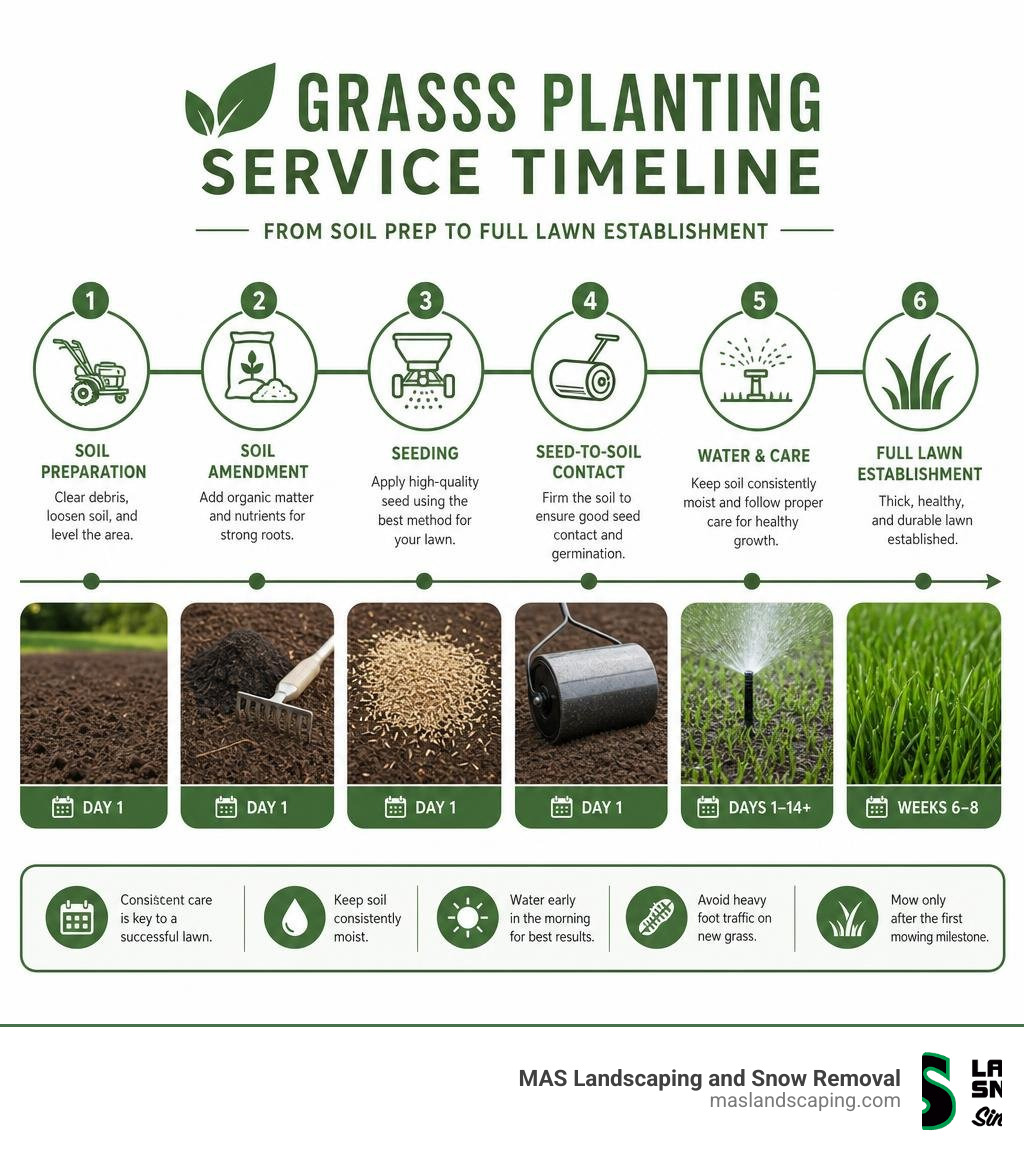
To ensure your new grass survives and thrives for years to come, we follow a strict, multi-step installation process. Cutting corners during the preparation phase is the number one reason DIY lawns fail.
From the initial site evaluation to the final rolling, every detail matters when executing a professional How to Install a New Lawn program.
What to Expect During Your Grass Planting Service
When you hire us for a grass planting service, the process is highly systematic:
- Site Evaluation & Debris Removal: We clear away all rocks, weeds, old turf, and construction debris.
- Soil Testing & Amendments: We test the soil’s pH and nutrient levels. In Massachusetts, our soil is often acidic, so we may add agricultural lime alongside organic compost to create a nutrient-rich foundation. Learn more about preparing the ground in our guide on Preparing Lawn for New Sod.
- Grading & Drainage Correction: We shape the land so that rainwater drains safely away from your home’s foundation, avoiding low spots where water might pool.
- Lawn Leveling: Using specialized rakes and rollers, we create a smooth, level surface. A flat yard is much easier to mow and prevents tripping hazards. You can read more about this on our Lawn Leveling Service page.
- Planting or Laying Sod: We apply your chosen seed blend using precise equipment or carefully lay fresh, farm-grown sod in a staggered, brick-like pattern to eliminate visible seams.
- Rolling & Initial Watering: We lightly roll the new lawn to press the seed or sod firmly into the soil, followed immediately by a deep, thorough watering.
Best Times of Year to Plant Grass by Region
Timing is everything when planting grass. Because Saugus, Lynnfield, Malden, and the surrounding Massachusetts areas are in a cool-season climate zone, we must align our planting with the natural growth cycles of cool-season grasses like Fescue, Ryegrass, and Kentucky Bluegrass.
- The Absolute Best Time: Late Summer to Early Fall (Late August through September). During this window, the soil is warm from the summer sun, autumn rains are frequent, and air temperatures are pleasantly cool. This combination allows seeds to germinate rapidly and establish strong roots before winter without having to compete with aggressive spring weeds or scorching summer heat.
- The Second Best Time: Early Spring (April to May). While spring planting is highly viable, you must water diligently to help the young grass survive the upcoming summer heat. Additionally, you must be careful with weed control, as many pre-emergent crabgrass preventers will also stop your new grass seeds from growing.
To learn more about accelerating growth during these key windows, check out our tips on How to Grow Grass Fast on Dirt. If you are located in the Essex County area, you can also explore local seasonal insights via the Boxford, MA landscaping service at the click of a button – LawnStarter resource.
Average Cost of Laying a New Lawn
When budgeting for a gorgeous new yard, it is helpful to understand the general market rates. Please note: the pricing ranges listed below are average costs based on regional internet data and do not represent actual, binding quotes for MAS Landscaping. Every property has unique grading, access, and soil preparation needs that require an on-site evaluation.
For a standard residential property, professional lawn installation costs can vary widely depending on the chosen method:
- Sod Installation: On average, homeowners across the Northeast spend between $1,500 and $8,500+ for professional sodding. On a square-foot basis, sod installation typically ranges from $1.50 to $7.50 per square foot installed, depending heavily on the amount of site preparation, old lawn removal, and grading required.
- Seeding Services (Power Seeding / Hydroseeding): Traditional and power seeding services are highly cost-effective, typically ranging from $800 to $3,500+ for standard residential yards.
To explore how these costs are calculated and what factors impact your final investment, read our comprehensive pricing guides: Cost of Laying a New Lawn and How Much Does It Cost to Install a New Lawn.
Post-Planting Care and Long-Term Maintenance
Once your new grass is in the ground, the handoff to the homeowner is critical. Proper aftercare is what stands between a thriving green oasis and dead, wasted grass.
Here are the essential rules for post-planting care:
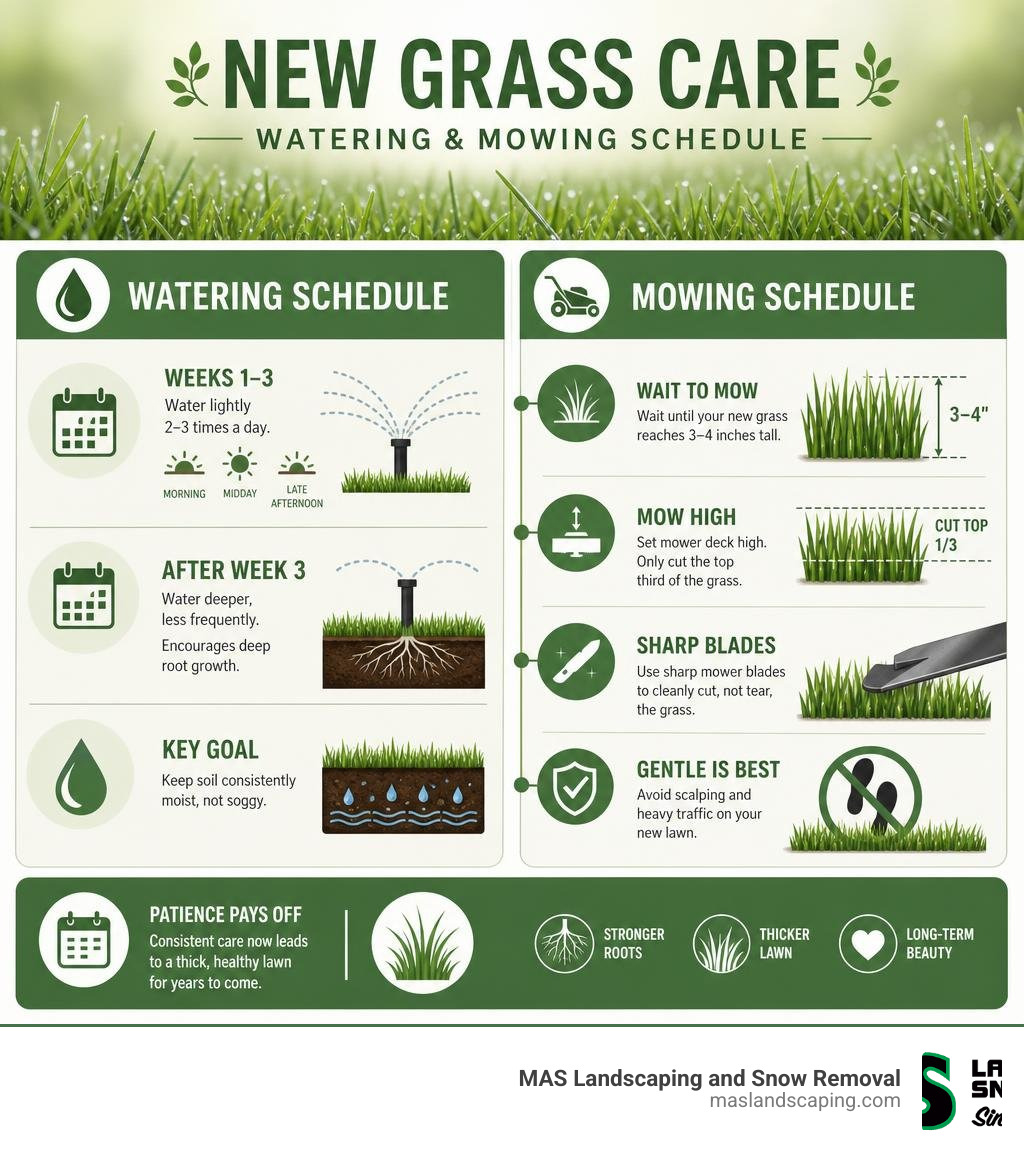
- Watering Schedule: For the first 2 to 3 weeks, your primary job is to keep the soil consistently moist but not soggy. Water lightly 2 to 3 times a day (usually morning, midday, and late afternoon). Once the grass reaches about 2 inches tall, transition to deeper, less frequent watering to encourage deep root growth.
- The First Mowing: Hold off on mowing until your new grass reaches approximately 3 to 4 inches tall. Set your mower deck high and only cut the top third of the grass blades. Make sure your mower blades are extremely sharp; dull blades will tear and pull the young, tender roots right out of the soil.
- Fertilization: Apply a high-quality starter fertilizer during the installation phase. This provides a gentle, slow-release dose of phosphorus to stimulate root development. Avoid harsh weed-and-feed products for at least the first 6 to 8 weeks.
- Keep Off the Grass: Limit all foot traffic (including pets) for the first 3 weeks to give the delicate root systems a chance to anchor firmly into the earth.
For more detailed maintenance instructions, read our guides on How to Care for New Sod and How to Maintain a New Lawn After Installation.
Frequently Asked Questions about Lawn Seeding
How long does it take for newly planted grass to establish?
Typically, new grass seeds will germinate within 7 to 14 days, depending on the species (Perennial Ryegrass germinates quickly, while Kentucky Bluegrass can take up to 21 days). However, the full establishment phase—where the roots knit deep into the soil and the lawn becomes durable enough for regular use—takes about 6 to 8 weeks. To learn more about this timeline, check out our guide: How long does the new lawn installation process take.
Should I choose sod or seeding for my new lawn?
If you need immediate results, have a sloped yard prone to erosion, or want a highly predictable, weed-free lawn from day one, sod is your best option. However, if you are working with a tighter budget or want a wider selection of grass varieties (such as specialty fine fescues or pollinator blends), seeding is the way to go. You can weigh the pros and cons of each in our article on Installing New Grass Sod.
Do I need to aerate my soil before planting grass?
Yes, absolutely! Soil compaction is the silent killer of new lawns. When soil is compacted, grass roots cannot penetrate deep into the ground, and water simply runs off the surface rather than soaking in. Core aeration pulls small plugs of soil out of the ground, loosening the dirt and allowing vital oxygen, water, and nutrients to reach the root zone. Learn more about preparing your soil in our guide on How to Prepare Ground for Sod.
Conclusion
A beautiful, healthy lawn is the foundation of your home’s curb appeal, but getting it right requires local expertise, professional equipment, and a deep understanding of regional soil and climate conditions.
At MAS Landscaping and Snow Removal, based in Saugus, MA, we are proud to provide top-tier, personalized lawn care, hardscaping, and snow management services to our neighbors in Everett, Lynnfield, Malden, and the surrounding North Shore communities. We treat every yard as if it were our own, combining professional-grade techniques with local expertise to build outdoor spaces that last.
Ready to transform your yard with a professional grass planting service? Contact us today for more info about landscaping services and let’s get started on your dream lawn!